A CWRU entrepreneur uses improv to get college athletes talking about mental health
A conversation with Ana Arruda (CWR ’11; DEN ’13), founder of Conquer Life, a team-based mental health program for collegiate athletes
An athlete can be the best player on the field and still be unable to get out of bed.
Ana Arruda, DMD (CWR ’11; DEN ’13) saw versions of that during four years on the varsity women’s soccer team at Case Western Reserve University—in teammates, in opponents and, at times, in herself.
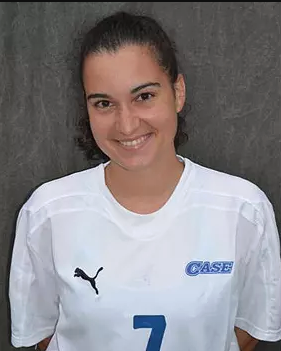
Arruda finished her CWRU soccer career ranked second in program history for goals scored and earned athletic and academic honors from the University Athletic Association (UAA). She also saw how rarely athletes talked about their mental health, even when they were struggling.
During her final year at CWRU, she lost a close friend and fellow athlete to suicide. Arruda started a company to help break that silence.
Founded in 2019, Conquer Life began as an e-commerce brand, moved through a blog and a video platform, and found its current direction after a friend talked Arruda into improv classes. The exercises did something her earlier ventures hadn’t: they got people talking.
Today, the company builds workshop programs for college teams that combine improv, movement and play, supported by an interactive app. The first pilot was with CWRU football. The university’s soccer, cross country, softball, tennis and volleyball programs followed.
Arruda has built the company alongside her work as an orthodontist. She came to CWRU through its Pre-Professional Scholars Program and earned her dental degree from the School of Dental Medicine in 2013.
She later completed a master’s degree in orthodontics at Saint Louis University (SLU), a Master of Legal Studies in business and corporate law at Washington University in St. Louis and an MBA at the University of Chicago Booth School of Business.

In a conversation with the CWRU Veale Institute for Entrepreneurship, Arruda talks about a pivot that shaped her startup company, what she borrowed from martial arts and the philosophy of Ubuntu, and how making eye contact can help others feel comfortable talking about their mental health.
This conversation has been edited and condensed for length and clarity.
How did Conquer Life begin?
Conquer Life originally started as an e-commerce company, with merchandise such as a mug that had the message of “conquer life.” We started building the brand with a blog where we interviewed people, from up-and-coming Marvel movie actors to fashion models to people living through the pandemic, and asked them how they were taking care of their mental health.
From there we expanded to shooting a “Thursday Talks” series, where Chicago comedians interviewed interesting people with awesome stories. Our media sparked the idea of an app that would allow for those similar conversations to happen across the world in a safe space. We began building the app, but there was a missing in-person piece.
After taking improv classes with a professor who is a Saturday Night Live rehearsal actor, I felt that was the key. We began developing a workshop program for student-athletes that combined improv with other evidence-based disciplines. The root of the program comes down to accepting yourself and improvising throughout life, free from labels put upon you.
What particular challenges do students in collegiate sports face?
When you no longer are fulfilled by your sport or career path, it can become a cage even if you’re successful.
Maya Angelou is one of my inspirations. Her book, I Know Why the Caged Bird Sings, explains that the bird must sing to stay alive. We all have a need to express what’s inside.
You could have a top athlete who is also deeply anxious about a race, hasn’t been able to get out of bed and is worried about no longer enjoying the pre-med path they’re known for. It’s important to hold space for others in that situation and stand out with kindness and courage.
What guides the design of your workshops?
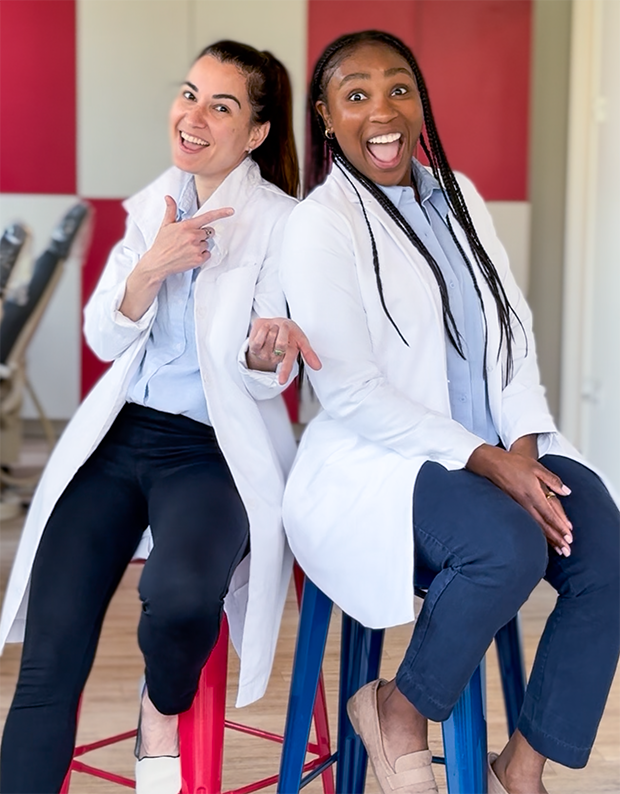
We implemented play theory, improv, music, Montessori, Kitsungi and martial arts concepts among others. The goal was to combine a variety of disciplines to create something comprehensive, effective, and fun.
Including the whole team, strengthening community, and bringing individuals to a collective was also key. Nelson Mandela used the concept of Ubuntu, which says: I am because we are, and I am better if I take care of you.
Working as a whole and connecting in that way creates a safety net for students.
How did the program get in front of its first team?
I first reached out to the CWRU football coach [Greg Debeljak] to explain the app idea and original iteration of the program. Coach Debeljak was welcoming and scheduled a day for us to work with his team. I had interviewed the University of Akron’s soccer coach during our blog series, so I reached out to her and she was also very supportive.
Both pilots were successful. We knew that entertaining media worked as a strategy for college students, so we started to build an app that incorporated fun with connection.
The missing piece was an experiential component—especially in the post-pandemic return to normal life. Seeing it all come together with those two teams catalyzed the development process.
Were there defining moments that shaped your approach to helping students?
As the football team was doing our guided activities, they started loosening up. One coach remarked that some members of the team had rarely interacted with each other before our session. The program was uniting these pockets of different students. Some were smiling who hadn’t in days.
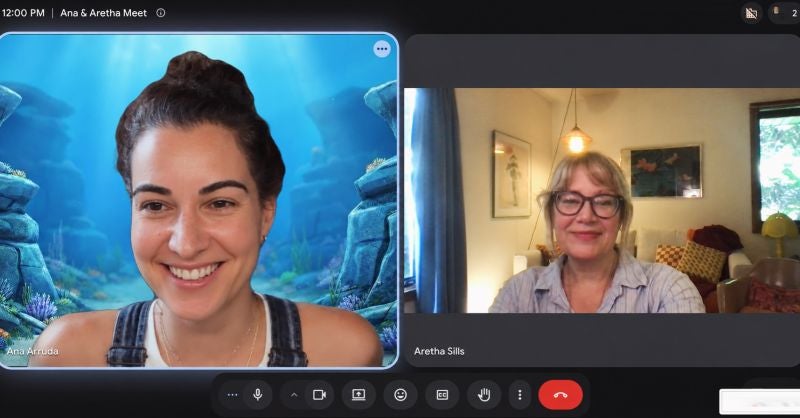
After our pilots we decided to create a more comprehensive program. I was connected with the swimming and diving coach [Doug Milliken], the CWRU Association of Student Athletes, the Hidden Opponent campus captains, and eventually with other CWRU teams such as soccer, softball and track.
We created an eight-week program, and it was great to see students sign on for another semester.
To test the program, we conducted an IRB-approved study and flew in visiting instructors from New York—a former baseball player turned lawyer and musician, and my improv professor and SNL rehearsal actor. Across the board, our research results and feedback from students were very positive.
Did any experiences, mentors or programs at CWRU make a lasting impression on you?
I came to CWRU for the Pre-Professional Scholars Program while still being focused on soccer. It was very rigorous. There are a few professors and students that stand out to me and helped me through.
People at CWRU are open-minded to learning and sharing knowledge. I remember our teaching assistant during summer organic chemistry was brilliant, and also humble enough to guide us without judgment. I still carry their kindness with me today.
How can students support each other around mental health?
Our program boils down to helping people see themselves and others. Eye contact is a big point we start emphasizing right away. Even practicing a wholehearted “thank you” to someone when you go out helps them feel seen, and you in turn.
Allow yourself to be present in the moment despite any flaws. Don’t be on your phone or distracted.
When you give people space after asking how they are, it permits them to start confiding.
What would you tell students who want to start a company in this field?
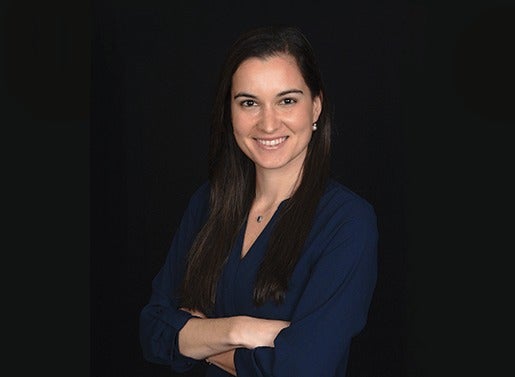
I moved here from Brazil. I do compare my dual societies a lot, and one good point about the U.S. is that starting an LLC is efficient and rewards creativity.
All you need is imagination, humanity, and hard work.
What’s next for you?
We’ve been working with CWRU teams to integrate our program into training schedules as effectively and seamlessly as possible.
Next we will develop it for more widespread use, because the need is overwhelming. Our goal is to increase our collaboration with Cleveland-area colleges and high schools, and grow across the UAA, expanding to places like New York, Pittsburgh, Boston, and Chicago. We’re also launching a social event series for communities and the general student body.
We need technology and infrastructure that can support students in the millions. We are building for this expansion and excited for what’s ahead!
Karin Ong is a second-year student studying child psychology and Japanese; she is an intern with the Veale Institute for Entrepreneurship.