At CWRU, genetic research fuels hope for treating Alzheimer's
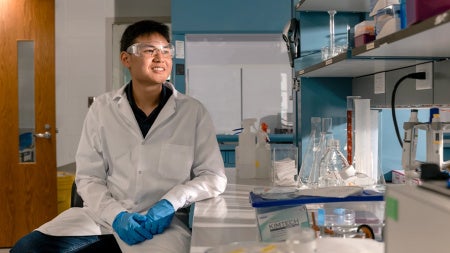
CWRU geneticist and bioinformatician William Bush helps turn data into discoveries by examining patterns and variants in people across the globe
For families, an Alzheimer’s diagnosis can be a double blow: While grappling with the news that a loved one has the disease, close relatives also often worry what it could mean for their own future.
While any individual’s risk of developing Alzheimer’s is a complicated and an enigmatic blend of genes and environmental factors, researchers estimate that genes are responsible for 60% to 80% of late-onset Alzheimer’s disease risk. But when you add up the impact of the more than 90 known genetic variants linked with Alzheimer’s, they explain only about 20% of that risk.
Where are the “missing” Alzheimer’s genes?
Case Western Reserve University geneticist and bioinformatician William Bush, PhD, is part of a global quest to find them—a search that is both deep and wide, encompassing genetic data from people around the world.
“For many, many years, the bulk of the participants in Alzheimer’s studies were of European ancestry,” said Bush, professor of population and quantitative health sciences at CWRU School of Medicine and associate director of the Cleveland Institute for Computational Biology. “To be able to find as many variants as possible to look at and to be as representative as possible, we need to look at global populations.”
Bush brings together experience in statistics, computation and biology to help researchers comb through vast genetic datasets and pick out genes that precipitate brain changes involved in Alzheimer’s—and he believes momentum is building toward a major leap forward.
“We’re able to investigate this disease so much more clearly than we have been before,” he said. “I think that will lead to fairly dramatic advances in the next five to 10 years.”

The need is urgent, and growing: Today, roughly 7.4 million older Americans are living with Alzheimer’s. With the share of the U.S. population over the age of 65 expanding rapidly, that number is projected to reach 13.8 million by 2060, according to the Alzheimer’s Association.
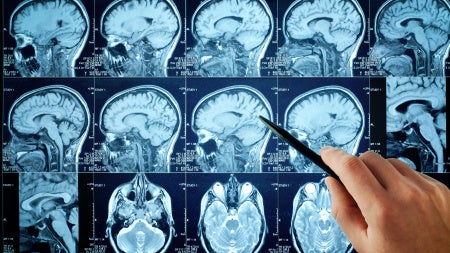
Bush sees hope on the horizon. New Alzheimer’s therapies are available for the first time in decades, and an explosion in the science of biomarkers—aberrant Alzheimer’s-linked proteins that leak from the brain into the bloodstream—makes it possible to more definitively diagnose and monitor Alzheimer’s in patients with blood tests. Meanwhile, a huge trove of genetic data—Bush’s specialty—is poised to expose the disease’s complicated biological playbook.
A Global Challenge
Sources: World Health Organization and Alzheimer’s Association
The diversity within the genetics of Alzheimer’s
Bush is an original member of the Alzheimer’s Disease Sequencing Project (ADSP), a national initiative to identify genes linked to Alzheimer’s. Launched by the National Institute on Aging in 2012, the ADSP holds DNA data from 58,000 people—a flood of data made possible by a boom in computing power and inexpensive sequencing.
ADSP data have helped reveal surprising diversity in the genetics of Alzheimer’s, with distinct patterns emerging among people with different ancestries. For example, the most powerful known genetic risk factor for Alzheimer’s, a variant known as APOE4, has a weaker effect on people with African and Hispanic ancestries than it does on those with European roots. And another genetic variation, common in people of African descent, reduces the odds that people carrying the high-risk APOE4 gene will develop Alzheimer’s.
To probe this diversity more deeply, Bush is working with CWRU colleague and genetic epidemiologist Jonathan Haines, PhD, as part of a multinational collaboration among universities, known as the DAWN study. The goal is to recruit study participants with a range of ancestries, specifically 5,000 people across the African continent, 4,000 African Americans, and 4,000 Hispanic and Latino participants in the United States. “This will be the largest contribution of African ancestry information to Alzheimer’s disease that has ever been done in the field,” Bush said.
Importantly, discoveries from specific ancestries could inform treatments for people of every race and ethnicity. “Looking at different ancestries brings back treatments to everybody,” said Haines, chair of the population and quantitative health sciences department at CWRU and inaugural director of the Cleveland Institute for Computational Biology.
“We’ve never been in a better position to be able to move forward and understand how to either slow down the progress or treat the disease,” Haines said. “But we have to be able to sort through all those data.”
In his role as an investigator with the Genome Center for Alzheimer’s Disease (GCAD), the data processing hub for the national Alzheimer’s Disease Sequencing Project, Bush is charged with “crunching” raw genetic data to make it more useful for researchers. First, Bush and his colleagues zero in on sites in the genome that are different from person to person. Then, they try to determine what, exactly, each variable region of DNA does. For example, does it change the expression of a gene, or modify the protein coded by that gene? This “annotation” information is attached to the genetic data that is then made available to researchers worldwide.
Next, Bush and his colleagues search the genetic variants for links with signs and symptoms of Alzheimer’s. Using a combination of computer modeling and statistics, they reveal how multiple variants can interact in ways that could contribute to Alzheimer’s, potentially pointing the way to the ultimate goal: drugs that could slow, stop or prevent the disease.
“Case Western Reserve has a lot of really extraordinary research for Alzheimer’s disease research,” said Bush, citing local collaborations such as The Cleveland Alzheimer’s Disease Research Center and the Cleveland Institute for Computational Biology, partnerships with medical school colleagues and university computing resources. “It’s just the perfect synthesis of pieces put in place that let us do all of this great work.”