The CWRU roots of a $725 million wound-care company
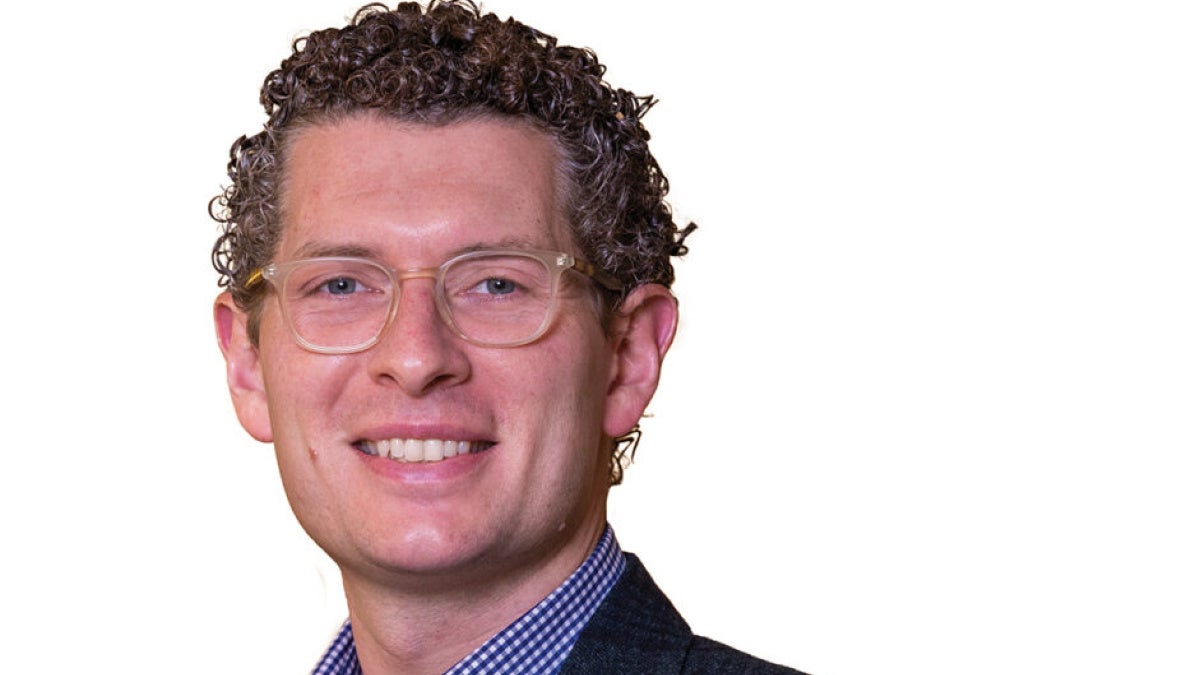
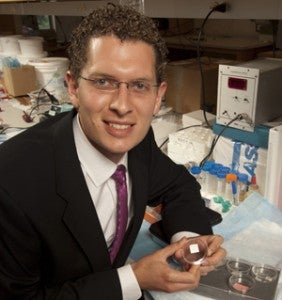
A conversation with Matthew MacEwan (CWR ’04), founder and chief science officer of Acera Surgical
A wound that will not heal can change a person’s life.
For patients with diabetes, poor circulation or other complications, a small wound can become a long-running medical problem—one that limits mobility, threatens limbs and requires repeated treatment.
Matthew MacEwan, PhD (CWR ’04), encountered that reality while training at Washington University School of Medicine. Difficult wounds often required advanced treatment, and many of the available options depended on costly biological tissue products.
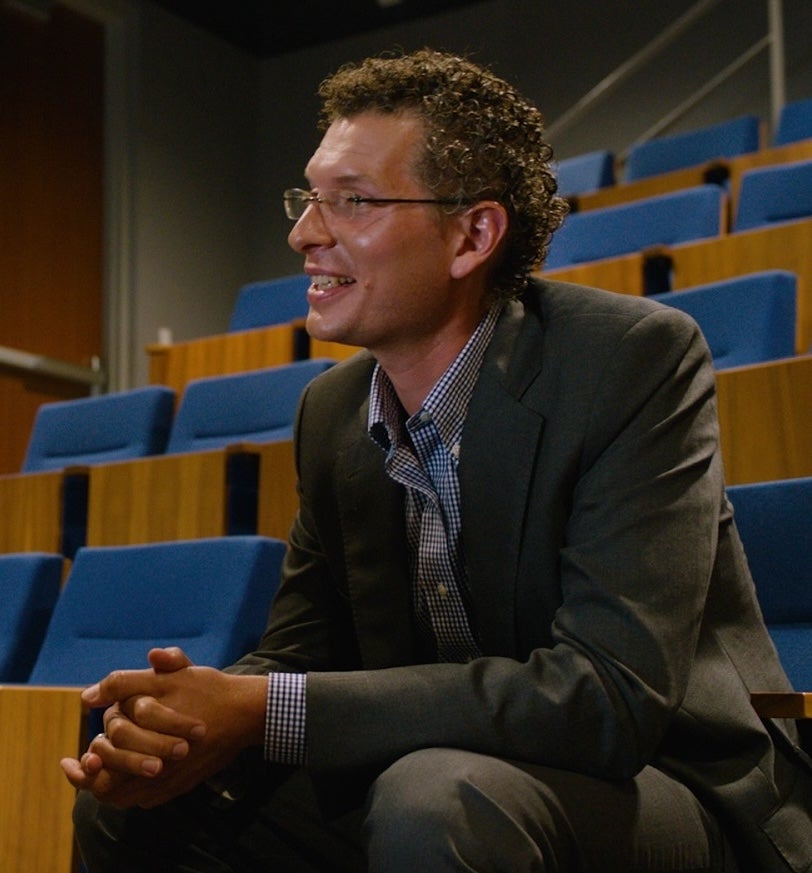
For MacEwan, the problem connected directly to work he’d started as an undergraduate at Case Western Reserve University: understanding how the body responds to engineered materials.
That work eventually became the basis for Acera Surgical, the St. Louis company MacEwan founded in 2013. Its products—including Restrata and Cerafix—are used in soft-tissue repair and wound care.
What began as a four-person team eventually grew into a company of more than 150 employees. In 2025, Acera reached a defining moment when Solventum—a global health care company—announced an agreement to acquire it for $725 million in cash, with the potential for up to $125 million more in additional payments.
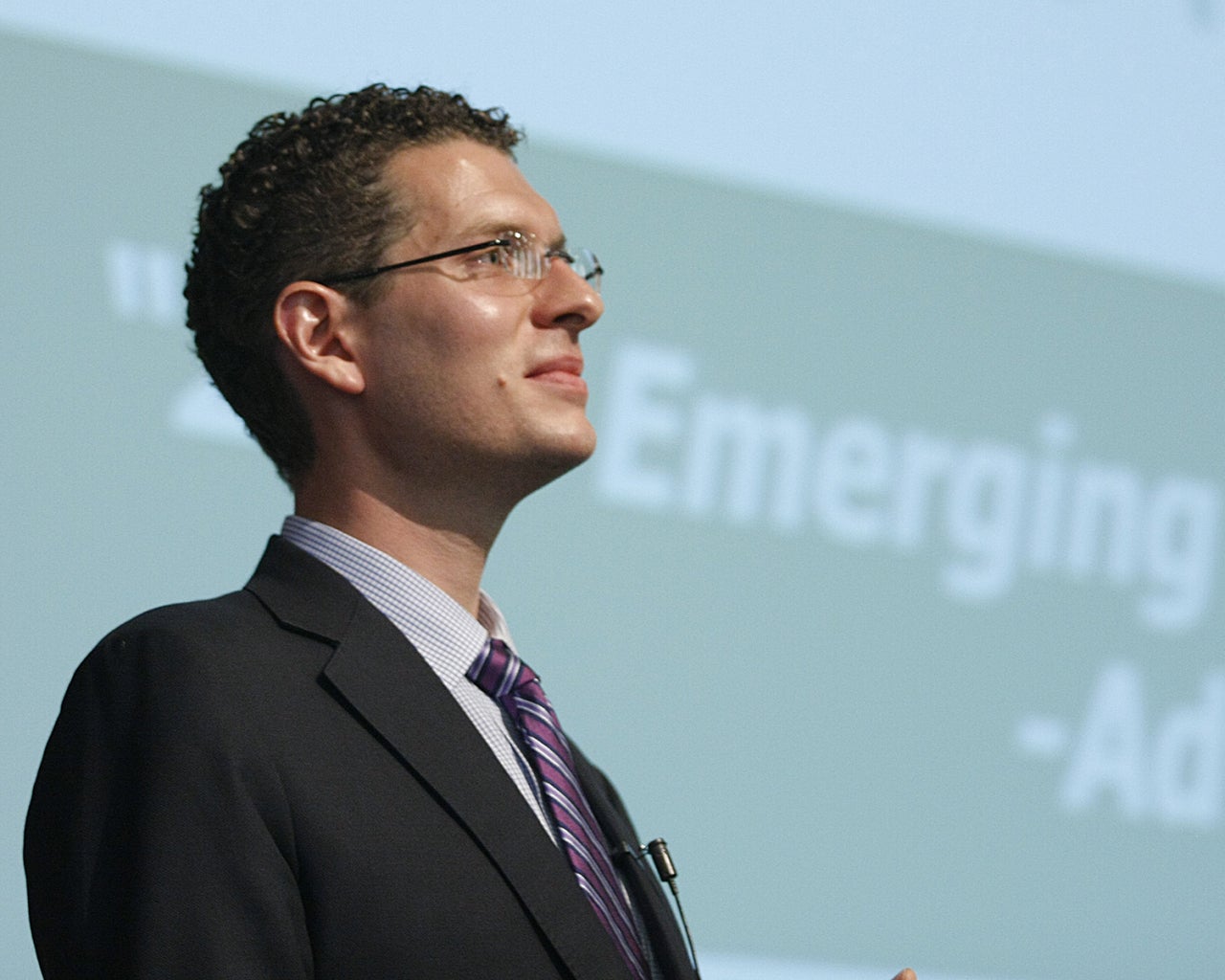
Along the way, MacEwan has remained connected to CWRU’s entrepreneurship community. In 2021, he returned through the Veale Institute for Entrepreneurship’s Entrepreneurship Speaker Series for a conversation on how Acera grew from university research into a patient-focused medical device company.
Below, MacEwan reflects on building a startup, bringing medical technology to market and what he’d tell CWRU students considering a similar path.
Tell me more about Acera Surgical and the impact your work is having on patients and the communities you serve.
At the simplest level, Acera makes materials that help the body heal.
Our products are synthetic electrospun matrices, which give the body a scaffold it can use to build new tissue. That matters in difficult wound cases, especially for patients with diabetes, poor circulation or delayed healing.
When we started, wound care relied heavily on harvested tissue products. We wanted to build a synthetic option that could be consistent, scalable and clinically impactful.
We started with four people trying to get the product into clinicians’ hands. Today, Restrata is being used from coast to coast.
What would you say is the most exciting part about working in regenerative wound care right now?
The most exciting part is being able to improve clinical care and patient outcomes.
One of our very first patients had a longstanding leg wound that kept him from going to the beach with his kids. Once Restrata helped his wound heal, he could participate in activities that had previously been inaccessible to him.
Seeing someone’s life improve in that way is very gratifying.
From a business perspective, there is also real potential for value creation and commercialization. Our acquisition by Solventum gives us a bigger stage to bring the product to more clinicians and patients.
How can biomedical engineering students at CWRU apply what they’re learning to entrepreneurship?
Get out into the world.
If you’re interested in scientific entrepreneurship, take every opportunity to be hands-on in the lab. At the same time, seek out campus startups. Volunteer. Help other students. Get close to the work.
CWRU gives students a place where research, engineering and entrepreneurship are closely intertwined. The university’s entrepreneurial resources—including the Veale Institute for Entrepreneurship, Sears think[box], LaunchNET—give students ways to test ideas, meet founders and see what it takes to move from a technical concept to something people can use.
That helps you build an entrepreneurial lens. Some parts of the journey can be taught in a classroom, but a lot of it comes from being around people who are trying to build something.
You’ve talked before about the importance of bringing together people from medicine, business, engineering and clinical settings. How did that help bring Acera to life?
I realized early on that I had scientific and clinical knowledge, but I did not have an extensive track record of creating companies.
I needed people with complementary skill sets. I found a business mentor first, then people who were skilled in operations. You cannot completely go it alone.
It is important to find people with different perspectives who can challenge your assumptions and help lift the company with you.
What was the original motivation behind the company, and has that changed as Acera has grown?
From day one, the goal was to get the technology out to patients who needed it—even if that meant helping just one patient.
Now it has been used in tens of thousands of cases across the country, but the core principle has stayed the same: use the technology platform to improve patient care.
When you think about your time at CWRU now, what feels most lasting?
My time at CWRU gave me a strong foundation for creating the business and serving as an agent of change in the applied biomaterials industry.
I learned so much about the underlying science and engineering principles, and that carried me through my academic, medical and business career.
My mentor, James Anderson, PhD [a Distinguished University Professor in the Department of Biomedical Engineering, a joint department in the CWRU Case School of Engineering and School of Medicine], was a forefather of biomaterial compatibility. His lab helped me understand how the body interacts with materials. He also advised me to look into MD-PhD programs.
I had a formative experience at CWRU, and it shaped my path going forward.
What part of your undergraduate experience carried over most into how you approach entrepreneurship?
Everyone around me was working on something novel and exciting.
I took away that spirit of solving new problems with new solutions in a meaningful way. That excitement in the community motivated me to push boundaries.
Is there any advice you received that changed how you approached this journey? What guidance would you pass on to students?
It is important to have an idea you are passionate about and to invest the time and care it deserves.
In a student setting, you cannot always dedicate yourself fully to a business. But eventually, you have to take a leap of faith if you want the company to grow faster. You have to commit to these projects and see them through.
I would also tell students to be open to career paths that are not what they envision right now. I never had entrepreneurship in my master plan. I thought I would be more of a medical practitioner.
But this technology commanded my attention. I felt it needed to get out to patients.
What’s next for you?
Today, I’m part of the Solventum team. I’m focused on integrating Acera’s work into the organization and getting the technology into the hands of more clinicians in the U.S. and internationally.
We are also looking at where else we can develop the technology beyond the domestic US market.
Long term, I’m excited to find other technologies and continue improving health care from different angles.
Karin Ong is an intern with the CWRU Veale Institute for Entrepreneurship.