Meet a graduating neuroscience student with a passion for caring for the country’s aging population
The population of individuals ages 65 years and older is expected to double by 2060, with those ages 85 and over expected to triple in that time. As a result, the demand for healthcare professionals who specialize in gerontology is expected to increase greatly in the coming years.
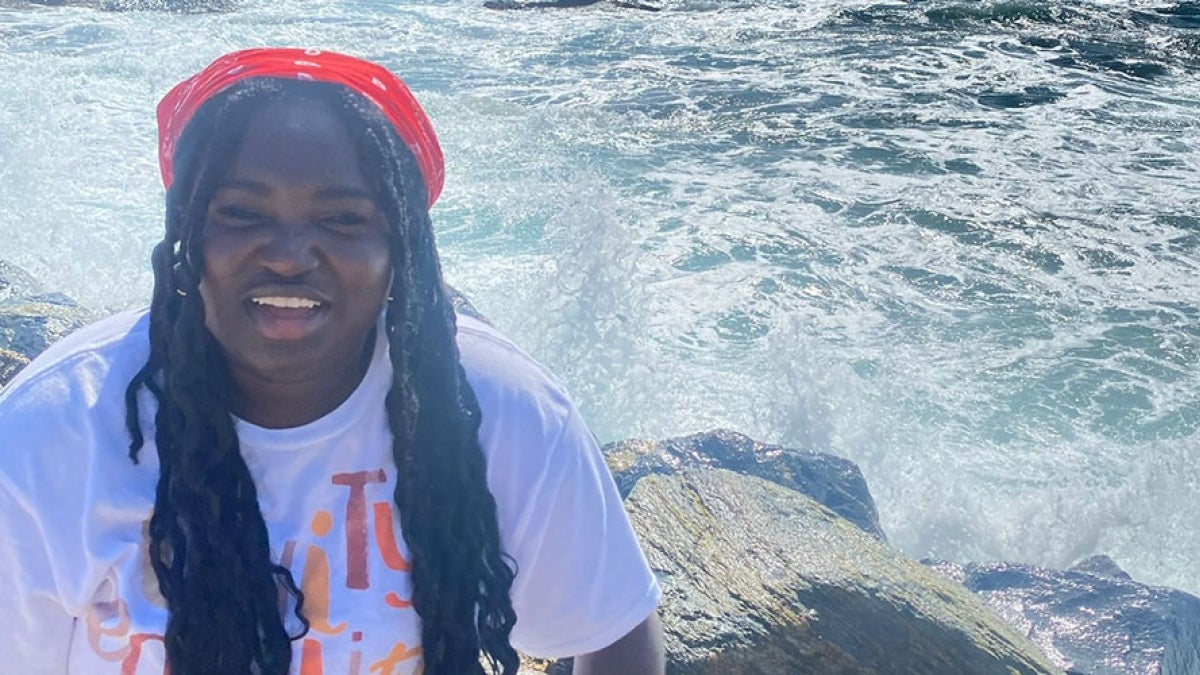
It will take young people like Ruth Boampong to meet that demand. A graduating fourth-year student majoring in neuroscience at Case Western Reserve University, Boampong is already contributing to research on this population.
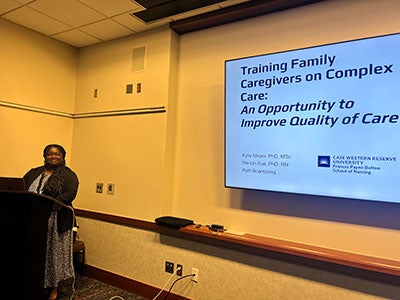
For the past two years, she has worked in The Family Caregiving Translational Science Lab at Frances Payne Bolton School of Nursing with Kylie Meyer, PhD. In particular, Boampong assists with implementing the Learning Skills Together program, which aims to help aging caregivers navigate healthcare and nursing needs for family members who have Alzheimer’s or dementia. The ultimate goal is to reduce mental health strain and enhance caregiver confidence. Boampong surveys family members in the program to understand their outcomes.
Even though this work doesn’t involve direct work with glial cells or neurons, she’s well-positioned to offer support to this study. Through her coursework, Boampong has learned about the care patients with neurodegenerative diseases undergo and the impact it can have on both them and their caregivers.
“Through this experience and through working as a PCNA where the majority of my patients were older adults, I realized I loved working with them and wanted to explore fields that focus on the aging population,” she said. “Gerontology is such a multidisciplinary field, and there’s definitely a need for more people to work in this field as well.”
Earlier this year, she was named a Scholar in Aging by the Ohio Department of Aging and Ohio Association of Gerontology Education. She was one of 10 students selected from universities across the state for the honor, which recognized her contributions to the gerontology field and offered opportunities to connect with local leaders in aging and the Ohio Statehouse.
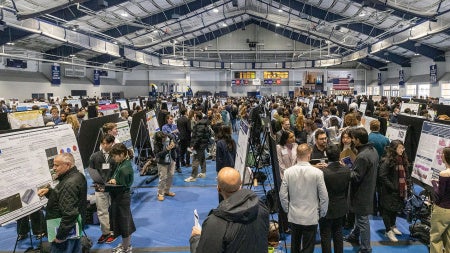
This spring, she also completed an aging-related research project, which she presented in Columbus in April. Boampong’s research focused on the prevalence and gaps in data collection for elder sexual abuse in Ohio. She reviewed data from Adult Protective Services and completed a draft report and presentation with her preliminary findings.
“The program honestly changed my life,” Boampong said. “I made so many connections and opened myself to so many opportunities that I believe can aid in my future career.”
Here at CWRU, Boampong also has been dedicated to fostering a supportive environment for younger students in STEM as the president of WISER (Women in Science and Engineering Roundtable) for the past three years. Alongside co-president Michelle Lo, Boampong has reworked the organization’s mentorship program and infrastructure.
As she prepares to graduate next week, Boampong intends to stay in Cleveland for the next year to continue gaining clinical experience while preparing for the MCAT. She will continue her work as a research assistant on Meyer’s study and serve as a nursing department assistant on the geriatric psychiatry floor at Cleveland Clinic Lutheran Hospital. She hopes that experience will help prepare her for her goal of becoming a geriatric psychiatry doctor.
“If I could do medical practice and also work as an advocate for the aging population, that would be my dream,” Boampong said.
Learn more about Boampong’s experiences at CWRU.
Answers have been lightly edited for clarity and length.
1. What inspired you to pursue neuroscience?
Ever since high school, I knew I wanted to major in neuroscience. I was just fascinated by the biology of what makes us different from other creatures. Also, my high school never had classes or lessons exploring neuroscience, so I knew I wanted to try this out.
2. What interested you in research on the topic of aging?
My initial beliefs about research were that it was a field where people sit in labs and pipette all day. My research experience at CWRU was a bit different, where I mostly participated in human-based dry lab research projects, and I really enjoyed it. I was introduced to the topic of aging through the [Learning Skills Together] study.
3. What have been your biggest accomplishments leading WISER?
Alongside my co-president, Michelle Lo, we entirely revamped our Peer Mentor Program, focusing on group-based mentorship, rather than one-to-one pairings. We created a lot of new roles, such as philanthropy, special events, and recruitment, which allowed WISER to grow our club and host more events.
4. Is there anything else you'd like to add?
I would like to encourage more people to research and work in the fields of aging! Anyone interested in this field and has any questions can reach out to me at rab315@case.edu!