Meet a PhD candidate eyeing translation for a neural implant that could stop seizures at their origin
Cedric Levi believes biomedical engineering is the key to unlocking the full potential of the brain.
“It's the perfect bridge between what, how and why,” said Levi, a fifth-year doctoral candidate in the Department of Biomedical Engineering at Case Western Reserve University. “There is an artistry to building functional, user-friendly and impactful devices. Biomedical engineering was the best way that I could express that and I cherish it dearly.”
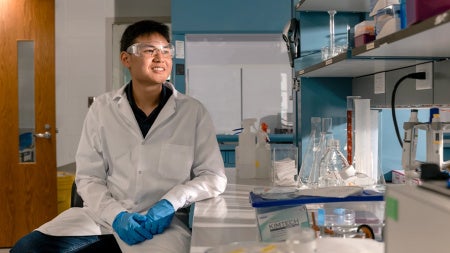
Just months before he’s set to complete his PhD program, Levi has already found a tangible way to make such an impact. Working in the lab of Dominique Durand, PhD, director of the Neural Engineering Center and the Elmer Lincoln Lindseth Professor in Biomedical Engineering, Levi has developed a neural implant that aims to stop seizures from their epileptic origin. What started as a joke between Levi and Durand about what seemed like an over-simplified solution has now made its way through pre-clinical animal models and will head to the translational level next.
Levi’s device builds on prior research in Durand’s lab. Before Levi joined, Durand's team had discovered that neurons talk to one another without a “biologically wired” connection.
“It's not magic, but it feels like magic,” Levi said.
This work shed insight into why some therapies, such as multiple hippocampal transection therapy, may fail even though the seizure origin point is completely severed from the hippocampus.
The implant Levi created—called “Fara”—aims to stop and control the signals by essentially short circuiting the signal.
“We're now waiting for a cohort of epilepsy patients at University Hospitals to get preclinical human data,” said Levi. “In tandem, we are making preparations for potential clinical translation, which I have fallen hopelessly—yet cautiously—in love with.”
Long interested in understanding how the brain functions and fueled by what he describes as a “childhood cyberpunk-like fantasy” and a fascination in psychoanalysis driven by existentialism, Levi set his research focus on implants, though his perspective on what that looks like has matured. Now, he views the complex relationship between our bodies and minds and the ability to interface with them like “decoding the most beautiful and relatable puzzle there is.”
For Levi the puzzle is personal. Levi’s best friend lives with epilepsy and he witnessed the difficulty his friend experienced with seizures.
“There is no shortage of his experience either,” Levi said. “Since the beginning of my involvement in this field, I have met with numerous patients and families and have heard their stories as well. It both pains me, and fuels me. If someone is reading this and wants to share their story, I am more than happy to lend an ear.”
1. What initially drew you to CWRU?
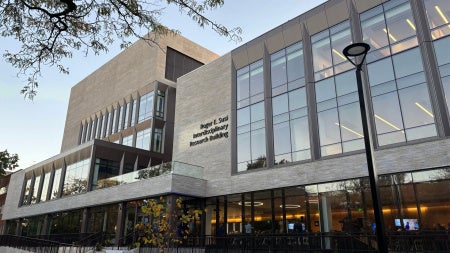
At my previous university a feeling of dissatisfaction lingered. I didn't feel well equipped to tackle the problems and projects close to my heart. CWRU pulled me in because it gives you everything you need to breathe life into an idea. From the get-go, Case [Western Reserve] felt like a place that had the education, facilities and mentorship necessary to build almost anything your heart desires. Its rich history of research, connection to a world-class hospital system, and maker workspaces like Sears think[box] made CWRU a no-brainer. It undeniably gave me the opportunity I craved.
2. What has your education and research involved up until this point?
Dr. Durand's lab is special. He pushes us to understand the fundamentals and builds us from the ground up. This is something I took for granted when starting this program and foolishly tried to skip to the fancy part—would not recommend learning this the hard way. Durand's lab is also different since the majority of things are done in-house. If a solution or device doesn't exist yet, we build it. This forces us to know our projects inside and out, and it has changed the way I approach problems and pick up new skills.
3. How did you end up working with Dr. Durand?
During my first conversation with Dr. Durand, he emphasized his focus on epilepsy research and my best friend immediately came to mind. We've been friends since middle school and he has lived with epilepsy since his early teens. (In a twist of fate he's now a valued member of our lab.) I knew right away this was a cause I could commit to on a deeper level. He is very brave and makes me want to work harder every day.
4. What are your career goals?
Innovation will forever be a part of me, and I plan to pursue entrepreneurship for the rest of my life, whether it be within or removed from healthcare. Empathizing with a need, finding a solution, recursively building it, deploying it, and seeing the change it makes in people's lives is one of the most fulfilling experiences in the world. Whatever career path I find myself walking, I at the very least would like to be the bridge between people, problems and solutions. Truly understanding and resonating with people's problems, translating difficult concepts, and delivering solutions aligns with both my skills and values to the highest degree.
5. Are you involved on campus in any other ways?
A few years ago I co-founded and ran CWRU Lift. It was so much fun bringing a community together around health and connection. Between mentorship, research and my translational efforts I have since had to shift my involvement toward activities that feed into one another while still giving me a "third place." This includes getting involved in the Veale Institute for Entrepreneurship, the ThinkImpact Program through Weatherhead School of Management’s Fowler Center for Business as an Agent of World Benefit, and serving as a university ambassador. You may also find me in Sears think[box] working on a personal project.
6. What do you enjoy outside of research and education?
I have far too many hobbies to mention! To name a few: road biking, cooking, running, weight lifting, yoga, sailing, volleyball, music, dance and tinkering. My hobbies rotate with the seasons and steal the spotlight from one another. I am training for my first half marathon, exploring vegan cooking, and am building a few apps and device concepts!