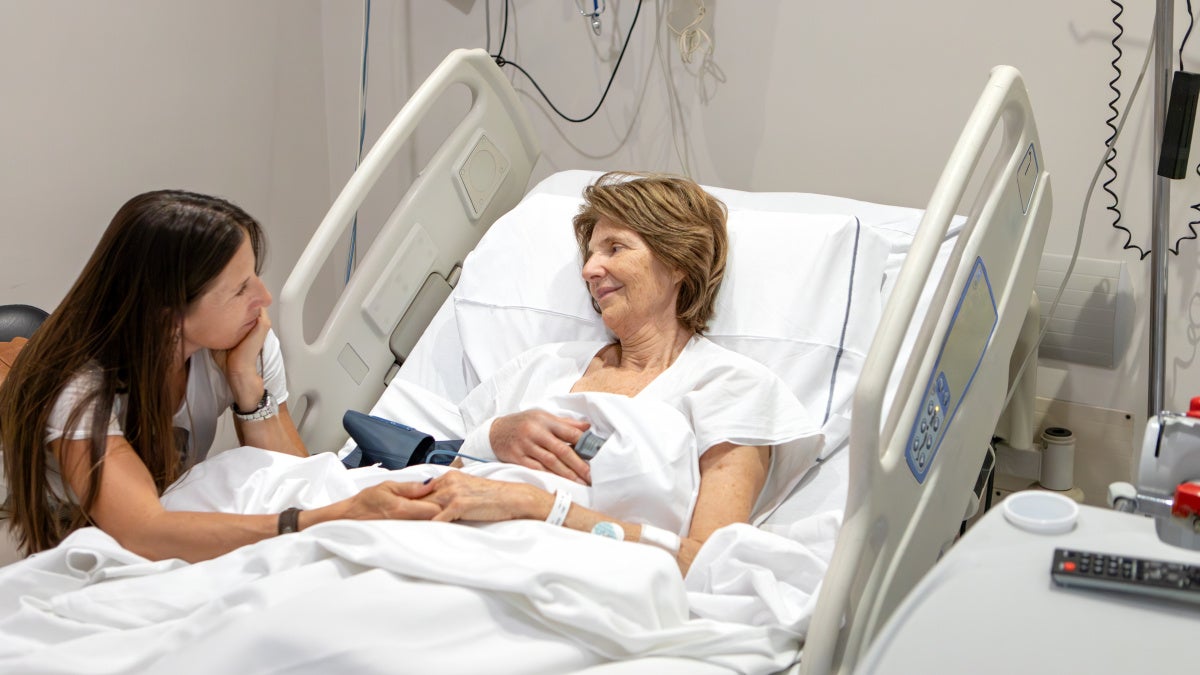
New study targets psychological toll of ICU surrogate decision-making
Case Western Reserve researchers testing digital program to help surrogate decision-makers manage emotional burden of life-and-death choices
When an intensive care unit (ICU) patient is too sick to communicate or make critical decisions, a family member or close friend often has to step in on their behalf.
That surrogate may suddenly have to make decisions about life-sustaining treatments—often with little preparation, limited time and enormous emotional pressure. As a result, many experience anxiety, depression, post-traumatic stress symptoms, guilt and regret.
"In that sense," said Grant Pignatiello, an assistant professor at Case Western Reserve University's Frances Payne Bolton School of Nursing, "families can become the hidden patients of critical illness. They are essential to care, yet their psychological needs are often overlooked."
So, Pignatiello and his research team created a program to address the problem. And with a new $3.26 million grant from the National Institute on Aging, they will test it in a clinical trial starting later this year—to learn not only whether it helps, but how.
The tool
Reappraisal Enhanced Foundation for Regulating Affect and Managing Emotions, or REFRAME, is a tablet-based application that teaches surrogate decision-makers practical skills to regulate their emotions while a loved one is in the ICU.

It helps them recognize what they are feeling, understand how those emotions shape their experience and practice "cognitive reappraisal"—changing how they think about distressing situations, so they become more manageable.
The segments are brief, about 10 to 15 minutes each, and use plain language, static visuals, audio narration and captions. The program doesn't direct families toward any particular medical decision.
“Instead of focusing on specific decisions they may face, REFRAME provides psychological support to help surrogate decision-makers navigate the ICU experience with greater steadiness and gives them a foundation they can draw on later as they live with the outcomes of decisions they were asked to help make,” Pignatiello said.
Clinical trial
Later this year, researchers will enroll 387 surrogate decision-makers of critically ill ICU patients aged 35 and older from University Hospitals Cleveland Medical Center's main campus.
Participants will be recruited during ICU days two to seven, when many families are actively involved in decision-making and emotional distress is often high. After consenting, they will complete an initial assessment about their background, how they've been feeling and how they typically manage stress and difficult emotions.
Then they will be randomly assigned to one of two groups.
- Those in the REFRAME group will complete three interactive modules over three to five days—learning to recognize the emotions of an ICU stay, monitor their symptoms over time and apply tailored reappraisal techniques.
- Those in the comparison group, called Informational Support, will watch three ICU-focused educational videos over a similar time frame.
Researchers will reassess everyone one to two days after the intervention and again three months later.
The primary goal is to determine whether participants who receive REFRAME show greater reductions in symptoms of depression, post-traumatic stress and decisional regret. A secondary goal is to explore whether REFRAME works the way it was designed to—by increasing the use of cognitive reappraisal.
“We are testing not only whether REFRAME improves outcomes,” Pignatiello said, “but also how it works.”
Interdisciplinary research team
The study reflects Case Western Reserve's strength in interdisciplinary research, building on nearly a decade of preliminary work supported through the Clinical and Translational Science Collaborative of Northern Ohio. The research team includes: School of Nursing Dean Ron Hickman; Alan Hoffer, professor of neurology and neurosurgery at the School of Medicine; Heath Demaree, professor of psychological sciences at the College of Arts and Sciences; Brian Krupp, associate professor of computer and data sciences at the Case School of Engineering; and Zhengyi Chen, senior biostatistical research associate at the School of Medicine.