What Case Western Reserve University faculty and staff experts are saying about the 2026 World Cup
CWRU experts weigh in on athlete nutrition and training, infectious disease precautions, the cultural significance of soccer and community-building in sports fandoms
Soccer fans have swarmed to North America for FIFA World Cup 2026, where 48 teams are competing at stadiums across the U.S., Mexico and Canada—the first time three countries have co-hosted the highly regarded international competition. The World Cup has a major global impact, as soccer is regarded as “the world’s game” and is more commonly known as “football” in countries around the world. While sports are at the center of the games, they reflect broad international themes.
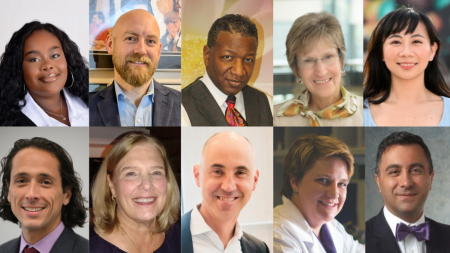
Case Western Reserve University faculty members have been in the news commenting on this global cultural moment, from the nutrition driving exceptional athletes to the way soccer bridges division.
We’ve pulled together some of the commentary CWRU faculty and staff experts have had on FIFA World Cup 2026.
Deepak Sarma
Inaugural Distinguished Scholar in the Public Humanities
Department of Religious Studies
College of Arts and Sciences
With 48 countries represented at the World Cup, players and their fans speak a wide range of languages. However, the language of their sport is common. Deepak Sarma described how sharing that commonality is what breaks down barriers.
“Soccer is a little bit like Esperanto,” Sarma said. “It's a shared language that lots of different people can understand and play together, right? And so communication and understanding about who is victorious, who's done well, it cuts across all kinds of cultures, nations.”
Amy Edwards
Associate Professor
Department of Pediatrics
School of Medicine
Just a few years post-COVID and amid news reports about Ebola outbreaks, many people remain wary of large gatherings. As tourists flood cities across the U.S. and our neighbors to the north and south, concerns about infectious disease risks echo. Amy Edwards offered insights on precautions visitors can take to protect themselves against a range of health concerns, such as respiratory viruses and foodborne illness.
“If I were going to go to the World Cup, I would make sure that I had all my routine vaccinations,” Edwards said. “Plus, I might consider, depending on my individual risk factors, whether I would get a spring COVID booster. A lot of high-risk individuals actually get two COVID shots each year, one in the spring and one in the fall.”
Curtis Bickham
Assistant Manager
Trainer
One to One Fitness Center
Playing a sport at such a high level is taxing on the body. Bickham emphasized the importance of recovery across different bodily systems for athletes, such as soccer players. He detailed the aerobic and anaerobic fitness required of soccer players, but also the mental load players carry and must address when they’re off the field.
“So the best thing that these soccer players can do is to get away from the media, family, and everything else that provides too much stimulus,” Bickham said. “So absolutely quiet, get off the phone, rehydrate, of course, all the physical stuff. But the best thing you can do for the nervous system is to calm it down and for it to know that you're safe—and that's the best recovery tool for it.”
Kristyen Tomcik
Assistant Professor
Department of Nutrition
School of Medicine
While exercise and training are critical components of an elite athlete’s routine, so too is the nutrition fueling their performance. Tomcik described the ideal nutritional balance for athletes, before and after a match. He also emphasized the importance of staying hydrated during play.
“When it comes to foods that can provide an edge mechanically or speed-wise or power-wise, there's no magic cure-all, there's no magic pill, there's no magic food that will automatically help an athlete become better,” Tomcik said. “These athletes have made it to the pinnacle of their sport through dedication, through training, through optimizing what works for them individually. Those are the sort of things that might help give a slight edge, but at the end of the day, good training, good nutrition, and good preparation are really the sort of keys to success for these athletes.”
Marjorie Edguer
Associate Professor
Jack, Joseph and Morton Mandel School of Applied Social Sciences
Competition is at the center of sports. However, they inherently sow community, both for those supporting a common team and those opposed. That is especially true of sports like soccer, which has a global following. Marjorie Edguer shared how sports fandom can combat loneliness. However, she cautioned against becoming so invested in a team that gambling and substance use become problems.
“We're all seeing each other as competitors, but also we want to know our competitors and we want to be friendly toward them. Watching a game together creates this instant sense of connection. We have a shared interest, a shared goal, a shared experience and this creates that sense of community between us because as humans we seek to have those kinds of connections,” Edguer said. “When we think about our social identities, it's an important piece of how we see ourselves and as humans we really want to have social identities that involve connection. That's an essential part of being human is having that sense of connection to others.”