

Doctoral Candidate Wins Epilepsy Research Award

Nrupen Pakalapati, a doctoral candidate in biomedical engineering at Case Western Reserve University and researcher in the Neural Engineering Center (NEC), won the American Epilepsy Society’s 2025 Grass Foundation Young Investigator Award. Pakalapati’s abstract, entitled “Single White Matter Electrode for Bilateral Epileptic Activity Detection and Monitoring,” was one of eight selected for the award from a pool of more than 1,500 submissions. The groundbreaking research, conducted under the supervision of Dominique Durand, director of the NEC and the Elmer Lincoln Lindseth Professor in Biomedical Engineering, pioneers a more efficient and less invasive method for monitoring epileptic seizures.
PhD Student Wins Trainee Professional Development Award
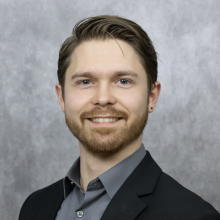
Jonah Mudge, a doctoral candidate in biomedical engineering at Case Western Reserve University, won the Society for Neuroscience’s 2025 Trainee Professional Development Award. The award is given to applicants who have demonstrated commitment to rigorous scientific inquiry and dedication to local advocacy and outreach efforts in neuroscience. Mudge is a student in Assistant Professor Emily Graczyk’s lab, where he characterizes proprioceptive percepts in people with upper limb loss who have been implanted with composite flat interface nerve electrodes (C-FINEs). “Jonah is excited to make connections and broaden his understanding of proprioception with the support of this award,” says Graczyk.
Grad Student Lands on “20 in Their 20s” List

Thomas DeSilvio, a doctoral candidate in biomedical engineering at Case Western Reserve University, was included in the Crain’s Cleveland Business 2025 list of “20 in Their 20s” for his commitment to advancing the frontiers of medical imaging and computer vision by developing state-of-the-art deep learning tools for computer-aided diagnosis and detection, disease characterization and treatment evaluation. DeSilvio is a member of several labs and centers, including the Imaging Informatics for Interventions (INVent) Lab and the Center for AI Enabling Discovery in Disease Biology (AID2B). He was recently awarded the National Cancer Institute’s Ruth L. Kirschstein National Research Service Award (NRSA) for Individual Predoctoral Fellows (F31) for his project entitled, “Pathologically Interpretable Computational Imaging Predictor for Response to Total Neoadjuvant Treatment in Rectal Cancers.”
Spring Graduate Honored as Finalist for ISMRM Young Investigator Award
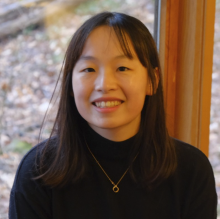
Yuran Zhu, who earned her PhD in biomedical engineering at Case Western Reserve University in June, was one of eight finalists selected by the International Society for Magnetic Resonance in Medicine for its 2025 Young Investigator Award. Her recognized work, “3D MR Fingerprinting for Dynamic Contrast-Enhanced Imaging of Whole Mouse Brain”, enables quantitative assessment of solute transport and clearance across the entire mouse brain. The research was conducted as part of her dissertation project in the lab of Xin Yu, the F. Alex Nason Professor II of Biomedical Engineering. In July, Zhu joined Nudge as a research scientist, where she is developing technologies for MRI-guided brain interfacing.
Dual-Degree Student Awarded NHLBI Training Fellowship
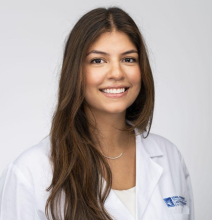
Prerna Singh, an MD/PhD candidate in biomedical engineering at Case Western Reserve University, was awarded the Ruth L. Kirschstein National Research Service Award (NRSA) Individual Fellowship for Predoctoral Dual-Degree Training Programs (F30) Fellowship from the National Heart, Lung, and Blood Institute (NHLBI). Singh’s research aims to improve early detection of heart disease using deep learning to automatically detect small, low-density coronary artery calcifications below the current detection thresholds in CT calcium exam scores.
“These tiny calcifications are linked to vulnerable plaques, which can cause heart attacks, especially in younger individuals,” says Singh, who works in the lab of Dave Wilson, the Robert J. Herbold Professor of Biomedical Engineering and Radiology. “Identifying these small calcifications can improve early heart disease detection and guide precision preventative therapies, with the ultimate goal of reducing deaths from heart disease.”
Post-Doctoral Researcher Attends Microneurography Workshop

Rohit Bose, a post-doctoral researcher in the Department of Biomedical Engineering at Case Western Reserve University, won an award from Linkoping University in Sweden to attend its microneurography workshop. Bose conducts research in Assistant Professor Emily Graczyk’s laboratory, where his main focus is developing innovative invasive and noninvasive technologies to deliver meaningful sensory feedback to individuals with prostheses. During the workshop, Bose learned how to implement a new technique recording from nerves with tiny electrodes.
PhD Student Wins Poster Competition
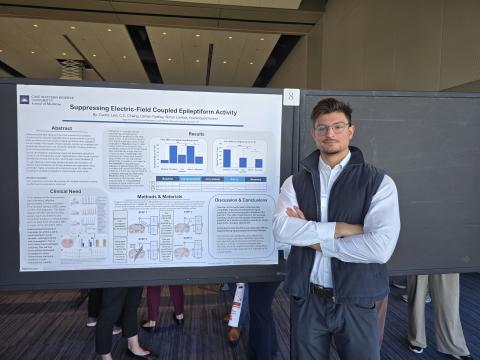
Cedric Levi, a doctoral candidate in biomedical engineering at Case Western Reserve University, won the outstanding poster award at the university’s third annual Graduate and Medical Student Research Day in October. The poster, entitled “Suppressing Electric-Field Coupled Epileptiform Activity,” presented research on medial-temporal lobe epilepsy conducted by Levi at the Neural Engineering Center (NEC). Building upon prior studies that show epileptic activity can propagate non-synaptically across tissue cuts via electric field (EF) coupling, Levi used a “Faraday cage” concept using perforated, 20um thick conductive metal films to short-circuit this field and block EF-coupled propagation in hippocampal mouse slices. Levi is mentored by Dominique Durand, director of the NEC and the Elmer Lincoln Lindseth Professor in Biomedical Engineering.