

Welcome to the CCIR Spotlight Series! In this series, we celebrate the vibrant community of researchers, engineers, and visionaries driving groundbreaking innovations at the Case Western Reserve University Center for Imaging Research (CCIR).
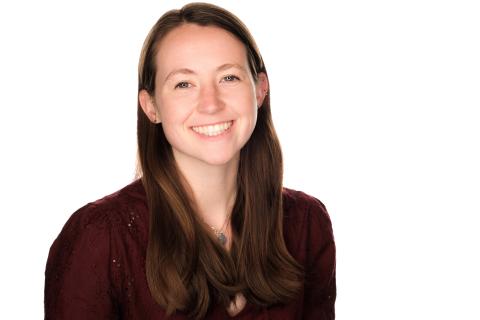
Sarah Garrow
PhD Candidate, Department of Biomedical Engineering
We are pleased to share this installment of the CCIR Spotlight Series featuring Sarah Garrow, a PhD candidate in Biomedical Engineering working with mentor Will Grissom, PhD. Sarah's research is in interventional MRI, and the overall goal of her work is to improve our ability to image near metal, which is often required in interventional procedures but can significantly degrade images. Sarah has served as Professional Development Chair and President of the CCIR Trainee Council.
Q&A with Sarah Garrow
What is the broader impact or significance of your research findings, or what future impact do you hope to achieve?
I hope to push the needle a tiny bit forward on what's possible for real-time interventional MRI procedures.
What is the most valuable piece of advice you've received from your mentor/PI?
To take really good notes.
In 5 years, where do you see yourself professionally?
I would love to be working on a team of R&D scientists working on hard technical problems with real world impacts.
The most rewarding aspect of being a member of CCIR is...
The community! In addition to being a huge benefit to my research and scientific development, the CCIR has been a great way to get to know more (really great!) people on campus.
We are glad to recognize Sarah Garrow in this CCIR Spotlight and celebrate her contributions to the CCIR community.
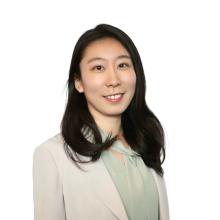
We’re delighted to share this spotlight of Dr. Lu’s research focus and a Q&A about the scientific impact of her work, best advice she’s received, and membership in CCIR. Dr. Lu joined CWRU and CCIR in May 2026.
Q&A with Dr. Lu
Dr. Ning Lu is an ultrasound scientist working to improve ultrasound imaging, therapy, and instrumentation to address critical and unmet clinical needs. One major area of her work is histotripsy, a non-invasive, non-thermal, and non-ionizing ultrasound therapy that mechanically fractionates target tissue using acoustic cavitation generated by short, high-intensity ultrasound pulses. Since receiving FDA approval in 2023, histotripsy has been performed in more than 90 hospitals worldwide for the treatment of liver cancer and has demonstrated an abscopal immune response.
Despite its significant clinical potential, limitations in imaging guidance and real-time feedback remain major challenges. As a result, there are cases that could be treated more effectively, as well as many patients who could potentially benefit from this therapy but are not currently viable candidates. Fundamentally, if the target cannot be seen clearly, it is difficult to treat it precisely. For example, pancreatic tumors are particularly challenging to visualize using traditional imaging methods. In many cases, there is also a need to dynamically and quantitatively visualize treatment progression in 3D, which is not currently available.
The central question Dr. Lu’s lab aims to address is how to precisely guide and dynamically monitor treatment by leveraging ultrafast ultrasound imaging, potentially in combination with other imaging modalities or contrast agents. Addressing these technical gaps will not only enable high-precision, personalized histotripsy for new applications such as the brain and pancreas and for a broader patient population but will also enhance the ability to interrogate and optimize its oncologic effects.
What is the broader impact or significance of your research findings, or what future impact do you hope to achieve?
Histotripsy is just one example within the broader landscape of image-guided interventions. My hope is that the technologies we develop for histotripsy can be extended to improve other focused ultrasound therapies and image-guided interventions, including drug delivery, neuromodulation, and many more. My long-term goal is to advance ultrasound technology for early diagnosis, high-precision therapy, and continuous health monitoring across a wide range of applications, including cancer, neurological diseases, cardiovascular diseases, and beyond. What motivates me most each day is the opportunity to really help more patients and to make ultrasound a more accessible and effective solution—as a treatment, or even eventually as a cure.
What is the most valuable piece of advice you’ve received in your research career?
Challenge yourself with hard problems and work hard at them. Don’t rush. Write papers that will make you proud when you look back on them, whether that is five years or twenty-five years from now.
What is the most rewarding aspect of being a member of CCIR?
… being surrounded by, and constantly inspired by, a highly interdisciplinary and collaborative group of people. Every day I feel that I am learning something new, and whenever I need expertise outside my own field, there are always people to talk to. This environment has really broadened my perspective and reshaped the way I approach scientific problems, leading to many new ideas and research directions I am now excited to explore!
Dr. Ning Lu is actively recruiting a PhD student, postdocs, and research assistants. For questions or inquiries, please reach out to Dr. Lu via email.
Originally posted July 2026.
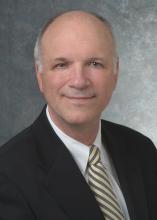
We’re pleased to share this installment of the CCIR Spotlight Series featuring David Wilson, PhD, Robert Herbold Professor of Biomedical Engineering and Radiology at Case Western Reserve University. Dr. Wilson is a founder of CCIR and a member of the cancer imaging program of the Case Comprehensive Cancer Center.
Dr. Wilson’s current research focuses on using AI to create what he describes as the equivalent of the mammogram for cardiovascular disease. In his own words, “The idea is to use low-cost (no cost at UH) CT calcium score exams to detect current and predict future cardiovascular diseases. Currently, we are working to predict atherosclerotic coronary artery disease, heart failure, aortic valve disease, and more. Image-based screening of cardiovascular disease could be important - cardiovascular diseases are the number one cause of death. Regarding the mammogram, it is important to note that many more women will die of cardiovascular disease than breast cancer.”
Q&A with Dr. Wilson
What is the broader impact or significance of your research findings, or what future impact do you hope to achieve?
Improved early image detection of cardiovascular disease could create an opportunity for timely therapeutic interventions and sustained treatments. My dream is a CT calcium score exam for all. Our hope is to reduce pain and suffering from cardiovascular disease.
What is the most valuable piece of advice you’ve received in your research career?
My father told me, “If you love your job, you never have to work another day in your life.” He taught civics and was a high school basketball coach. I consider it extraordinary that I can do what I love and make a living at it! I am indebted to CWRU.
What is the most rewarding aspect of being a member of CCIR?
…the research ideas that have guided my directions. I have learned from many research collaborations and from many PhD committees on which I have served. Immediately, I can map my interests and growth in interventional MRI, cryo-imaging, cardiovascular imaging, and AI to people I have known through CCIR. Somehow, I believe every little tidbit we learn helps us approach the next problem. Clinicians such as Drs. Robert (Chip) Gilkeson, Sanjay Rajagopalan, and Jonathan Lewin have really impacted my career trajectory.
I was there in the early days. It is wonderful to see how imaging has grown at CWRU: significant research funding, incredible facilities, numerous patents, startups, many PhD students and postdocs, and a large vibrant faculty! Our most important products are the graduates of our program who have gone on to become leaders in industry and academia. It has been an honor to have directed the Biomedical Imaging T32 program in BME, which has now supported over 70 PhD students.
Dr. Wilson is always interested in hearing new ideas for application of AI in medical imaging! Please reach out to Dr. Wilson via email.
Originally posted July 2026.