

For more than a century, the Department of Physiology and Biophysics at Case Western Reserve University has contributed to advances in biomedical research, education and scientific discovery. From pioneering physiology instruction and Nobel Prize-winning research to nationally recognized training and innovation in cell physiology and biophysics, the department has played an important role in shaping the field and advancing the School of Medicine’s mission.
1888–1918: John Macleod and the Early Years

The Department of Physiology and Biophysics traces its origins to the Medical Department of Western Reserve College, which was established to strengthen the scientific training of medical students. In 1888, the department introduced the first required laboratory course in physiology in the United States.
The department gained early prominence under its first chair, Scottish physiologist and biochemist John Macleod, who joined the faculty in 1903. Macleod received his medical training at the University of Aberdeen in Scotland and later served as demonstrator of physiology and lecturer of biochemistry at the London Hospital School. He led the department until 1918 and emphasized the role of chemistry in physiology during his tenure. A few years after leaving Western Reserve College, in 1923, he received the Nobel Prize in Physiology or Medicine as co-discoverer of insulin. He also authored the first edition of the successful textbook Physiology and Biochemistry in Modern Medicine in 1918.
1918–1953: Carl Wiggers and Cardiovascular Research

The department’s tradition of excellence in teaching and research continued under the leadership of Carl Wiggers, MD, who chaired the department from 1918 to 1953. During this time, the Department of Physiology became a nationally recognized center for cardiovascular research, attracting students and investigators from across the country. Wiggers is best known for his discovery of a new method of registering blood pressure and for the invention of the Wiggers diagram, which remains widely used in medical education today. In recognition of his contributions to cardiovascular physiology, he received the Lasker Award in 1955.
1953–1986: Transition and Curriculum Change Under George Sayers and Richard Recknagel


Between 1950 and 1986, the Department of Physiology experienced a decline in prominence under the leadership of George Sayers (1953–1976) and Richard Recknagel (1976–1986). In part, this decline resulted from the School of Medicine’s shift to a new integrated curriculum, which eliminated department-based teaching, including physiology instruction. At the same time, rapid advances in other scientific disciplines increased interest in programs such as biochemistry.
1986–2007: Expansion Under Antonio Scarpa

Under the leadership of Dean Richard Behrman, MD, the School of Medicine’s basic science departments underwent a period of revitalization, and in 1986, Antonio Scarpa, MD, PhD, was appointed chair of the Department of Physiology. Scarpa led a major expansion and restructuring of the department, including a broader focus on cell physiology and biophysics. To reflect the growing importance of biophysical methods—including electrophysiology, imaging and protein structure analysis in the study of biomolecules—the department was renamed the Department of Physiology and Biophysics.
The department later moved to its current location, a newly renovated space, and became a nationally recognized center for cell physiology and biophysical research. At its peak, the department included up to 26 primary faculty supported by national grants, three training programs funded by the National Institutes of Health (NIH) and up to 40 graduate students. Scarpa left the department in 2005 to become director of the NIH Center for Scientific Review. Cathleen Carlin served as interim chair until 2007. The same year, The Chronicle of Higher Education ranked the department No. 2 nationally among academic centers offering doctoral programs in physiology.
2007–2025: Growth Under Walter Boron

To continue its tradition of excellence in research and teaching, the School of Medicine recruited Walter Boron, MD, PhD, from Yale School of Medicine in 2007 to serve as chair of the Department of Physiology and Biophysics. Boron is internationally recognized for his research in acid-base regulation and gas channels and is co-editor, with Emile Boulpaep, of the textbook Medical Physiology.
Under Boron’s leadership, the department recruited 12 tenured or tenure-track faculty members, established the Master of Science in Medical Physiology program, created two core facilities and completed extensive renovations and infrastructure expansions.
Today, the department includes 57 faculty members: 21 primary faculty, 19 secondary faculty, 14 adjunct faculty and three emeritus professors. It also includes 15 postdoctoral fellows and scholars, 11 PhD research staff members, 15 students in the PhD program and more than 320 students in the Master of Science in Medical Physiology post-baccalaureate program.
2025–Present: Continued Progress with Xin Qi
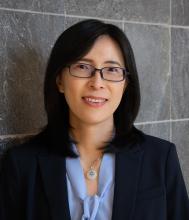
Xin Qi, PhD, the Jeanette M. and Joseph S. Silber Professor of Brain Sciences, officially became the current department chair in April 2026 after serving as interim chair since February 2025. Qi is widely recognized for her groundbreaking research and therapeutic strategies that offer promising new directions for treating neurodegenerative disorders such as Alzheimer’s, Parkinson’s, Huntington’s and ALS. Qi guides the department with vision and steady leadership, supporting faculty and trainees while advancing the School of Medicine’s research and educational missions. Her commitment to fostering collaboration and innovation has helped position the department for continued growth and success.