

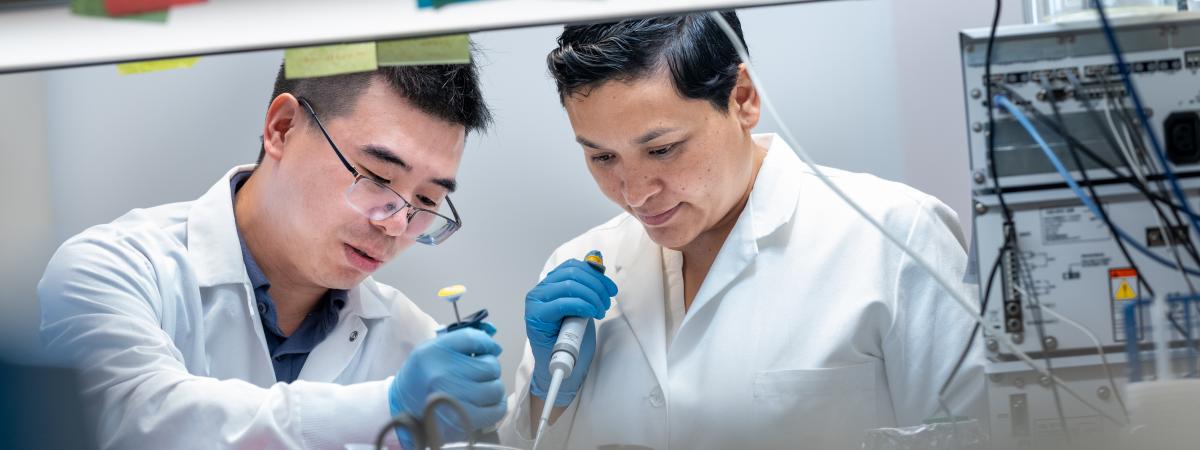
From Organelle to Organisms: Mechanism to Medicine
The PhD in Physiology and Biophysics at Case Western Reserve University provides interdisciplinary doctoral training for students pursuing research careers in the biomedical sciences. Housed within the Department of Physiology and Biophysics, the program emphasizes quantitative approaches, advanced instrumentation and translational research focused on understanding biological processes in health and disease.
As a student in the program, you will engage in research spanning molecular, cellular and systems physiology, with opportunities to study the cardiovascular, nervous and renal systems as well as diseases affecting those systems, including cancer and neurodegenerative disorders. Through collaborative research, laboratory rotations and individualized mentorship, you will develop the scientific and technical expertise needed for careers in academia, industry and biomedical research.
Program Features
- Fully funded doctoral training, including a competitive stipend, health insurance and full tuition waiver
- Interdisciplinary curriculum integrating physiology and biophysics across molecular, cellular and systems-level research
- Quantitative and instrumentation-intensive research training
- Three laboratory rotations followed by thesis lab selection
- Elective coursework opportunities across Case Western Reserve University
- Research opportunities in structural biology, molecular medicine, cell biology and electrophysiology
- Mentorship from nationally and internationally recognized faculty
- Active departmental seminar series featuring internationally renowned researchers who engage students through seminars, weekly lunch meetings and special Q&A sessions
- Collaborative research environment with interdisciplinary and international research partnerships
Research and Training
Graduate researchers are central to the department’s mission to advance scientific discovery and understanding. The curriculum integrates core concepts in physiology and biophysics while emphasizing the department’s areas of research expertise.
Upon entering the program, students complete foundational coursework in cell and molecular biology, integrated physiology and biophysics, and systems physiology before focusing primarily on research. Students complete laboratory rotations during the fall term, allowing them to identify and join a thesis lab early in their doctoral training.
Coursework is largely completed by the second year through required and elective courses, after which students focus primarily on research. Each student works with a thesis committee that meets twice a year, with the goal of completing the program within six years.
Research within the department combines molecular, cellular and systems-level approaches to investigate biological function and disease. Students work alongside faculty conducting research in cardiovascular, nervous and renal physiology, structural biology, molecular medicine and electrophysiology, with many laboratories focused on translational approaches to diseases including Alzheimer’s disease, cancer and hypertension.
The department also maintains an active research seminar series featuring internationally recognized scientists who engage with students through seminars, discussions, weekly lunch meetings and mentoring opportunities.
Funding and Student Support
All full-time PhD students receive a competitive stipend, health insurance and a full tuition waiver. Teaching is not required, allowing doctoral students to focus on coursework and research training.
Students may enter the PhD in Physiology and Biophysics program either through direct application or through the Case Western Reserve University Biomedical Sciences Training Program (BSTP).