CWRU University Farm nourishes campus and community
The 400-acre site is also a biological field station, recreational landscape and living classroom
Before fresh tomatoes top a campus salad or sauteed garlic enlivens a pasta dish, a portion begins growing in the rich soil of the Case Western Reserve University Farm.
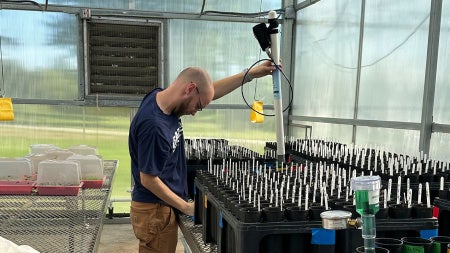
Spanning more than 400 acres, the property is a biological field station, recreational landscape, living classroom and working farm, yielding 8,000 to 12,000 pounds of produce each year. Nearly 40 varieties of fruits, vegetables and herbs grow alongside beehives (for honey) and maple trees (for syrup). A team of full-time horticulture experts, student interns and volunteers harvests the bounty each year.
While much of its output is used in campus dining halls, the farm’s impact extends far beyond those eateries. Farm produce is also sent to the CWRU Department of Nutrition’s teaching kitchen, university farm stands and local restaurants. And more than 20% is provided free to area residents through the CWRU Community Pantry and MetroHealth’s Food as Medicine clinic.
But the harvest story doesn’t end there: More than 200,000 pounds of campus dining-hall food waste is composted at the farm each year, transforming yesterday’s leftovers into soil nutrients for tomorrow’s harvest.
“It’s fulfilling to know that the efforts of an entire growing cycle come full circle here,” said Missy Ackerman, the farm’s assistant director.
Illustration by Petra Sitaru