A CWRU year in review: Take a look back at some of the top stories at CWRU in 2025
A lot happens at Case Western Reserve University in a single calendar year. We wish graduates “good luck” in May as they take the next steps in their lives and months later, welcome new students as they begin their college journeys in August and greet alumni when they return for homecoming. But, look beyond the surface and there are research breakthroughs, major national and international news moments, and special celebrations and traditions that take place.
Year-round, we tell stories of the students, faculty, staff and community members who shape our institution. It’s impossible to summarize everything that has happened at CWRU in 2025, but we took a look back at some of the stories that shaped our year.
January
Four Case School of Engineering faculty receive highest honor from U.S. government
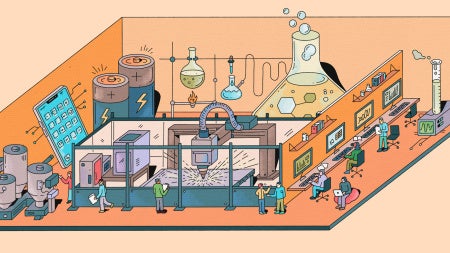
Four Case School of Engineering faculty members were among nearly 400 scientists and engineers who received the Presidential Early Career Award for Scientists and Engineers in January from former President Joe Biden. A. Bolu Ajiboye, Christine Duval, Burcu Gurkan and Steve Majerus were selected for this honor, the highest bestowed by the U.S. government on outstanding scientists and engineers early in their careers.
Case Western Reserve University School of Law becomes first law school in the U.S. to require legal AI education certification for all first-year law students
Artificial intelligence has rapidly changed the landscape of nearly every facet of life, and the legal system is no exception. In January, Case Western Reserve University School of Law became the first U.S. law school to formally require AI education for its students. First-year law students are now required to complete certification that incorporates hands-on experience with AI-powered legal tools, while exploring the evolving landscape of AI regulations, ethical considerations and the future of legal technology.
February
CWRU launches bicentennial website; kicks-off yearlong celebration with campus events
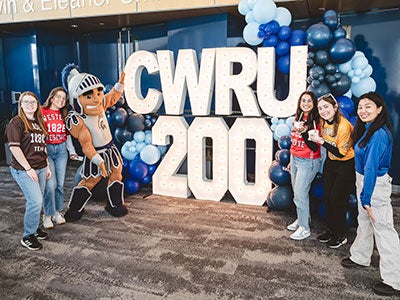
Case Western Reserve is celebrating a major birthday this year: 200 years since the founding of Western Reserve College in 1826. To mark this momentous occasion, CWRU launched a bicentennial website to explore the university’s history and share updates on upcoming events—including a February 2026 birthday celebration.
Spartan Sweethearts
To commemorate Valentine’s Day, we caught up with couples whose love stories originated at CWRU. We spoke with a couple who met at pre-orientation events, another whose family has an established legacy of Spartan romance and others whose student organization involvements brought them together.
March
Watch: CWRU’s class of graduating medical students celebrate Match Day 2025
Each March, soon-to-be medical school graduates learn where the next stop on their professional training will be during Match Day. Fueled by anticipation after years of dedicated study, Match Day is full of heightened emotions and excitement about the future.
How cells respond to stress is more nuanced than previously believed
School of Medicine researcher Maria Hatzoglou’s team made a research discovery that could lead to new targets for cancer therapy and neurodegenerative diseases. Their groundbreaking research, published in Nature, suggests this adaptive response to stress—which the researchers call “split-integrated stress response” or s-ISR—could potentially be exploited to kill cancer cells and more effectively treat neurodegenerative diseases.
April
How Case Western Reserve’s graduate programs rank on latest U.S. News & World Report list
U.S. News & World Report released its annual rankings of graduate programs in April, with several CWRU programs seeing gains. The School of Medicine maintained its “Tier 1” position for medical schools for research and several specialty programs across schools also had improved rankings.
The rise of robotics: CWRU projects helping shape our future
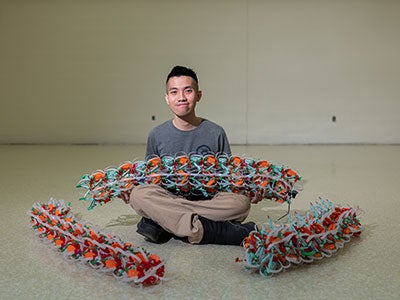
In labs across campus, researchers are exploring how robots can reshape our daily lives. In the Social and Physical Human-Robot Interaction (SaPHaRI) Lab at Case School of Engineering, Alexis E. Block’s research team designs, builds, and programs robots for unique social and physical interactions with humans. Also at the engineering school, Kathryn “Kati” Daltorio’s team is working to create “soft robots”: creations that bridge a gap between the design and function of biological creatures and manufactured robots. Students also get in on the action, with members of CWRUbotix, the university’s student-run robotics club, also hard at work driving robotics projects forward.
May
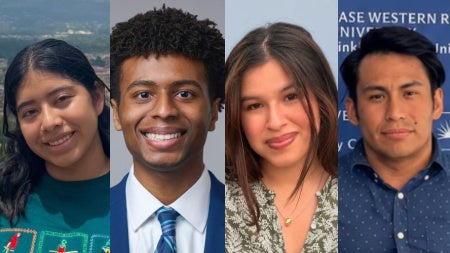
Get to know eight members of CWRU’s graduating Class of 2025
As the Class of 2025 prepared for commencement in May, we highlighted an exceptional student from each of the university’s schools. These students exemplify the ambition CWRU students demonstrate in their studies, extracurricular activities and professional development.
Potential new treatment for Alzheimer’s disease, other neurodegenerative conditions
School of Medicine researchers Andrew Pieper and Sanford Markowitz co-led a study that uncovered a promising new drug to treat Alzheimer’s disease. Published in Proceedings of the National Academy of Sciences, their study also identified a new target in the brain and showed promising results in mouse models.
June
Pancreatic cancer vaccines eliminate disease in preclinical studies
Biomedical engineer Zheng-Rong (ZR) Lu and immunologist Li Lily Wang teamed up to develop vaccines targeting pancreatic cancer that could eliminate the disease, leaving a patient cancer-free. So far, the vaccines have achieved dramatic results in studies with preclinical models.
CWRU undergraduate student Sara Desai receives prestigious Barry Goldwater Scholarship
Sara Desai, now a fourth-year student majoring in biochemistry with a minor in applied data science, landed a 2025 Barry Goldwater Scholarship, a highly competitive national scholarship for undergraduate students who intend to pursue research careers in science, mathematics or engineering.
July
On his 103rd birthday, Case Western Reserve University School of Medicine’s Howard Tucker has no plans to slow down
Case Western Reserve University has an unexpected viral star: Howard Tucker, a 103-year-old neurologist, Navy veteran, lawyer and part-time lecturer at the School of Medicine. He gained a following on TikTok when his grandson, Austin, and filmmaker, Taylor Taglianetti, began documenting Tucker’s life in a film called What’s Next?
Interning with intention: Inside CWRU students’ summer internships
Many students have meaningful experiences during their summer breaks at internships. These opportunities allow them to continue their education in real-world settings. We highlighted several students at CWRU who took on summer internships this year.
August
Case Western Reserve University researcher earns prestigious Individual Biomedical Research Award from The Hartwell Foundation to explore gut-brain link in autism
School of Medicine’s Marissa Scavuzzo wants to understand why many children with autism spectrum disorder experience chronic digestive issues—and how to treat it. This year, The Hartwell Foundation recognized her research with an Individual Biomedical Research Award; Scavuzzo was just one of 10 researchers in the country to receive this honor.
Get to know CWRU’s Class of 2029 by the numbers
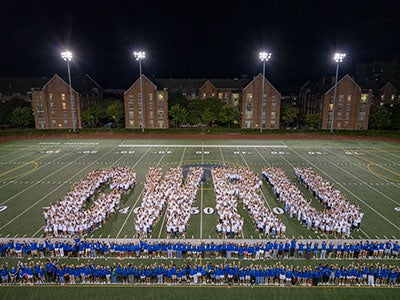
Year after year, Case Western Reserve draws an impressive pool of new undergraduate students—and 2025 was no exception. From 39,000 applications, CWRU welcomed 1,650 new students in August.
September
Case Western Reserve holds overall spot in ‘U.S. News’ ranking of national universities
In 2025, Case Western Reserve University maintained its position among national universities—#51—with some modest movement in certain specialties, according to the latest rankings from U.S. News & World Report.
Case Western Reserve named a national ‘Dream School’
In addition to traditional rankings, prospective students can turn to other resources when deciding where to apply to college. Earlier this year CWRU was named one of 75 “Dream Schools” in journalist Jeff Selingo’s new book Dream School: Finding the College That’s Right for You, earning a spot as an institution that offers strong career outcomes, accessible admissions and exceptional student experiences.
October
Watch: Spartans return for Homecoming and Reunion Weekend
More than 2,400 alumni, students, families, faculty, and community members reconnected across 152 events during Homecoming and Reunion Weekend—marking its highest attendance since the COVID-19 pandemic.
Kids, courts and care: How CWRU professor Eileen Anderson protects vulnerable youth across Ohio
Eileen Anderson is on a mission to better support vulnerable youth who encounter the legal system for cases such as custody disputes, abuse or neglect proceedings, or foster care hearings. She has worked to help strengthen legal education and training for guardians ad litem and related professionals by sharing her expertise in psychology, anthropology and neuroscience to build practical tools.
November
Cleveland’s famous sea monster gets a scientific update
More than 160 years after the discovery of Dunkleosteus terrelli, a prehistoric sea monster that once roamed the shallow sea above present-day Cleveland, graduate student Russell Engelman made new scientific discoveries about this predator.
$8 million gift from Shaughnessy family solidifies Case Western Reserve’s status as nurse leadership destination
Frances Payne Bolton School of Nursing received an $8 million matching gift from the Shaughnessy family to further Marian K. Shaughnessy’s, DNP, RN (NUR ’85, ’17), vision for a leadership academy that would redefine the role of nurses in healthcare policy.
December
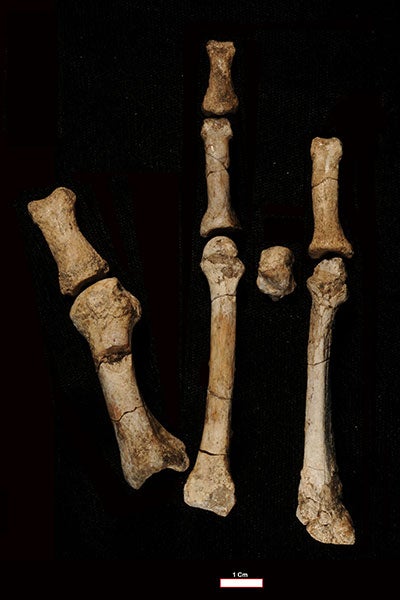
Ancient cousins: New evidence that two early human species lived side by side
After years of careful detective work, a research team determined that foot bones found in Ethiopia’s Afar region belonged to Australopithecus deyiremeda, an early human species that lived side by side with the same species as the famous fossil Lucy. CWRU researcher Beverly Saylor contributed to the work.
Discovering America’s ‘epilepsy belt’: First-of-its-kind national study reveals national regions with high epilepsy rates among older adults
Researchers completed a national study mapping epilepsy incidence rates among older adults in the United States and identified key social and environmental factors associated with the neurological condition. The analysis revealed that epilepsy cases among adults aged 65 and older were significantly higher in parts of the South—including Louisiana, Mississippi, East Texas and central Oklahoma—compared to other regions.