A year of discovery: 10 research breakthroughs at CWRU
From advancing precision medicine and examining how nail fungus affects various sports to investigating multilingual hearing behavior in noisy environments, researchers at Case Western Reserve University push the boundaries of discovery across labs, clinics and collaborative spaces each day.
Throughout 2025, those who work and study at CWRU tackled some of today’s most pressing challenges—developing new therapeutic frameworks, leveraging artificial intelligence in unexpected ways and uncovering insights capable of shaping the future of health, engineering and society.
To learn about 2025 research breakthroughs that took place across campus, we spoke with several members of the CWRU community, who gave their insight.
Read on to hear from 10 students, postdoctoral scholars and faculty members.
Answers have been edited for clarity and length.
Gary Galbraith
Professor, Department of Dance, College of Arts and Sciences
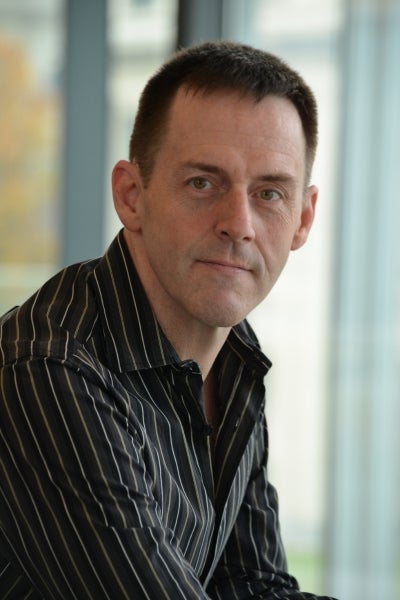
Gary Galbraith, MFA, created “Chambers of Painted Light,” a dance which integrated three AI-based technologies: a 3D Light Detection and Ranging based system, motion tracking Pan-Tilt-Zoom cameras and a body-limb detection system. Supported by the Expanding Horizons Initiative grant, this project served as a trial and proof-of-concept for motion and location tracking projects around campus and established a model for how professional dance companies might incorporate similar technologies in future performances.
Q. What is the significance of your research? How has this project shaped your perspective?
Galbraith: Dancers' joints can now be detected in 3D space in real-time without using any kind of wearable technology. This expands the art form’s potential by allowing a dancer to control theatrical elements—such as lighting, sound and holograms—through a highly-responsive technology network not being done anywhere else in the world. This project is another in a long line of technology-infused dances and all have taught me that technology integrated intelligently, ethically, aesthetically and sophisticatedly can challenge our sense of time and stimulate new ways of thinking that were not possible before.
Rubej Khan
Third-year PhD candidate, Department of Chemistry, College of Arts and Sciences
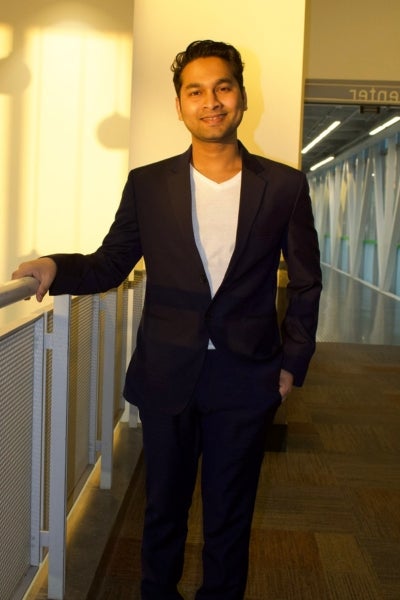
A graduate research assistant, Rubej Khan led a team of researchers in developing a new class of light-activated molecules—alloxazine derivatives—able to kill and slow the growth of cancer cells. Through an interdisciplinary approach, the team combined organic synthesis, ultrafast laser spectroscopy, theoretical modeling and in vitro cellular assays. The team also used CWRU’s High Performance Computing (HPC) resource for theoretical calculations to better understand how these molecules behave on ultrafast timescales and inside living cells.
Q. What are the potential impacts or future implications of your research findings?
Khan: Right now, our findings help advance the next generation of photo-activated molecules that are more target specific, less toxic and have absorbance in therapeutic windows. In the future, these multifunctional molecules could be integrated into clinical imaging, targeted drug delivery or even smart theranostic platforms that combine diagnosis and treatment in a single step.
Pavel Fileviez Perez
Associate Professor, Department of Physics, College of Arts and Sciences
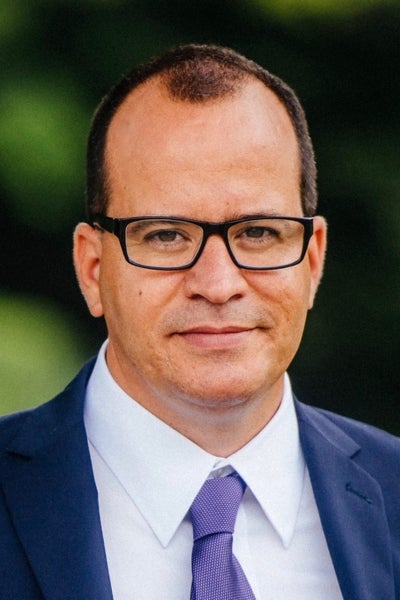
Earlier this year, Pavel Fileviez Perez developed a new theoretical framework that naturally generates neutrino masses—one of the major open problems in fundamental physics that cannot be addressed within the Standard Model of particle physics. In addition to accounting for neutrino masses, the theory predicts a new candidate for dark matter and proposes novel ways to test the mechanism behind neutrino mass generation at particle colliders. The theory also predicts distinctive gamma-ray signals arising from dark matter annihilation, which could provide valuable clues about the nature of dark matter.
Q. How did CWRU’s resources influence your research? What methods, technologies, or collaborations made this breakthrough possible?
Fileviez Perez: In theoretical particle physics, we use the mathematical framework of quantum field theory—based on the idea that the universe is described by quantum fields, with particles emerging as tiny excitations of these fields—to construct new theories that respect fundamental symmetries and are consistent with all existing experimental constraints. These tools were essential for developing this new theory for physics beyond the Standard Model and for predicting experimental signatures that can be tested in current and future experiments. I am fortunate to work with outstanding graduate students in the Department of Physics who contributed to this research. We also relied heavily on the HPC resource to perform the necessary numerical calculations.
Tazrin Islam Tonny
Third-year PhD candidate, Department of Chemistry, College of Arts and Sciences
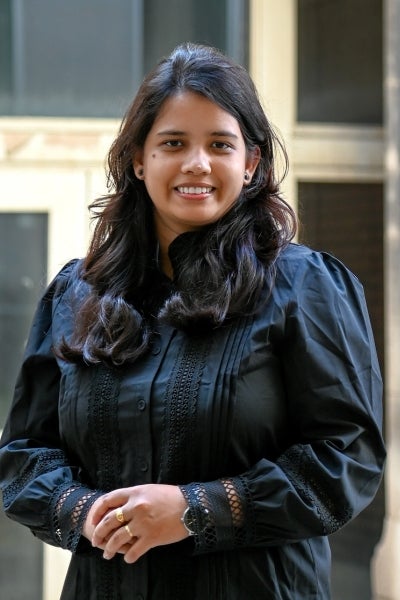
At CWRU, Tazrin Islam Tonny explores chemical origins of life by investigating excited-state dynamics of DNA and RNA nucleobases using femtosecond transient laser spectroscopy—a technique that tracks how excited electrons relax after being exposed to a specific wavelength of light. In 2025, Tonny and researchers at the Department of Chemistry became the first to experimentally confirm a twisted-intermediate pathway and its water-mediated reaction mechanism evidenced by a kinetic isotope effect in RNA-based uracil, with findings published in the Journal of the American Chemical Society.
Q. What is the significance of your research? How has this project shaped your perspective?
Tonny: These findings have direct relevance to modern medicine. Understanding how DNA and RNA bases absorb and dissipate energy informs the design of improved antiviral drugs, vaccines and molecular therapeutics. Ultimately, the goal is to explain how life’s molecular alphabet was chosen and to leverage that knowledge for future therapeutic innovation. This project expanded my technical and conceptual limits, strengthening my command of advanced experimental and analytical techniques and sharpening my ability to address complex scientific problems through a systematic, hypothesis-driven approach.
Douglas Brubaker
Assistant Professor, Department of Pathology, Center for Global Health and Diseases, School of Medicine
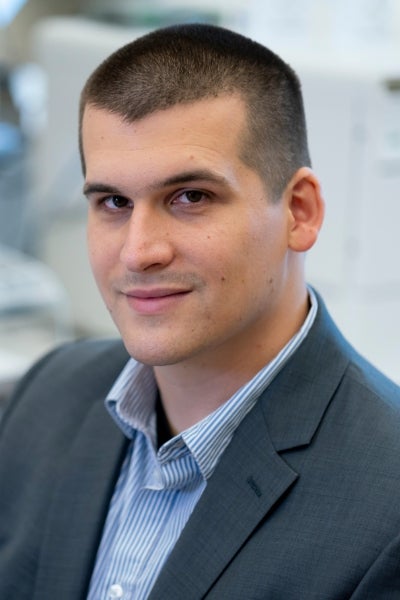
At the Brubaker Lab, Douglas Brubaker and researchers use computational methods to study how microbiomes regulate host biology, with a focus on the vaginal microbiome, women’s health and reproductive biology. This year, they developed a new approach that identifies microbiome-derived molecules with potential to treat endometrial cancer and serve as selective vaginal antibiotics.
Q. What new methods, technologies, or collaborations made this breakthrough possible?
Brubaker: Our computational method used many different kinds of large scale molecular experimental data from drug screening databases and clinical cohorts. Those experimental approaches that profiled the human response to tens of thousands of drugs when combined with molecular profiling tools of clinical samples were a powerful combination that our modeling work leveraged to generate these insights. Our study is really a great example of the synergy that happens when computational and clinical science meet.
Alexis Heath
Third-year PhD candidate, Systems Biology and Bioinformatics, School of Medicine
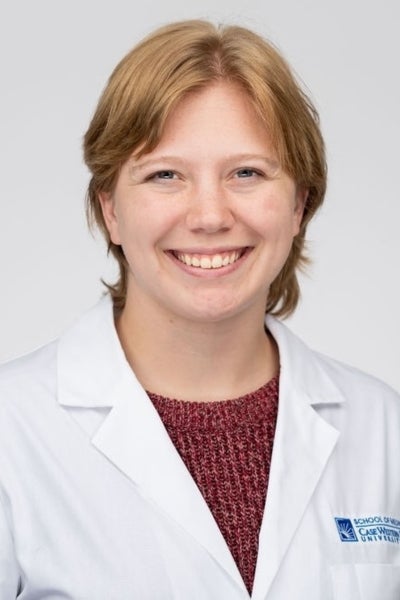
Hoping to redefine the roles of estrogen receptor alpha and beta, Alexis Heath helped create the largest single-cell atlas of endometriosis to date, integrating data from 557,000 cells. Using network modeling and pathway analysis, her work clarifies how estrogen signaling differs across cell types, helping explain why many treatments have fallen short and providing new molecular context for patient variability. This research lays the groundwork for more precise diagnostics and targeted therapies.
Q. How did CWRU’s resources influence your research?
Heath: CWRU’s high-performance computing resources made it possible to integrate and analyze over half a million single cells—something that simply wouldn’t be feasible without large-scale computational support. In addition, collaborations with University Hospitals OB-GYN clinicians provided critical clinical context and helped ensure that biological questions guiding the analysis were grounded in real patient experience. My dissertation committee has also been instrumental, offering expertise that spans computational biology, network modeling, estrogen signaling and reproductive science.
Reshma Mathew
Postdoctoral research associate, Department of Chemistry, College of Arts and Sciences

Part of the Crespo Research Group, Reshma Mathew, PhD, helped solve a long-standing mystery of how RNA is damaged by UV light. Using ultrafast electronic spectroscopy, Mathew’s team became the first to successfully capture this step, which provides fundamental insight needed to design more stable RNA-based therapeutics and materials in the future. Late October, these findings were published in the Journal of the American Chemical Society.
Q. What is the significance of your research? How has this project shaped your perspective?
Mathew: This research reveals, for the first time, the exact molecular event that triggers UV-induced damage in RNA. Until now, scientists understood the end products of RNA photodamage but not the fleeting structural change that initiates it. By capturing this short-lived
twisted intermediate and proving its reactivity with water, we filled a critical gap in our understanding of nucleic acid photochemistry. Watching a molecular event unfold in less than a picosecond reinforced my belief that fundamental curiosity, combined with the right tools and a supportive research environment, can lead to discoveries that change how we understand life at the most basic level.
Alessandro D'Amico
Fourth-year undergraduate student, Department of Chemical Engineering, Case School of Engineering
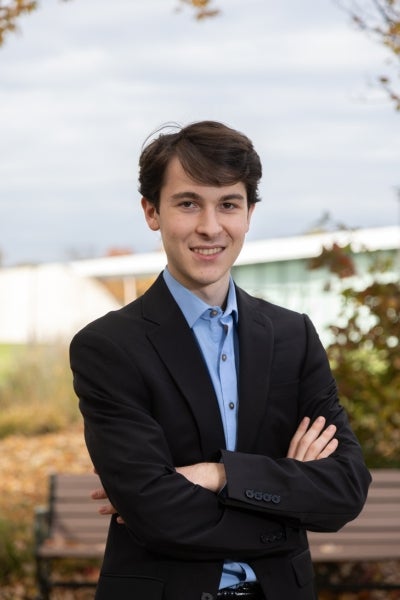
Under the guidance of Abhinendra Singh, assistant professor at the Department of Macromolecular Science and Engineering, Alessandro D’Amico and postdoctoral scholar Sidong Tu extended a technique used to study dry granular materials, such as sand or coffee grounds, to dense suspensions (such as wet coffee grounds or sand). Since rigid particles interact in liquid existing continuum and statistical models break down, they proposed an alternative way of looking at these dynamic and disordered systems, an insight that could improve understanding of how systems jam or fail in both natural and industrial settings.
Q. How has this project shaped your perspective?
D’Amico: Currently our impact is very limited because we are still studying an idealized version of real systems. Though we lack predictive statistical models for dense suspensions, our work is a step toward such understanding. This process shaped me as a scholar immensely since it was the first research project I participated in front to back. This project taught me how to read research papers, engage in computational research and go through the process of communicating my research findings—both through oral presentation and written reports.
Armin Aminimajd
Fourth-year PhD candidate, Department of Macromolecular Science and Engineering, Case School of Engineering
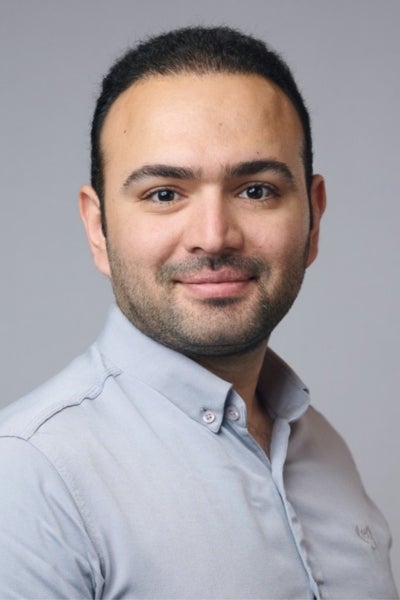
In 2025, Armin Aminimajd developed a machine-learning approach that makes it faster and less expensive to predict how dense particle suspensions behave. His research shows that graph neural networks can accurately infer frictional contact networks in near-jamming suspensions using only particle positions, learning from small, low-cost simulations and extrapolating to more complex conditions. This breakthrough reduces the need for computationally expensive force calculations and opens new possibilities for efficiently modeling and understanding complex suspension behavior in research and industrial applications.
Q. How did CWRU’s resources influence your research? What methods, technologies, or collaborations made this breakthrough possible?
Aminimajd: Machine learning and suspension simulations demand significant computational resources. On typical computers, a single simulation can take days. CWRU’s high-performance computing resources allowed me to run multiple simulations simultaneously, sometimes up to 50 at once, significantly speeding up the research process. HPC also provided the necessary platform and resources to implement machine learning runs.The project was supported by my advisors, Dr. Joao Maia, PhD and Dr. Singh, who provided guidance, equipment, and research environment.
Peter Thomas
Professor, Department of Mathematics, College of Arts and Sciences
With the help of Max Kreider—PhD candidate at the Department of Mathematics—Peter Thomas discovered a new way to understand the result of two noisy oscillators (or anything that acts like a rhythmic clock) synchronizing and its irregularities in rhythms. Looking ahead, Thomas aims to apply their insights to improve measuring the degree of synchronization between different parts of the human brain, as observed through electroenchephalogram (EEG) signals.
Q. What is the significance of your research? What are the potential impacts or future implications of your research findings?
Thomas: Physicists and mathematicians have long known how to quantify when two oscillators fall into a common rhythm, under the idealized assumption that the oscillators follow deterministic laws of behavior. But real oscillators—whether the swaying of a tall building
during an earthquake, or the brain waves detected by EEG signals—combine regular and irregular movements. One potential application of this finding is to develop better tools for analyzing EEG signals. This work could potentially lead to better ways of diagnosing and managing diseases such as epilepsy.