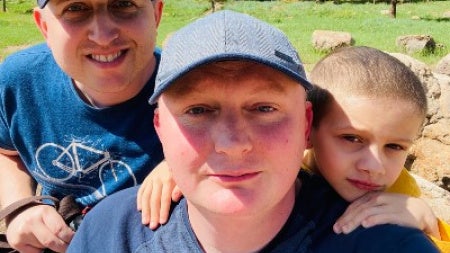
Get to know three veterans who served their country and now are making an impact at CWRU
Behind every military uniform is a story of service, sacrifice, resilience and personal growth. For many members of the armed forces, answering the call to serve can mean time away from family, missed milestones and putting the needs of others before their own. For others, it means leading alongside fellow service members, navigating unfamiliar challenges and developing a lifelong commitment to helping others.
In recognition of Veterans Day (Nov. 11), we’re highlighting three members of the Case Western Reserve University community, whose military experiences shape how they lead on campus—and beyond.
Read on to learn more.
Answers have been edited for clarity and length.
William Hall
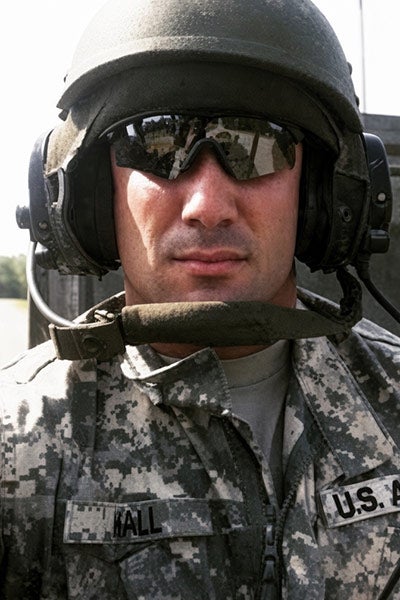
Second-year Master of Social Work student
Before pursuing graduate studies, William Hall spent several years in the U.S. Army as an Infantry Officer, where accomplishing a mission meant working efficiently and effectively to serve others. Now, as an online Master of Social Work student at the Jack, Joseph and Morton Mandel School of Applied Social Sciences, he is discovering that making an impact sometimes means slowing down, giving others room to grow and allowing them to lead.
Growing up in Akron, Hall found family and purpose through Cub and Boy Scouts. His scoutmaster, a World War II colonel who landed on Utah Beach during the Normandy invasion, inspired him to earn the rank of Eagle Scout at the age of 15. Hall later joined ROTC and was commissioned as an infantry officer.
Those early experiences continue to shape Hall's work at the Mandel School, where he has maintained a 4.0 GPA, written more than 500 pages of research-based work and completed nearly 1,000 internship hours, currently with the Jewish Community Legacy Project. In his role, he helps small and closing Jewish congregations preserve their histories, sacred spaces and causes.
"Ensuring a legacy is the charge of a servant, and it's an honor to carry it," said Hall, who expects to graduate in spring 2027.
Beyond the classroom, Hall serves on the university's Disability Advocacy Board, bringing his perspective as a disabled veteran, and as a Mandel School student ambassador, supporting prospective and newly admitted students. He also founded the Mudita Foundation, a nonprofit connecting Sri Lankan Americans in Northeast Ohio with community-led recovery projects in Sri Lanka. Its first project supports rebuilding efforts in Sippikalana, a village near Chilaw, after Cyclone Ditwah damaged its school and the residence of its Buddhist monk in late 2025.
"My scoutmaster showed me what a life of service looks like," he said. "Social work is how I keep living it."
Learn more about Hall.
What led you to pursue the MSW program at CWRU, and what do you hope to accomplish through your studies?
Hall: I left home at 14 on a scholarship to Western Reserve Academy, the original campus of Western Reserve College. For nine months a year it was the safest and most academically enriching place I had ever known. I like to say my life began there. When I decided to start a second career, there was no other place I wanted to begin again. Ultimately, I want to bring evidence and accountability to how we invest in under-resourced communities, so that the people who live there lead the work and the results last.
How has being in the army influenced your journey at CWRU?
Hall: Most people assume infantry leadership and social work have nothing in common. As a young leader, I took over a platoon that had just lost two soldiers. Two out of 50 is a devastating number, and it touched everyone. Part of my job was regular counseling sessions—honest evaluations of each soldier's strengths, where they could grow and a plan with real benchmarks.
The army rightly measures readiness in numbers, but I learned that care is what moves those numbers. The army's greatest asset is the individual soldier, and my job was to be there when they needed me. That meant their families, their complaints and making sure they knew they weren't alone and had an advocate. Looking back, I first practiced social work in that platoon leader's office. It's what brought me here.
In what ways have your experiences in the military and at CWRU shaped your future goals?
Hall: I see my future in public service, particularly congressional oversight that holds nonprofits and public programs accountable for real results, and immigration policy. After the army, I worked as a private investigator, and I love the pursuit of truth. The military gave me a framework of duty and integrity. Social work gave me an ethical compass. Together they point me toward a life dedicated to fairness and opportunity for every person.
What is one lesson you learned during your military service that continues to guide you in everyday life?
Hall: My commissioning officer was General David Petraeus, a giant of a leader. The first thing he told us was that we are servants. No one is beneath us, and the higher the rank and the deeper the responsibility, the more we owe to those we serve. I carry that everywhere: to clients, constituents, my family and my community. It's why I treat everyone the same. That's how we stay honest and ethical. Guilt, shame and grief are heavy companions that travel with all of us. The way to put them down is to set our ego aside and give every person the same positive regard.
Hunter Edwards
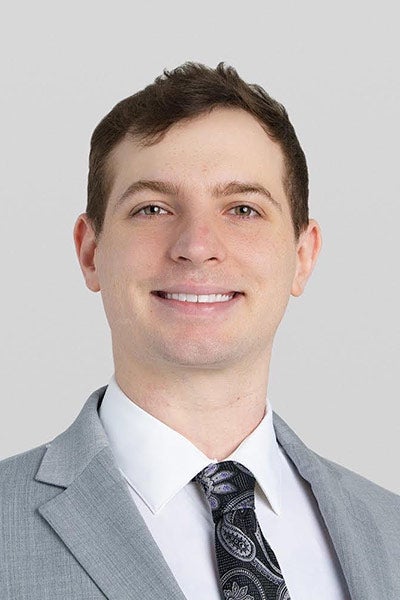
Instructor for critical care clinicals
From the operating room to the intensive care unit, Hunter Edwards wears several hats at Cleveland Clinic. He may spend the day shadowing a certified registered nurse anesthetist (CRNA), gaining insight into anesthesia practice, or teaching nursing students in critical care, helping them strengthen their clinical knowledge and confidence.
Originally from Amarillo, Texas, Edwards joined the U.S. Marine Corps immediately after high school, inspired by his stepfather's military service. Today, he works as a charge nurse in Cleveland Clinic's Cardiovascular Intensive Care Unit and serves as a clinical instructor at Frances Payne Bolton School of Nursing.
This June, Edwards will return to the nursing school as a student in its Doctor of Nursing Practice Nurse Anesthesia program, transitioning from educating future nurses to advancing his own clinical expertise.
Outside the clinical setting, Edwards is prior membership chair for the American Association of Critical-Care Nurses Lake Erie Chapter and the American Association of Nurse Anesthesiology's Professional Development Committee. He also participates in research exploring artificial intelligence in graduate healthcare education.
Looking ahead, Edwards hopes to specialize in adult or pediatric cardiothoracic anesthesia, where he can continue developing his expertise while caring for patients undergoing some of the most complex surgical procedures.
Get to know Edwards.
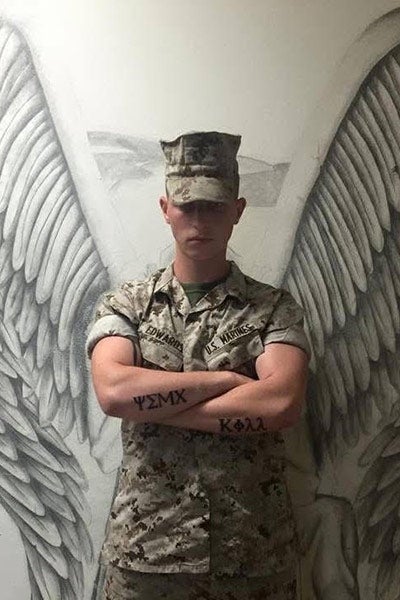
What does being accepted into CWRU’s Doctor of Nursing Practice Nurse Anesthesia program mean to you?
Edwards: For me, this represents years of hard work, personal growth and a commitment of pursuing one of the most challenging and rewarding roles in advanced practice nursing. Reaching this milestone required dedication both inside and outside the clinical setting. I worked to strengthen my critical care knowledge, pursue advanced certifications, take on leadership responsibilities and become involved in professional organizations at both the local and national levels. Balancing those commitments with my responsibilities as a husband, father and full-time critical care nurse required discipline, sacrifice and the support of my family.
How has the support of the CWRU community influenced your decision to pursue nurse anesthesia?
Edwards: One interaction that has stayed with me during my journey toward becoming a nurse anesthetist was when I had the opportunity to connect with the leadership of the nurse anesthesia program. During a conversation about my goals and aspirations, I was met with genuine encouragement and support. Hearing the words, “Let's make it happen,” was a simple but meaningful moment that reinforced my confidence in the path I was pursuing. What made that interaction particularly meaningful was the willingness of an experienced healthcare professional and educator to invest in the success of someone aspiring to enter the profession.
Throughout my military and nursing careers, I have learned how much of an impact strong leadership and mentorship can have on an individual's development. That conversation reminded me of the importance of providing the same encouragement to others. As I prepare to begin my education at Case Western Reserve University, I hope to carry that lesson forward by supporting my classmates, mentoring others, and contributing to a community where people are genuinely invested in one another's success.
What values or principles did your time in the Marine Corps instill in you that continue to shape the way you approach life and your career?
Edwards: One of the most important lessons the Marine Corps taught me is that leadership is about taking responsibility for others, especially when circumstances become difficult. Being a leader means remaining composed under pressure, making sound decisions and ensuring the people around you have the support they need to succeed. That is a lesson I have carried with me throughout my personal and professional life.
As I prepare to begin the nurse anesthesia program at CWRU, I know those same principles will continue to guide me. The military taught me that leadership is not defined by a title, but by the responsibility you take for those around you. Whether I am working alongside classmates, learning from faculty, or eventually caring for patients as a CRNA, that is a lesson I intend to carry throughout my career.
Are there any moments in your nursing career when you recognized similarities between military service and leading a healthcare team?
Edwards: One experience that stands out is stepping into leadership roles in the Cardiovascular Intensive Care Unit at Cleveland Clinic. As a charge nurse, I have been responsible for coordinating teams and responding to critical emergencies where clear communication, sound judgment, and remaining composed under pressure are essential. In those moments, I often recognize the same leadership principles that were emphasized during my military service. Although the environments are very different, the responsibility of leading a team and supporting others during challenging situations remains much the same.
Calebe Charles
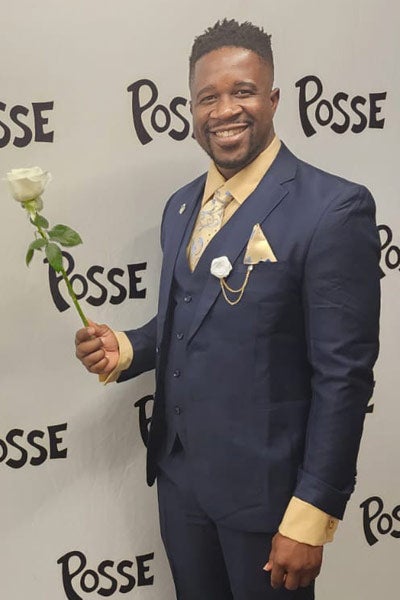
Fourth-year psychology student
After deploying to Afghanistan in 2021, Calebe Charles encountered a drowning man while visiting the beach with a friend. Then an infantry soldier in the U.S. Army, Charles swam out to help and performed CPR until emergency responders arrived—an experience that reignited his longtime interest in pursuing medical school to become a healthcare provider.
Through the university’s Posse Veterans Scholars Program, Charles found an opportunity to continue his education while balancing demands as an active duty drill seargant—leading him to the College of Arts and Sciences where he studies psychology.
Having been out of the classroom for several years, Charles initially faced the challenge of adjusting to life as a college student while continuing his responsibilities in the army.
“The discipline and determination I developed in the army were valuable, but I also had to learn new ways to approach academic challenges,” said Charles, who now expects to graduate in December.
“Having a Posse cohort gave me a community I could rely on,” he continued. “We shared information and experiences that helped me navigate college, and I gradually became more comfortable attending professors’ office hours and asking questions.”
Following graduation, Charles hopes to build on his psychology education and commitment to serving others, carrying lessons he learned at CWRU into his military career.
Hear thoughts from Charles.
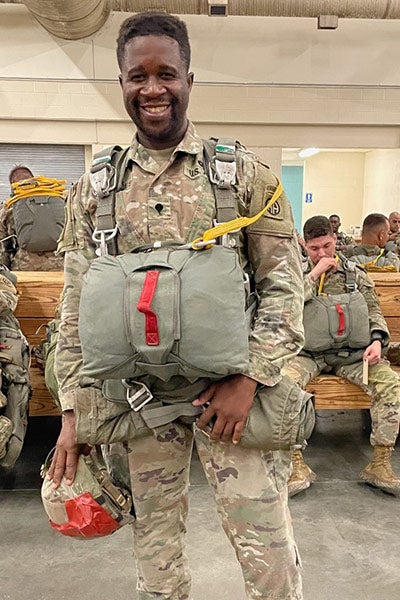
What does the opportunity to attend CWRU mean to you, both personally and professionally?
Charles: As a first-generation college student from Haiti, I understood that this opportunity was something I could not take for granted. I knew I had to make the most of it, work hard and take full advantage of the resources available to me. Attending CWRU represents more than earning a degree. It’s an opportunity to pursue a dream I had carried for years and create possibilities for my future that once seemed difficult to imagine.
Were there any lessons from your military experience that you had to rethink or approach differently as a college student?
Charles: When I first arrived at CWRU, I was somewhat full of myself. As a soldier, I had learned to push through discomfort, embrace challenges and keep going even when things became difficult. I initially thought I could apply that same approach to everything in college. That mindset worked to a certain extent, until exams arrived and I realized that believing I had mastered the material was not the same as actually understanding it.
I eventually began studying with classmates, asking questions and participating in
study groups. That change made a tremendous difference. My grades improved, my
GPA increased and my confidence grew. The experience reminded me of an important lesson I had learned in the army: no one succeeds entirely on their own. Sometimes, strength means recognizing when you need help and being willing to learn from others.
The classmates, mentors, and advisors who supported me helped reinforce that lesson. Their willingness to share knowledge and encouragement showed me how much further we can go when we work together.
How has returning to the classroom influenced the way you lead and support others in your role as a drill sergeant?
Charles: My experience at CWRU has reinforced the importance of leading by example. As a leader, I cannot simply tell people to persevere through difficult situations without being willing to do difficult things myself. I believe in practicing what I preach. Leadership is not just about giving instructions, enforcing standards or raising your voice when necessary. It is also about standing alongside the people you lead, demonstrating that you are willing to put in the work, and reminding them that they do not have to face every challenge alone.
Being a student again gave me a deeper appreciation for the people I mentor. It reminds me that even capable, dedicated people can struggle, need guidance and benefit from someone who believes in them.
What advice would you give other veterans or first-generation college students who are considering pursuing higher education?
Charles: You get out of an opportunity what you are willing to put into it. Be intentional about the results you want, put in the work and take advantage of the resources and people available to support you. Do not be afraid to ask for help, and do not assume that struggling means you do not belong. Sometimes, you simply need to learn a new approach or give yourself time to adjust. Most importantly, start today. Tomorrow is not promised, and you should not let fear, uncertainty or the possibility of failure prevent you from pursuing something meaningful.