They prepared for their futures at CWRU—and returned to invest in the next generation
With Homecoming and Reunion Weekend underway, alumni-turned-faculty reflect on their student experiences at CWRU
Each year, Homecoming and Reunion Weekend brings heightened energy to Case Western Reserve University. Students, alumni, faculty and staff don their favorite CWRU Blue merchandise, reconnect with old friends and snap photos on campus, as excitement builds for the homecoming football game, Blue Bash and other special events across campus. Amid the buzz, familiar paths lead to old memories and new traditions.
For some CWRU faculty members, homecoming offers a chance to reflect on their own time at the university—whether as undergraduate or graduate students. They remember late nights spent studying, lessons learned from faculty and mentors, friendships formed along the way and experiences that helped shape who they are today. Now, they bring those perspectives to the classroom as instructors, teaching and mentoring students at the university that has remained an important part of their lives.
Read on to hear from several faculty members whose CWRU journeys have come full circle—and how their experiences shaped the path to the front of the classroom.
Kristina Bowdrie, PhD
Assistant professor, Department of Psychological Sciences, College of Arts and Sciences
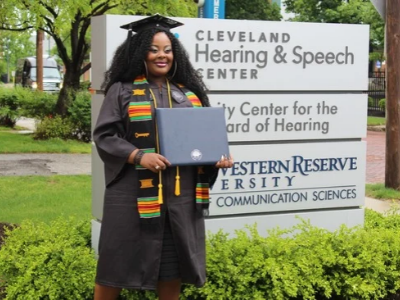
Long before Kristina Bowdrie, AuD, PhD, CCC-A (CWR ’17) walked onto CWRU’s campus as a student, she knew she wanted to be there. A Cleveland native who grew up visiting University Circle, Bowdrie dreamed of attending college in her hometown before she went on to earn a Bachelor of Arts in Communication Sciences and Psychology from CWRU.
She later completed her clinical doctorate and PhD in speech and hearing sciences at The Ohio State University before receiving postdoctoral training at the Louis Stokes Cleveland VA Medical Center through the VA Quality Scholars program. Now an assistant professor at CWRU, Bowdrie draws on her own experiences to emphasize the importance of building broad mentorship networks, and helps students navigate uncertainty and discover new opportunities.
What did you take away from CWRU that has stayed with you?
Bowdrie: CWRU gave me a strong sense of intellectual curiosity, collaboration, mentorship and connection to the surrounding Cleveland community. As I moved through graduate school and began thinking about the kind of professional I wanted to become, I realized how important those qualities were to me. Returning to CWRU feels like an opportunity to contribute to the kind of environment that helped shape me into who I am today.
Bryan Singelyn, MS
Senior instructor, Department of Anatomy, School of Medicine
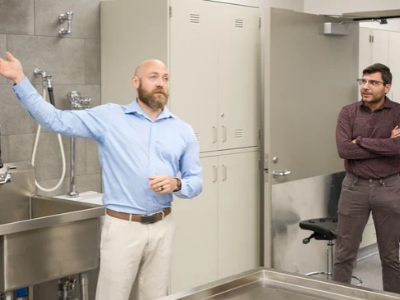
When Bryan Singelyn, MS (GRS ’13, applied anatomy) arrived at CWRU from Michigan, he didn’t know anyone. His advisor, Barbara Freeman, assistant professor emerita of anatomy at the School of Medicine, quickly became a source of support, helping him navigate a new university and city before eventually becoming a mentor. That experience stayed with Singelyn as he transitioned from student to staff member and, ultimately, senior applied anatomy instructor at CWRU School of Medicine.
A graduate of the Master of Science in Applied Anatomy program, Singelyn remembers late study sessions, Cleveland Heights pizza runs and occasional games of ultimate frisbee with medical and graduate students. Today, he draws on those experiences to understand what his students are going through while recognizing that every learner approaches material differently.
What’s been most rewarding about your experience as an educator at CWRU?
Singelyn: Over the years, seeing students I’ve taught in the anatomy program, the physician assistant program, the medical school and even undergraduates go on to achieve the things they’ve worked so hard for has meant everything to me as a teacher. Their success is the most rewarding part of what I do. I hope others who have the drive to become educators can see the value in this work and the impact it can have on so many people.
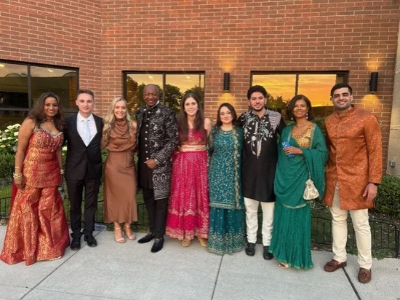
Andre Mickel, DDS
Chair and professor, Department of Endodontics, School of Dental Medicine
In 1987, Andre Mickel, DDS (DEN ’91, dentistry; DEN ’94, endodontics), arrived at Case Western Reserve University to pursue the Doctor of Dental Surgery program. He later earned his Master of Science in Dentistry in Endodontics under the mentorship of Jefferson J. Jones. Two years after completing his MSD in 1994, Mickel became faculty and director of the endodontic program—a role he has held for nearly four decades.
Since then, he has trained doctors from five continents, extending the mentorship he received at CWRU to dental professionals around the world. Today, Mickel continues to teach at the same school where he once studied, while his son, Alexander Mickel (CWR ’20; DEN ’24), has carried on the family legacy, graduating from CWRU’s dental school two years ago.
What first brought you to CWRU as a student, and what do you remember most about arriving on campus?
Mickel: My father was in the Air Force and we moved about every three years throughout most of my life–from Omaha, Nebraska, and Washington, D.C., to Kansas, Mississippi and Spain. Then he retired, and we moved back to Ohio and I finished high school here. When it came time to consider professional schools, I knew of CWRU’s reputation and came to see the campus. What really struck me when I first came was the vibrant area and the number of museums in the University Circle area. So, that drew me here and I felt prepared to be in a diverse atmosphere since I’ve lived in so many different places my whole life.
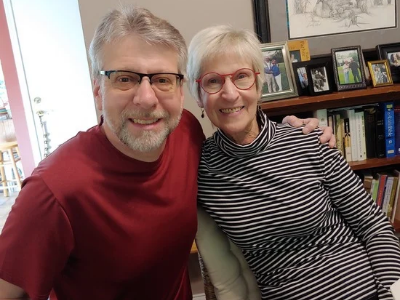
Sarah Andrews, MSSA
Senior instructor emerita, Jack, Joseph and Morton Mandel School of Applied Social Sciences
With a master’s degree in family development and nearly two decades of experience in education, counseling and social services, Sarah Andrews, MSSA (SAS ’91) came to the Jack, Joseph and Morton Mandel School of Applied Social Sciences in 1989 to pursue a PhD in social welfare. In 1990, she advanced to PhD candidacy and earned her Master of Social Work from the Mandel School a year later. While pursuing her PhD, she began leading the “Women’s Issues” course at the school. As her role in the classroom grew, she shifted her focus from the PhD program to faculty work and joined the full-time faculty in 1994. She eventually served 11 years as assistant dean for academic affairs.
Shaped by a commitment to children and families, Andrews’ work focused on social justice, including women’s and LGBTQ rights. A two-time recipient of the Mandel School Outstanding Teacher Award, she also received the Ohio School Social Work Association’s statewide Friend of School Social Work Award in 2015. Now retired, Andrews continues to connect with former students through Facebook, following their growth and the paths they’ve taken since leaving the Mandel School.
What first brought you to CWRU as a student, and what do you remember most about arriving on campus?
Andrews: I was in my early 40s and working full time at a social services agency. One afternoon, on my way to a meeting, I stopped by a message board near the meeting room at my local United Way, and a poster caught my eye. It said “Reach a little higher!” and had tear-off sheets for the PhD program in social welfare at the Mandel School. I said to myself: “Yes. Why not?” I tore off a sheet, made some calls, completed an application, and the rest is history. What I remember most about arriving on campus were the very diverse backgrounds and ages of the people in my entering PhD cohort.
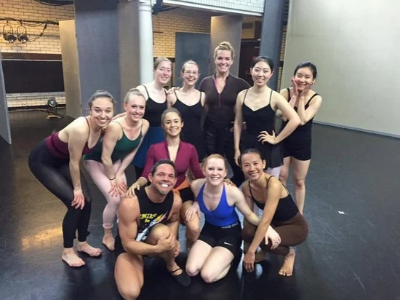
Yidi Lin, MFA
Associate professor, Department of Dance, College of Arts and Sciences
When Yidi Lin, MFA (GRS ’16, dance) arrived at CWRU from China, she was focused on finding an affordable way to pursue her graduate studies—not becoming a professor. After earning a Master of Fine Arts in Contemporary Dance, she furthered her professional experience in New York City before transitioning to higher education and becoming a tenured associate professor at Jacksonville University.
Since returning to CWRU in 2024, Lin has drawn on the care and support she received as an international student to help prepare the next generation of dancers in the Department of Dance. In her role, she researches contemporary movement and dancer wellness while teaching modern dance history and technique, choreography and other courses.
Looking back, what would you tell yourself as a CWRU student?
Lin: I know you chose this school primarily because of the scholarship, but it is going to be one of the best decisions of your life and career. Go ahead and cry when you feel stressed. I promise that everything you are learning and experiencing now will become incredibly valuable in the future.
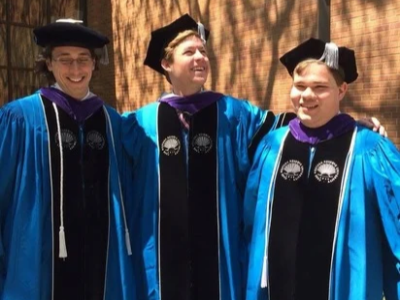
Liam Dunn, JD
Associate professor, School of Law
From his first visit, Liam Dunn, JD (LAW ’14), felt an immediate connection to CWRU School of Law. The familiarity of Mather Quad, which reminded him of the New England campuses where he had previously studied, made the decision to pursue his Juris Doctor feel even more natural. As a student, L’Albatros became a favorite spot, from his first meal in Cleveland to drinks with friends to celebrate getting through another week of law school. He also participated in the Hudson Relays, where his experience as a runner landed him an unexpected role as coach of the graduate school’s team.
Dunn’s path to teaching began when his former instructor, Jaime Bouvier, JD—professor of lawyering skills—encouraged him to apply for a postdoctoral fellowship at CWRU, opening the door to an academic career he hadn’t envisioned. Today, the support and approachability he valued from his own professors shape how he teaches, while the connections he made as a student continue to influence his CWRU experience.
What’s changed most about CWRU since you were a student—and what’s still the same?
Dunn: The physical campus has definitely changed the most. It's impressive how much development has happened over the past 10 years. The law school, for the most part, has stayed the same in ways that I love. The students are still as brilliant and inquisitive as my classmates were when I was a student. And so many members of the faculty from when I was a student are still here today. That made things a bit intimidating when I first started working at CWRU because some of them had been my professors only a couple of years ago, but they all made me feel like a colleague immediately.
Carol Musil, PhD
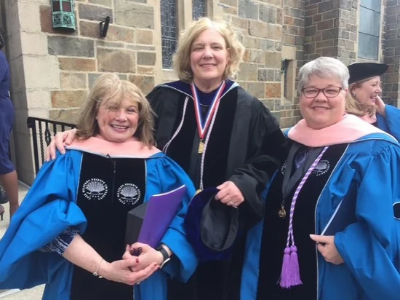
Former dean and Edward J. and Louise Mellen Professor of Nursing, Frances Payne Bolton School of Nursing
Carol Musil, PhD (NUR ’79; GRS ’91), began her CWRU journey with a nurse traineeship that covered her tuition and provided a $200 monthly stipend as she pursued a Master of Science in Nursing in Psychiatric Mental Health. Encouraged by family, friends and a nursing mentor who called Frances Payne Bolton School of Nursing the best in the country, Musil knew she had found the right place.
After earning a PhD from CWRU, her path continued at the university, as a postdoctoral fellow and faculty member—eventually leading her to serve as dean from 2018 to 2025 before returning to serve as a faculty member. Mentored by May Wykle, professor emerita at the nursing school, during her postdoctoral fellowship, Musil now draws on the patience and support she received from her own faculty mentors as she trains aspiring nurses who will shape the field.
Looking back, what would you tell yourself as a CWRU student?
Musil: I have been fortunate in so many ways and remain aware of that. I’d tell my student self: build on your strengths, take chances, work hard, trust your instincts, try to do the right thing and don’t worry too much about the five-year plan. It has been an interesting CWRU journey and it’s satisfying that CWRU is finally receiving the recognition it has always deserved.
Andrew Medvedev, MBA
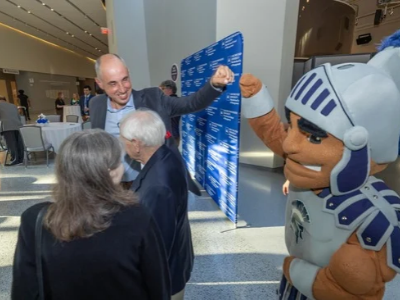
Dean and Albert J. Weatherhead III Professor of Management, Weatherhead School of Management
CWRU has long been part of Andrew Medvedev’s, MBA (CWR ’97) family story. His mother, Irene Medvedev, worked at the School of Medicine, and Medvedev followed her connection to the university as an undergraduate economics student at Weatherhead School of Management. Model UN became a defining part of his student experience, where he worked in small teams to organize conferences—experiences that helped prepare him for the collaborative leadership he would later bring to Weatherhead.
As a student, Medvedev rarely ventured beyond his corner of campus and didn’t fully appreciate how interconnected CWRU was. Now, as dean of Weatherhead School of Management, he has a much broader view, interacting with people and ideas across the university. His role has given him a new appreciation for the connections that span CWRU, from business and economics to medicine, engineering and beyond.
What does “coming home” to CWRU mean to you now?
Medvedev: Coming home is not really about returning to the place you left. It is about coming back with everything you learned while you were away and asking what you can help build next. CWRU gave me an extraordinary amount when I was young: opportunity, lifelong friendships, a way of thinking and relationships that changed my life. Coming back has given me a different relationship with the institution. I no longer see it as a static place that I get to belong to. I see it as something each generation gets a turn to shape. That is probably what “home” means to me now: the nexus of people, ideas and causes that matter the most, and having some responsibility for what it becomes.
Rebecca Darrah, PhD
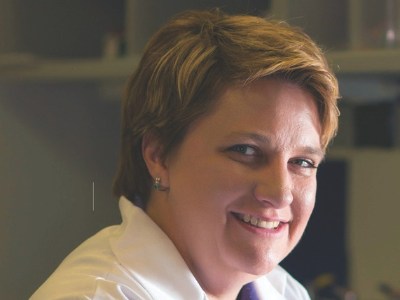
Professor, Department of Genetics and Genome Sciences, School of Medicine
For more than 30 years, Rebecca Darrah, PhD (GRS ’98, bioethics; GRS ’00, genetic counseling) has watched CWRU evolve while building nearly every chapter of her career on campus. She first arrived as a research technician and assistant, where employee class offerings sparked her interest in genetics and inspired her to pursue graduate studies. In 2010, she earned a PhD in genetics and genome sciences while continuing to work alongside her longtime mentor, Mitchell Drumm, PhD, and went on to complete a postdoctoral fellowship and serve in several faculty roles before earning tenure.
Today, Darrah finds meaning in the changing rhythm of the CWRU campus—from the buzz of homecoming and commencement, when flowers brighten the grounds, to the stillness of summer when the paths grow quieter. This homecoming season, she eagerly looks forward to experiencing CWRU through a new lens as the parent of Liam Darrah, a first-year student studying physics and music.
What’s changed most about CWRU since you were a student—and what’s still the same?
Darrah: I think CWRU does a very good job of keeping up with all the societal changes that are going on, whether toward diversity, disability and other things happening nationally and internationally. CWRU has always been right at the forefront of that, changing their language and policies around certain issues. I’ve been appreciative and grateful for that and oftentimes I see changes here before I see them in the rest of the community.
Ozan Akkus, PhD
Kent H. Smith Professor, Department of Mechanical and Aerospace Engineering, Case School of Engineering
Years after earning a PhD in mechanical engineering from Case Western Reserve University, Ozan Akkus, PhD (GRS ’00) carried fond memories of Cleveland’s manageable size, University Circle’s museums and its vibrant cultural scene with him to New York and Indiana. When an opportunity later arose to return to Case School of Engineering as a faculty member, he didn’t hesitate. A native of Türkiye, Akkus was first drawn to CWRU by its global reputation and a fascination with what makes bones withstand decades of wear—and what makes them vulnerable to fracture.
More than a decade later, he found a transformed Cleveland but the same collaborative, collegial CWRU culture. Today, as the OMEGA principal investigator at the Tissue Fabrication and Mechanobiology Lab, Akkus studies tissue repair and biomedical imaging. He also makes a point of being accessible to students, creating a space where even those who are shy feel comfortable sharing their thoughts.
What advice would you offer today’s CWRU students and those who will follow?
Akkus: Engage with the community. I think anybody can study, attend a lecture, make the grade and get a degree. But the friends and connections make your own doing. Sparing time to make an impact in other people’s lives through service or community engagement is just as important, if not more. As a student, my entire focus was on getting work done in the lab and writing reports, but I wish I had spared, maybe 10% of my time in a graduate student organization or with some kind of society.