

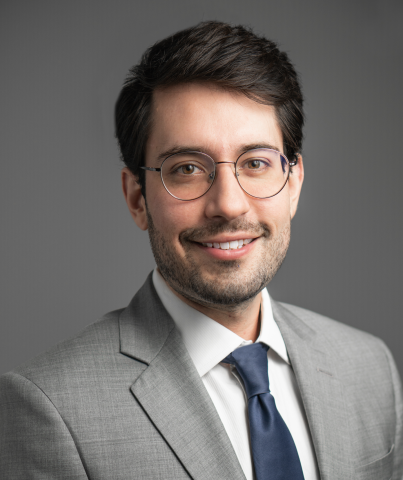
How has your education from CWRU influenced your career path and professional endeavors?
Before starting my master’s at CWRU, I knew I wanted to become a surgeon, so I was particularly interested in the ethical aspects of developing new surgical techniques. During my time in the program, I had great mentors who guided me in my research on this topic, and we were able to publish recommendations for guideline development in a peer-reviewed journal.
Now, as a surgery resident, I’m more conscious of ensuring patients are fully informed and involved in their care before any kind of surgical intervention. My bioethics education has also motivated me to conduct research that improves surgical outcomes while keeping ethics at the forefront.
How do you apply the concepts learned at CWRU to your work as an industry professional?
At CWRU, I learned the importance of integrating ethical considerations into every aspect of my clinical practice. As a surgeon in training, I apply these concepts by prioritizing informed consent, shared decision-making, and patient-centered care in my daily work. My bioethics training has made me more mindful that procedures and treatments are never risk-free, so balancing risks and benefits with the patient is paramount. Additionally, in my future clinical research projects, I plan to focus on improving surgical outcomes while maintaining the highest ethical standards.
Do you have any advice for prospective Bioethics and Medical Humanities students?
Whenever you choose a topic during your education for writing or a presentation, do it because you are genuinely interested in learning about it, and always be open-minded to change your position if you encounter strong arguments that contradict your prior beliefs. Also, write as if you were planning to publish it to share with a broader audience than your classroom. You’ll be surprised how many people will share your curiosity, and you might be able to publish your thoughts and research on a larger platform.
What would you say is the most rewarding aspect of your career so far, as it relates to bioethics or medical humanities?
The most rewarding aspect so far has been the opportunity to apply bioethics to real-world clinical scenarios. Specifically, working with patients who require surgical treatment, as they find themselves in complex and stressful situations where building a strong patient-physician relationship from the first contact is crucial to ensuring the best possible outcomes.
Can you share any notable achievements or milestones in your career since graduating the program?
I matched for a year of surgical training at the nationally recognized Beth Israel Deaconess Medical Center/Harvard Medical School. Additionally, I had the privilege of publishing my work on the ethical use of race in prostate cancer screening guidelines in The New England Journal of Medicine, with my mentors from CWRU as coauthors.