NeuroTechnology

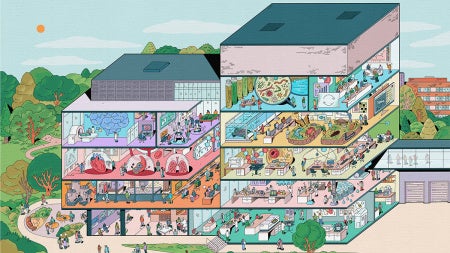
An artist's rendition of the Neurotech cluster in the ISEB building.

What is the NeuroTechnology research cluster?

The NeuroTechnology research cluster at Case Western Reserve University's Roger E. Susi Interdisciplinary Research Building is focused on discovery, translation, and commercialization of solutions to neurological conditions that affect millions—such as stroke, spinal cord injury, chronic pain, movement disorders, and cognitive decline. Through interdisciplinary and intersectoral collaboration, researchers develop technologies that interface with the brain, spinal cord, and peripheral nervous system using electrical and optical stimulation, focused ultrasound, neural recording, and physiological sensing. By integrating computational modeling, signal processing, and artificial intelligence, teams accelerate the development of clinically effective and commercially viable solutions that help people regain function, restore independence, and improve quality of life.

Problems that NeuroTechnology is Working to Solve

  • Stroke
  • Spinal cord injury
  • Chronic pain
  • Cancer neuroscience
  • Movement disorders
  • Epilepsy
  • Cognitive decline
  • Autism
  • Autonomic disorders
  • Urinary and fecal incontinence
  • Wearable, noninvasive photoacoustic and ultrafast ultrasound imaging for continuous monitoring of function, hemodynamics, and neurovascular coupling
  • Deep-tissue functional imaging and stimulation toward closed-loop neuromodulation 
  • Sensorimotor function after limb amputation
  • Sensory loss after mastectomy

Instrumentation, Tools and Resources

  • Human brain-computer interface recording and neural microstimulation
  • Central and peripheral neural recording and stimulation
  • Optical neuroimaging and delivery of light to the nervous system
  • Ultrafast ultrasound and photoacoustic device for sensing, imaging, and modulation
  • High-resolution imaging of peripheral nerves
  • Single-neuron recording from the autonomic nervous system
  • Bioelectric-field recording, mapping, and stimulation
  • Multimodal physiological sensing and wearable instrumentation
  • Neural-signal acquisition and real-time processing
  • Closed-loop neuromodulation and neuroprosthetic control
  • Computational neural modeling and simulation
  • Artificial intelligence and machine-learning analysis
  • Device prototyping, validation, and translational testing

Meet Our Researchers

NeuroTechnology News


Contact Us

To learn more about NeuroTechnology, email cluster faculty lead Robert Kirsch or meet the team of researchers