

Digital Scholarship specialists consult with researchers, students, and project teams on digital projects within our areas of expertise and beyond. Explore some of the projects that have partnered with the Freedman Center and its resources. Use the arrows on the image to advance projects.
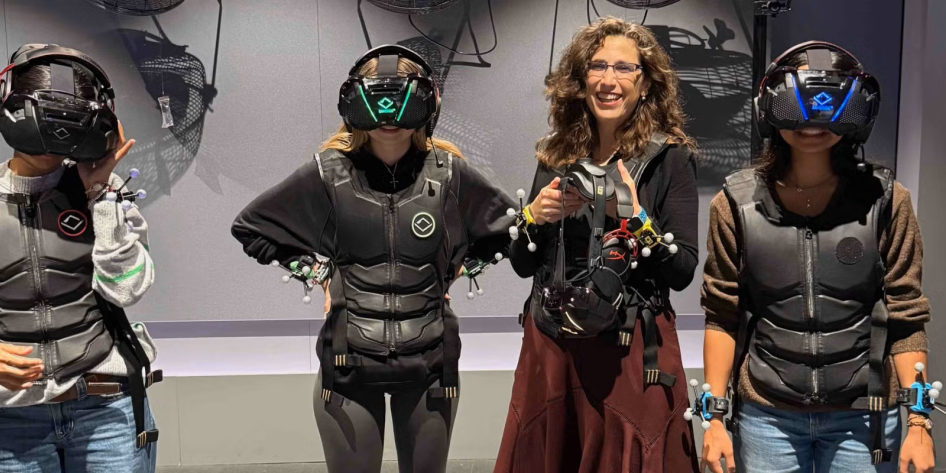
Dr. Alanna E. Cooper (Religious Studies) and her students worked with Freedman Center specialists to use photogrammetry to create 3D models of artifacts in a Tifereth Israel memorial in Beachwood. The models were digitally placed in their original home in the Maltz Performing Arts Center, accessible through extended reality (XR) headsets. Digital Scholarship specialists taught photogrammetry techniques to Dr. Cooper's students, and Center software and hardware played a key role: high-end AI Sandbox machines processed photographs into models in Agisoft Metashape.
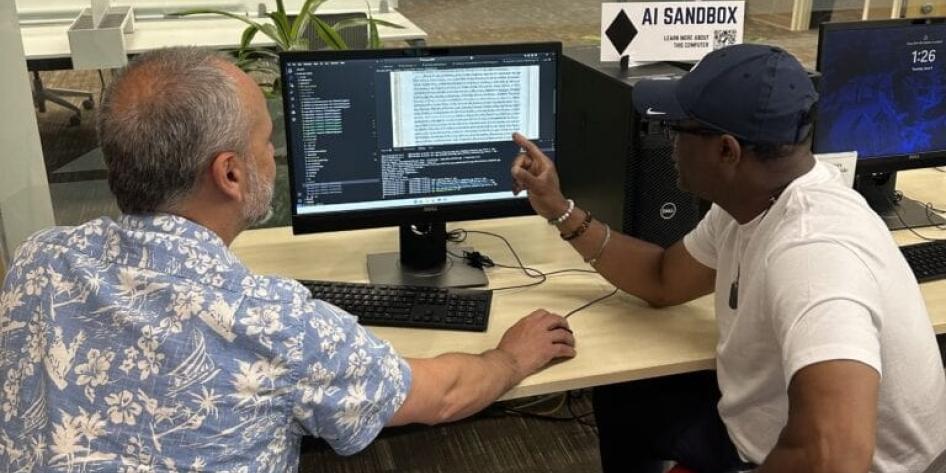
Dr. Ben Vinson III (Baker-Nord) is working with Freedman Center specialists through an Experimental Humanities grant on the Somos Project. The project explores if LLMs can be used to improve the Optical Character Recognition (OCR) of early Latin American archives to aid in finding use of first-person voices, signified by somos and soy. Agentic AI tools independently comb archives for references before ingesting the digitizations into a custom-built pipeline to render them more legible to machines and human researchers.
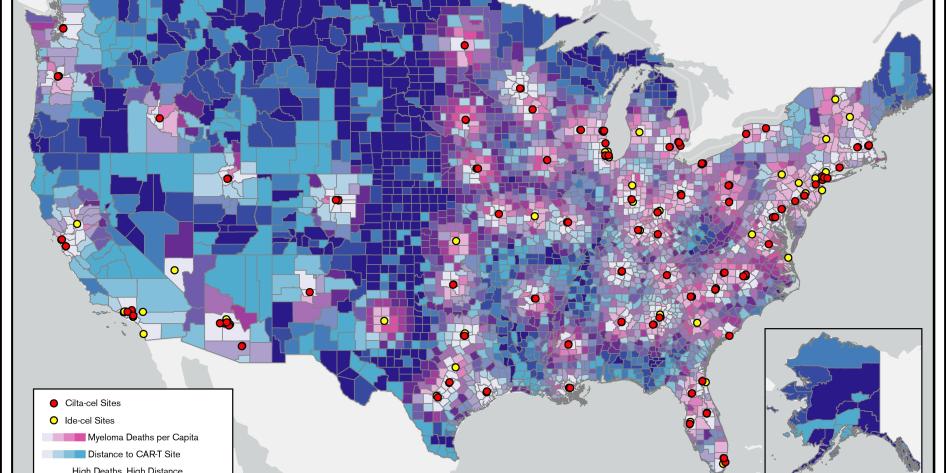
Michael Daunov, DO, (School of Medicine) has worked with Freedman Center specialists to visualize gaps in care for patients diagnosed with multiple myeloma. The team uses ArcGIS Pro, a geospatial mapping program, to visualize the distance between areas where patients with multiple myeloma live and their nearest treatment center that offers chimeric antigen receptor T cells (CAR-Ts) as a treatment, which greatly improves patient outcomes. Center specialists assist with data analysis and visualization and geocoding.
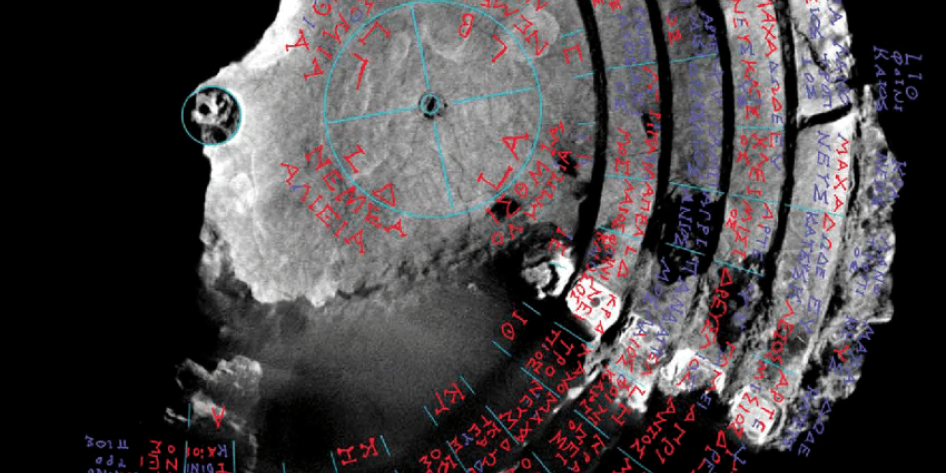
Dr. Paul Iversen (Classics) has worked on a series of projects with support from the Freedman Center, NEH, Baker-Nord Institute for the Humanities, and Interactive Commons. One project allowed Dr. Iversen's team to 3D model the Antikythera Mechanism, described as the world's oldest computer. The model was created using CT scan with support from the Freedman Center to decipher the images. A Wacom tablet and clever usage of Adobe software allowed Dr. Iversen to identify writing on the device to decipher its usage.
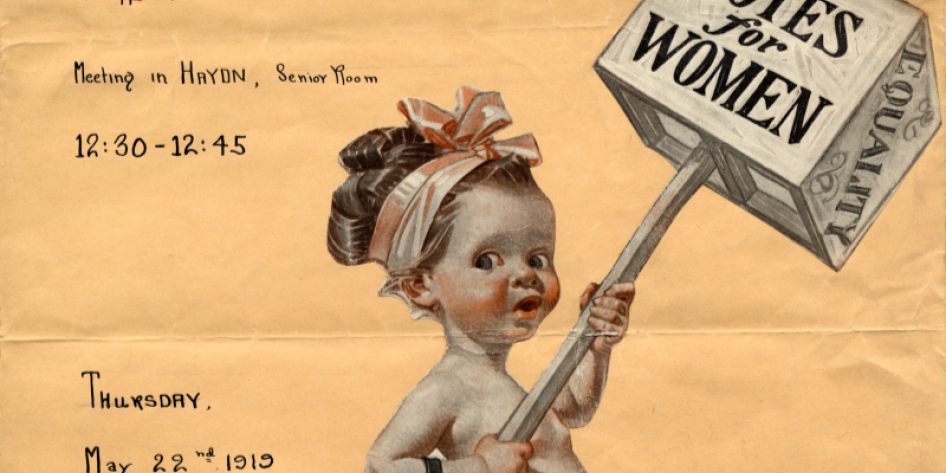
The Cleveland Suffrage project is a Scalar publication led by Dr. Einav Rabinovitch-Fox (History) that that uses the platform's multimedia and non-linear storytelling to trace the progression and successes of the suffrage movement in northeast Ohio. Dr. Rabinovitch-Fox connected current students with activists on campus who held suffragist meetups in Haydn Hall. Digital Scholarship specialists assisted with embedded instruction on the Scalar platform.
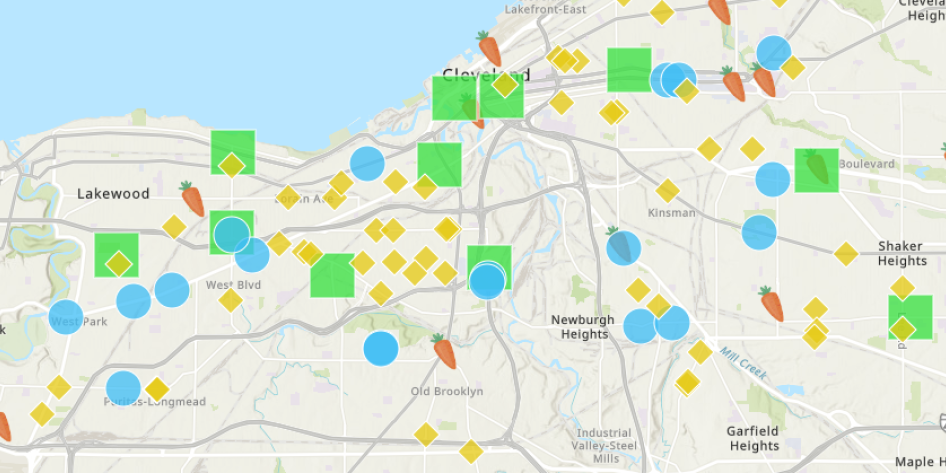
The Prevention Research Center for Healthy Neighborhoods maintains FreshFinder, a map that visualizes what areas have access to fresh and healthy foods. This project uses ArcGIS Pro, a geospatial mapping tool that the Freedman Center provides at no cost to the CWRU community, alongside workshops and tutorials to help scholars learn how to leverage its capabilities. The Freedman Center has supported this project since 2020, providing assistance with data cleaning, geocoding, and visualization.
Ready to start your own project with the Freedman Center? You can email FreedmanCenter@case.edu or book directly with a Digital Scholarship specialist.