Nature's blueprints: Inside the ISEB’s NeuroRobotics research cluster at Case Western Reserve
How a team of Case Western Reserve researchers is drawing on millions of years of evolution to solve urgent problems with robotics
This story is the eighth in a series introducing the research, people and building that will define Case Western Reserve’s next chapter of discovery. We’ll go inside each of the seven research clusters and the resources that make the work possible.
Civil engineer Hyoung Suk Suh, PhD, is not a robotics expert. Nor is mathematician Peter Thomas, PhD, or social scientist and lawyer Brian Gran, PhD.
Yet, each will bring their own distinct expertise to Case Western Reserve University’s NeuroRobotics research cluster—perhaps the most interdisciplinary group in a building designed to shatter silos, cultivate collaborations and build toward breakthroughs.
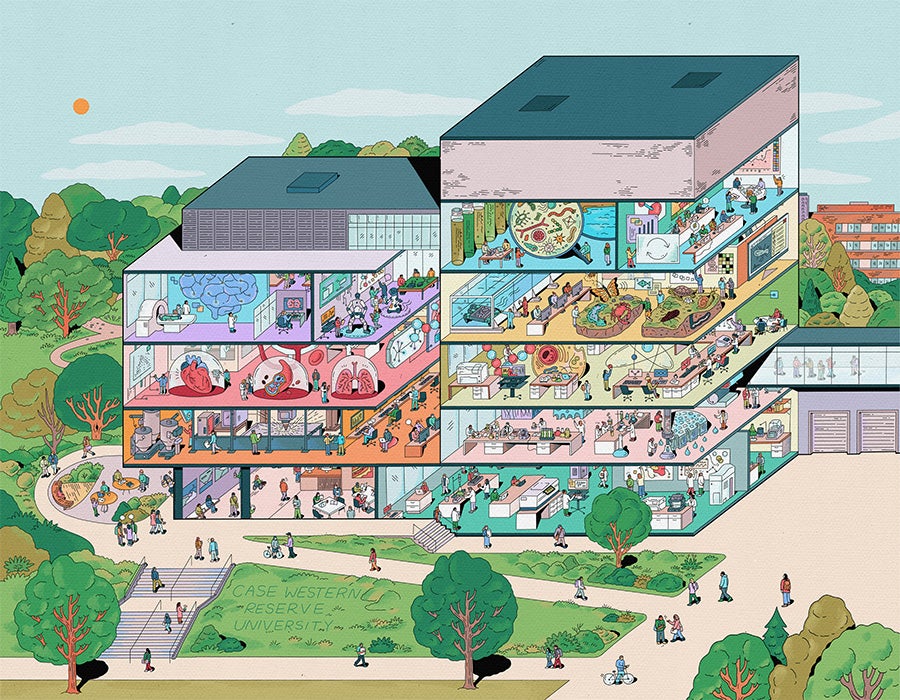
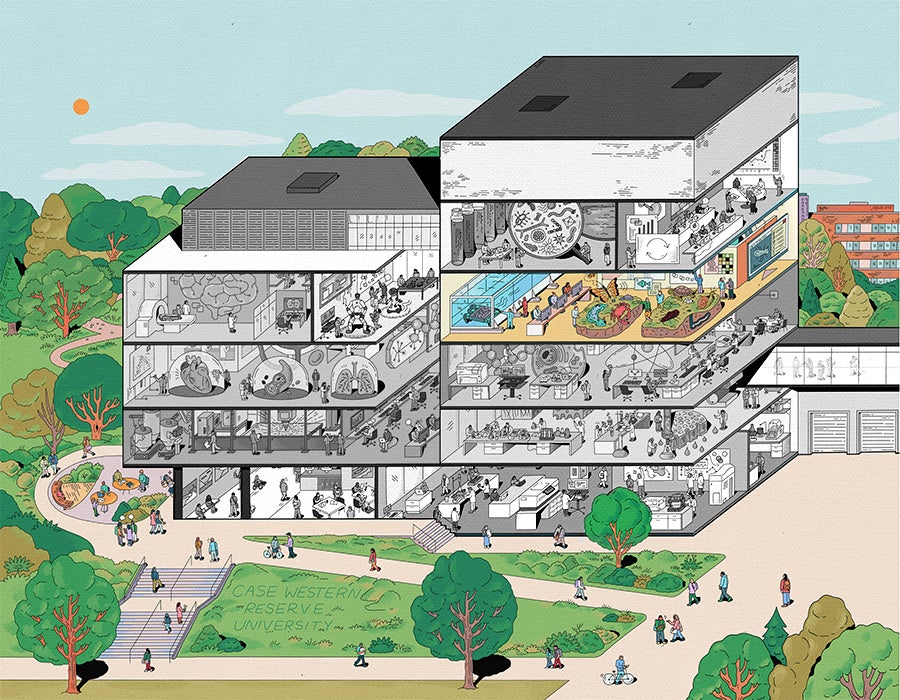
The NeuroRobotics cluster is one of seven anchoring the Interdisciplinary Science and Engineering Building (ISEB), the university's new 189,000-square-foot home for discovery and innovation.
To build robots, CWRU researchers have long turned to biology for inspiration, studying worms, crabs, sea slugs, moths and other animals to understand how they sense, move and adapt. The very nature of this work intersects disciplines—intersections that will evolve as the NeuroRobotics cluster connects bio-inspired models to practical, real-world problems.
The possibilities seem endless. Imagine robots inspecting and repairing bridges in rivers where flows have changed over time and begun to erode structures. Or, worm-inspired robots that can install underground conduit, saving time and overhead on construction sites without risking common damage from excavation to water mains or fiber optic cables. Or even crab-inspired robots, which can retrieve unexploded ordnances on ocean floors too dangerous for divers to reach.
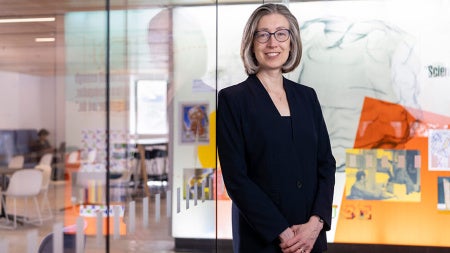
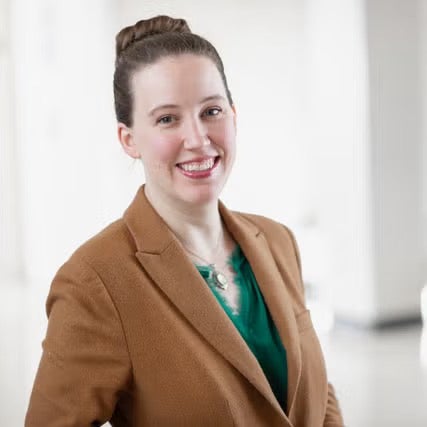
"We are asking ourselves how can we learn from animal intelligence to better understand it and work with that intelligence for robots that can interact in the physical world," said Kathryn Daltorio, PhD (CWR '05; GRS '07, '13, mechanical engineering), faculty lead for the cluster and associate professor in the Department of Mechanical and Aerospace Engineering.
Preparing a robot for the physical world—and all of its inconsistencies—takes a lot of different experts.

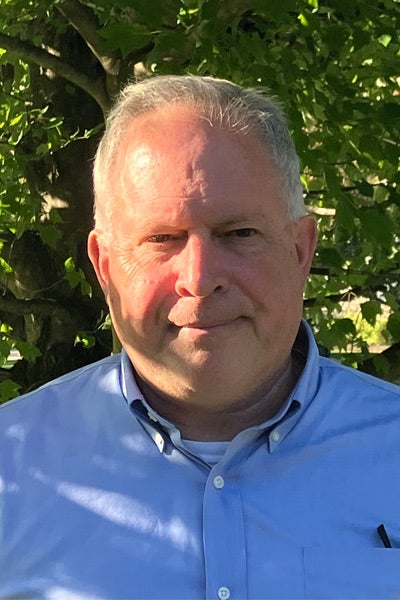
While Daltorio’s work has centered on the worm- or crab-inspired robots mentioned above, her colleagues’ interests vary widely. For instance, Suh, assistant professor in the Department of Civil and Environmental Engineering, examines how soil and robots interact. Thomas, professor in the Department of Mathematics, Applied Mathematics, and Statistics, uses math as a tool for understanding biological systems. And Gran, professor in the Department of Sociology, studies public interest technology, striving to make technology available to all and ensuring it is used for the public good.
They'll join engineers like Daltorio and biologists such as Jessica Fox, PhD, professor in the Department of Biology, whose research about the crane fly's nervous system could inspire and inform the design of machines that can walk, crawl and land smoothly. In total, 23 scientists and engineers make up the NeuroRobotics cluster, along with each of their teams and students.
Collectively, cluster members envision a future where robots operate beyond precise, pre-programmed tasks in controlled settings. They aim to build adaptable robots that can operate reliably in messy, unpredictable environments where needs are greatest.
Designing for adaptability
Building and designing robots that can interact in an unpredictable world requires experts to examine what an animal can do, how to model that, and what’s possible to build, Daltorio said.
"If you want to really let a robot learn how to interact in the world, you need a couple things," she said. One aspect? Materials soft and unique enough to be safe.
According to Daltorio, the robot's material interface should be designed in such a way that when it touches the ground or other objects, that interaction won't immediately break the robot or those other objects.
That's where experts like Suh come in. Suh will build computational models to study how robots interact with soil or other porous materials, offering information to optimize designs and behaviors based on different conditions. That could involve robots walking on the ground, exploring the ocean floor, tunneling underground or navigating the surface of the moon or Mars, Suh said.
Also key here is materials science expertise, such as that of Samuel Root, PhD, assistant professor in the Department of Macromolecular Science and Engineering, who studies how polymer materials can be designed to give robots the same kinds of properties that make animals so effective in the physical world—softness that absorbs unexpected contact, stiffness that varies across a structure and even the ability to sense and recover from damage.
Safe, adaptable robots also need to layer different types of intelligence, or all the biological lessons from animals, on top of each other. This is where math comes in, Daltorio said.
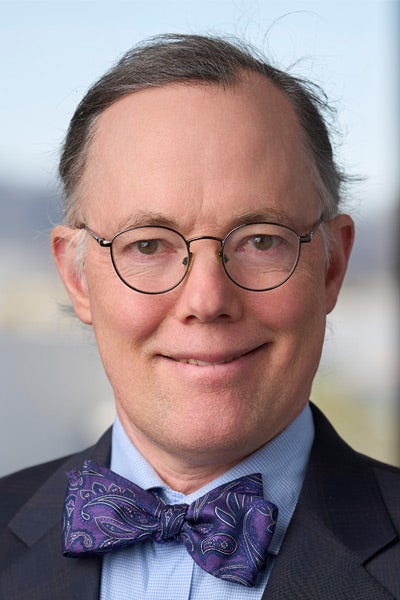
Thomas, for instance, has used mathematical models to understand how the brain uses sensory feedback from the body to regulate rhythms and movement. He's had a longstanding collaboration with fellow cluster member Hillel Chiel, PhD, professor in the Department of Biology, asking questions about the interplay between rhythmic processes inside the brain and how information is exchanged between the brain and body.
The pair has learned from looking at sea slugs to unravel biomechanics and neural control, the type of work they’ll bring to the ISEB.
"The people building biologically inspired robots want to look at the things that make animals able to move about the world robustly, get insights from those systems, and then use them to come up with new designs for ways to control robots," Thomas said. "I'm interested intellectually in the same kind of principles."
Gran is interested in the different potential applications of technology and whether they’re accessible and meaningful to all.
"I'd like to see if a public interest technology perspective can be part of what we're doing," in the ISEB, Gran said. "Thinking: How are these technologies useful to the public good? And then helping the different researchers take their work [in] those directions."
New paths, new possibilities
Gran and fellow faculty in the Department of Sociology have had conversations about how to show people all the possible paths that emerge from a degree in sociology, from medicine to law. He hopes the ISEB helps demonstrate those.
Similarly, in the ISEB, civil engineering students who may only be thinking of a job in civil industry or academia will be able to expand their horizons, Suh said. Exposing them to different application areas—and providing them with a research portfolio to match—opens them up for many additional opportunities.
Kathryn Daltorio, PhD (CWR '05; GRS '07, '13, mechanical engineering), associate professor in the Department of Mechanical and Aerospace Engineering
Samuel Root, PhD, assistant professor in the Department of Macromolecular Science and Engineering
Brian Taylor, PhD (CWR ’05; GRS ’08, ’09, ’12, mechanical engineering), assistant professor in the Department of Mechanical and Aerospace Engineering
Chengyu Li, PhD, associate professor in the Department of Mechanical and Aerospace Engineering
Gourav Datta, PhD, assistant professor in the Department of Electrical, Computer and Systems Engineering
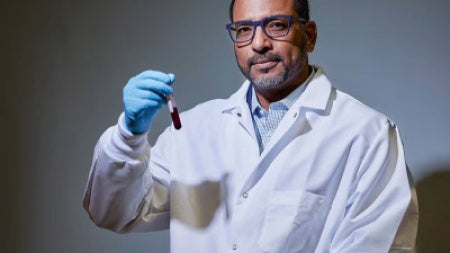
Hyoung Suk Suh, PhD, assistant professor in the Department of Civil and Environmental Engineering
Gary Wnek, PhD, Chair, Department of Macromolecular Science and Engineering
Robert Gao, PhD, Chair, Department of Mechanical and Aerospace Engineering
Roger Quinn, PhD, Distinguished University Professor and Arthur P. Armington Professor of Engineering, Department of Mechanical and Aerospace Engineering
Xiong (Bill) Yu, PhD, chair of the Department of Civil and Environmental Engineering
Zachary Patterson, PhD, assistant professor in the Department of Mechanical and Aerospace Engineering.
Edward Wang, PhD (GRS ’17, mechanical engineering), associate professor in the Department of Mechanical and Aerospace Engineering.
Changyong (Chase) Cao, PhD, assistant professor in the Department of Mechanical and Aerospace Engineering
Yash Sondhi, PhD, assistant professor in the Department of Biology
Brian Gran, JD, PhD, professor in the Department of Sociology, with secondary appointments in the School of Law and the Jack, Joseph and Morton Mandel School of Applied Social Sciences
Angela Dixon, PhD,assistant professor in the Department of Biology
Gabriella Wolff, PhD, assistant professor in the Department of Biology
Hillel Chiel, PhD, professor in the Department of Biology
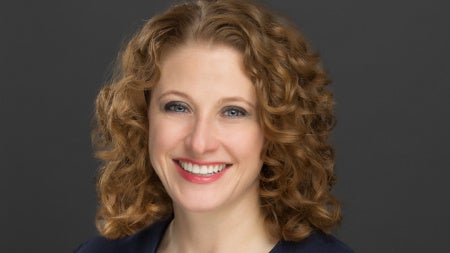
Jessica Fox, PhD, professor in the Department of Biology
Mark Willis, PhD, professor in the Department of Biology
Peter J. Thomas, PhD, professor in the Department of Mathematics, Applied Mathematics, and Statistics
For applied math students who will be working on mathematical models for robotics, the NeuroRobotics cluster can provide invaluable physical contact with the subjects of their theoretical models. Ensuring students connect the abstract to reality is a priority for Thomas. He made sure a student working on mathematical models based on data from the sea slugs in Chiel's lab walked across campus to stick her hand in the tank, pick up the sea slug and look at it.
"I'm expecting there will be something similar where seeing the challenges with getting a robot to do whatever the robot is trying to do may trigger an insight into, 'oh this aspect was important that I had overlooked,'" Thomas said.
Daltorio hopes these intersections can help not only students better understand the work, but also industry and community partners. If the cluster is looking at a practical problem for an industry partner, that process can begin to reveal the layers of different disciplines required to solve it and open up new potential collaborations.
Perhaps a company leader asks the NeuroRobotics cluster researchers to develop a robotic solution and then realizes that the math researchers rely on to build the robot would solve a number of other needs. That paves the way for additional collaborations with mathematics, Daltorio said.
"The ISEB is a window to show off things that are happening all over the university, which will help connect all the pieces together," Daltorio said. "I'm hoping we can kind of start to help make those connections that wouldn't otherwise be happening."
For Gran, that's ultimately the point—not just building smarter robots, but ensuring they reach the people who need them most.
"We may come at it differently," he said, "but we share interests, and it may be simply making the world a safer place or a better place."