

President's Message – April 2026
Happy spring! It is my absolute pleasure to greet you at this point of the year—and what a special year it is. In February, we celebrated the 100th anniversary of Black History Month, recognizing the past, present and future contributions of Black people in America. This year, we also celebrate 200 years of Case Western Reserve University! I am so proud of our history—the accomplishments and impact of Black alumni, students, faculty and staff on the Case Western Reserve campus over the past 200 years—and I am excited about all that is yet to come.
AAAA has been busy already this year, and I send a special shoutout to everyone who has joined us for our events thus far, including our annual Black History Month Day of Service on Feb. 14 at the Lutheran Metropolitan Ministries Men’s Shelter and the Black Student Union Game Night on Feb. 18. I can’t forget the AAAA Day at the Spartan basketball games on Feb. 28! It is always a pleasure when we can come together in service and community. If you missed those events, don’t worry; there’s more to come! Be sure to see the events listed in this newsletter and join us if you can!
Homecoming and Reunion Weekend will be here before we know it, with our biennial awards dinner and our business meeting, where we elect new leaders for the organization. I hope that you plan to attend as we come into community with one another, celebrate the many accomplishments of our peers and elect the leaders that will continue the mission and impact of AAAA. While more information about nominations for board positions will be available in our next newsletter, I highly encourage you to take a look at the positions listed in this one and consider candidates that you wish to nominate—which can include yourself! In the meantime, read on to learn how to nominate someone, yes, even yourself, for the 2026 African American Alumni Association Leadership Awards!
I hope you enjoy this newsletter. Join us for our events, share our newsletters and other materials with your classmates and friends and help us to continue to be a meaningful presence for our fellow alumni, students, faculty and staff at CWRU.

With warmest regards,
Tiarra L. Thomas (CWR ’12)
President
African American Alumni Association
2026 AAAA Leadership Award Nominations

Nominations are open for the 2026 CWRU African American Alumni Association Leadership Awards! These awards celebrate the rising stars within our alumni community, honor the courageous leadership of our peers, uplift the true servants in our midst and recognize the academic excellence of the faculty at our beloved alma mater.
Do you know a fellow alum who deserves to be recognized? Have you always wanted to see your favorite faculty member awarded for their academic excellence? Now is the time to nominate them!
Stephanie Tubbs Jones Leadership Award
Recipients of the Stephanie Tubbs Jones Leadership Award are CWRU alumni who provide service to the broader community and demonstrate loyalty to the university through participation and/or financial support. They show strong, effective leadership and resilience in the face of adversity.
Ella Mae Johnson Service Award
Recipients of the Ella Mae Johnson Service Award are alumni who have made a difference in the lives of others. They have provided direct service to the university and the community through volunteerism and civic engagement.
Rising Star Award
Recipients of the Rising Star Award are alumni from within the past 15 years who have demonstrated the potential for long-term distinction.
Distinguished Academic Award
Recipients of the Distinguished Academic Award are current or former faculty members or department heads who have made significant contributions to the university and to their professional areas of expertise.
Add your business
The African American Alumni Association is creating a business directory to highlight and support alumni-owned and operated businesses. We invite our alumni community to take part in this initiative. If you own or operate a business, please share your information with us. Your participation helps us celebrate the achievements and impact of our alumni community. Submit your business.
Black History Month recap
AAAA commemorated Black History Month with a series of community engagement and social events. Activities included volunteering at Lutheran Metropolitan Ministries' emergency men’s shelter, hosting a collaborative game night with the Black Student Union and attending the CWRU men's and women's basketball games against Carnegie Mellon.
Meet CWRU College of Arts and Sciences 2025 Distinguished Young Alumna Shayna Brathwaite
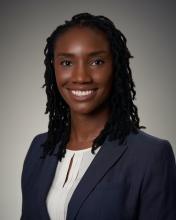
Shayna Brathwaite (CWR ’07, MED ’12), is a vascular surgeon at the Atlanta Veterans Affairs Healthcare System and an assistant professor of surgery at Morehouse School of Medicine, where she has been a part of the Department of Surgery since 2021. Originally from Ohio, Brathwaite completed undergraduate studies at Case Western Reserve , earning a Bachelor of Arts degree in 2007. She then attended CWRU School of Medicine, where she obtained her medical degree in 2012.
After medical school, Brathwaite completed her general surgery residency at The Ohio State University Wexner Medical Center. During her surgical training, she earned a Master of Science degree, and subsequently completed her vascular surgery fellowship at Emory University, where she distinguished herself through research and clinical achievements.
Brathwaite is dedicated to promoting health equity by diversifying the vascular surgery workforce. She actively mentors students and trainees to increase the representation of underrepresented minorities within the surgical profession. Additionally, she participates in community service events that raise awareness and educate high-risk communities about vascular disease.
As a funded surgeon-scientist, Brathwaite uses her academic background, clinical skills, and research to create programs that improve care for veterans on hemodialysis. She also helps patients make informed choices about vascular access. Outside of work, Brathwaite is a wife and mother of two young children. She enjoys DIY house projects, traveling with her family and trying new restaurants in Atlanta.
Abolitionism at Western Reserve College in the 1830s
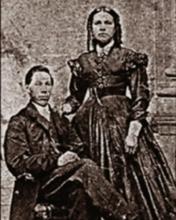
The Western Reserve of Ohio was strong in anti-slavery sentiment in the early 1830s, and many students, faculty members and trustees at Western Reserve College, recently established in 1826, were colonizationists and abolitionists. Colonization was the gradual emancipation of the enslaved people and included sending them to Africa; abolition was their immediate emancipation.
According to historian Frederick C. Waite, in 1831, President Charles B. Storrs became the first college president to publicly advocate for abolition. At that time, enrollment at the college was just 35.
In the summer of 1832, faculty member Elizur Wright, Jr. published a series of letters in the Ohio newspaper Observer and Telegraph, supporting the abolitionist cause and denouncing colonization. With some revisions in 1833, his writing was published in William Lloyd Garrison’s widely read anti-slavery newsletter, The Liberator. (The Sin of Slavery, and its Remedy; containing some reflections on the Moral Influence of African Colonization.)
Also in 1832, Wright’s colleague Beriah Green preached a series of sermons denouncing colonization. His argument that one could not be a good Christian if one were a colonizationist angered some trustees and local citizens, but attempts to remove or censure Green failed. 25 students wrote, signed and submitted a petition supporting him, among them John Sykes Fayette, class of 1836, the college's first documented African American student. This petition is the first documentation of student activism in the university’s history. Students formed the Western Reserve College Anti-Slavery Society in Dec. 1832.
By the 1833/1834 academic year, much had changed. In June 1833, Beriah Green resigned to take a position as president of Oneida Institute. Elizur Wright, Jr. resigned in August to begin full-time abolition work as editor for several abolitionist publications and secretary of domestic correspondence for the American Anti-Slavery Society. President Storrs became ill and died from tuberculosis on Sept. 15, 1833. Some students left the college for the newly established Oberlin College or for other institutions.
Abolitionist efforts continued, however. The Western Reserve College Church, of which many faculty and students were members, passed an anti-slavery resolution on July 27, 1835.
- Resolved. That we believe the treating of men as property is at war with the revealed will of God, conscience, & the common principles of humanity, & we therefore consider it a flagrant sin & one which, unless speedily repented of & forsaken, will not only ruin our temporal prospects as a nation, but bring blasting & mildew upon the church.
- Resolved. That, believing slavery thus defined to be a sin, it is the duty of the church to wash her hands of it by rebuking it publicly & in the spirit of our divine Master.
- Resolved. That a member of the church still persisting in the sin of slave-holding, after all the light which has been shed upon the subject, ought to be cut off from the communion of his brethren; & we, therefore, declare that we cannot conscientiously admit to our fellowship, or listen to the preaching of a slave-holder.
Thank you for serving
AAAA thanks President Tiarra Thomas, Vice President Brian Webster, Treasurer Vincent Holland and Directors-at-Large Joanna Rusely and Arik Smith for their devoted service, as they complete their final terms in these positions. Elections for board positions will take place at our biennial business meeting on Oct. 10, 2026.
Do you know someone who would be an asset on the AAAA Board of Directors? Please consider nominating yourself or another talented alumnus. Nomination forms and guidelines will be in our June newsletter. Terms are for two years, with no one serving more than two terms in the same position.
President
Calls and presides over the Board of Directors (BOD) meetings and performs other duties pertaining to that office. In consultation with and with approval of the BOD, the president appoints the chairpersons of all committees and fills any vacancies on the board. The president serves ex officio on all committees.
Vice President
Performs the duties of the president in the event of the absence, disability or resignation of the president. The vice-president may serve as chairperson of a committee other than the Membership or Program committees.
Secretary: Records the minutes of the BOD meetings and the association's business meetings, and preserves copies of publications and documents of special importance to the association. Sends out meeting notes to all members of the BOD.
Treasurer
Works closely with the Office of Alumni Relations to submit accurate reports of association revenues and expenditures to the BOD. Submits an annual financial report to the membership.
Directors-at-large
Work with the officers to carry out the purposes of AAAA. They may also serve as committee chairpersons.
Questions? Contact us at
aaaa@case.edu.
Meeting students where they are
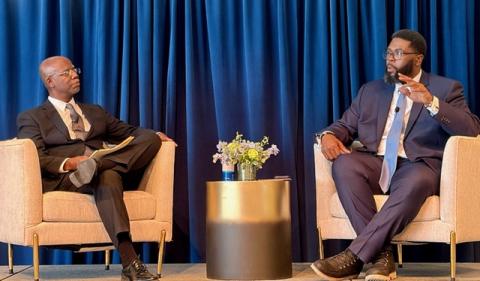
The frigid weather did nothing to discourage people from coming to hear Anthony Jack, associate professor of higher education leadership at Boston University and inaugural faculty director of Boston University's Newbury Center, when he delivered the keynote address and answered previously submitted questions at the Martin Luther King, Jr. Convocation on Jan. 23 at CWRU. Quoting King's "Injustice anywhere is a threat to justice everywhere", Jack challenged colleges and universities to address institutional inequities that reinforce inequality, even while expanding access. Said Jack, "Colleges are increasing access and broadcasting diversity wins, though they're recruiting students they are not ready for." These are students who cannot afford to leave campus during spring break, those with no knowledge of how to secure campus jobs that offer social benefits as well as financial support, and those with little home support for their educational journey.
It is important for students to advocate for themselves, but they should not do the university's job. Having scholarship and services working together is Jack's answer to the question, "How can we meet students where they are and not just where we want them to be”? The Newbury Center, where he is Inaugural Faculty Director, is a resource office for first-generation students and provides such services as the following: support for navigating the financial aid system, support for getting internships and study abroad opportunities, outreach to families to build shared commitment to academic success, programs to direct students to academic resources, and mentoring programs.
Recognition of the above student challenges prompted biology professor Stephen Haynesworth (GRS ’87, biology), facilitator of the question-and-answer portion of the convocation, to co-found, with Arthur Evenchik, what has become the CWRU Nord Family Emerging Scholars Program. Now in its 15th year, Emerging Scholars offers services similar to those of the Newbury Center and boasts a higher student graduation rate than the university as a whole.
Membership Survey
If you have not yet completed the survey, please do so and help shape the future of AAAA programming! Help us plan future events.
Back in the Day
Finding safety and fueling change
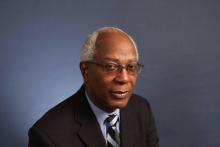
Across more than five decades, the African American Society (AfroAm) has provided a community for Black students and fostered a spirit of activism at Case Western Reserve University and beyond. The organization’s reaction to the announcement of a campus debate in 1974 between William Shockley, a Stanford professor who argued that Black people were genetically inferior to white people, and Roy Innis, the national chairman of the Congress of Racial Equality, served as a turning point for Melvin Rhoden (WRC ’78).
“It was just simply a slap in the face. It was an insult,” Rhoden said of the planned debate. “Here we were at one of the best universities in the country, and we felt ourselves to be well prepared to be there, and yet, there was supposed to be this debate.”
After 100 demonstrators led by AfroAm staged an hour-long protest, the event was canceled. Rhoden recalled attendees blowing whistles to drown out the debate before it started.
Despite partially cementing the legacy of AfroAm, the immediate effects were not as kind to student activist leaders. The protest was widely seen as a threat to free speech, and disciplinary actions loomed large for Rhoden and a tight-knit group of classmates. The group faced the threat of dismissal from the university and the uncertainty of it for nearly a semester—a circumstance that made the risks and responsibilities of their protest all the more clear.
“The real part of that was a sense of being present at the university, being a part of the university,” Rhoden said of the debate and its aftermath.
To Rhoden, his time at the university provided the foundation he needed to advocate for himself and others while not limiting himself in the process.
Rhoden found safety as a Case Western Reserve student, which provided a foundation for a lifelong commitment to service and advocacy. He served as president of the AfroAm as a student, and has supported his alma mater in his time after college as a member of the African American Alumni Association (AAAA).
Rhoden’s journey to Case Western Reserve mirrors that of Western Reserve College’s move from Hudson to Cleveland. The Western Reserve Academy (WRA) graduate found himself in University Circle for college at the recommendation of his high school counselor.
This move from the predominantly white all-boys boarding institution to the coeducational African-American-focused Sherman House residence hall was certainly an adjustment, but pivotal in his transition to college life. Rhoden described Sherman House as “the core of that first-year experience,” and that it was made all the more critical by “dorm mother” Stephanie Tubbs Jones (FSM ’71, LAW ’74). “She was a very strong, loving individual, and really held the whole place together,” Rhoden said of Tubbs Jones.
The late congresswoman, then a law student, introduced Rhoden and classmates to leadership from the Black Law Students Association who helped the protesters formulate their approach and understand their situation.
His experience with AfroAm laid a foundation of involvement for Rhoden. His first interaction with the organization was on his first day of classes his first year—before making any new friends. A group of seven older students from AfroAm took him in right away, creating an early sense of belonging. “It gave me immediate relationships,” he said.
Rhoden arrived at a leadership role with AfroAm as Black students expressed not being heard by leadership in control of the university budget or the university’s social committee. Specifically, students were dissatisfied with “general programming” and hoped to take part in social events more “culturally connected to them.” Having already led a similar organization at WRA, Black Students for Pride and Unity, and lived the university-style boarding experience there, he emerged as a voice.
As a member of the organization, Rhoden was elected to the University Budget Committee, and later became its treasurer. As more representation from AfroAm joined the committee, the change led to the funding that supported the first Ebony Ball, which AfroAm continues to celebrate each year to this day. The group also successfully advocated for funding for a Black poetry magazine, Welcome to Our Pad, of which Rhoden served as the managing editor. These changes occurred while Rhoden was president of the organization.
Protest wasn’t the only medium of activism for Rhoden and the other members of AfroAm. It was participation that was key. “We needed to be up at the table,” he said.
As college campuses continue a new chapter of campus activism on quads and online, the shift magnifies the similarities and differences between the modern protestors and those of the 1960s and 70s.
Rhoden says it’s important to realize that the Black student population at CWRU during his time on campus was “a critical mass of folk who had to find a space, who had to carve a space for themselves out of an environment that had been whole without them.”
“The lesson we could share with current students is this notion of being dually engaged, finding a safe space for yourself, for your own issues, and also being able to have those issues mature, so that they inform, therefore, the larger community.”
As for where the student activists of the 1960s and 1970s can learn from the modern campus protestors, Rhoden points to the importance of “recognizing how things evolve.”
“I’m probably sure that instead of blowing whistles, there would have been some other creative way to make a very loud statement about the Shockley-Innis debate.”
After graduation, Rhoden continued his dedication to advocating for others. This commitment took the form of a career in independent education administration, where he has continued to speak up for underrepresented students and the equal treatment of others. Even in retirement, he aims to play a part in providing the same foundation to young people he found in AfroAm.
Rhoden credits the safety of Sherman House and the significant number of Black students in his class as “the precursors to the welcoming environment” he found at CWRU, and says they were “the springboard for much that evolved. Specifically, he attributes much of the change that took place on campus and beyond to his classmates and students from the classes of the present and past. “I was well-positioned by experience to take up the mantle and move things along for the duration of my time at CWRU,” he said. “This is critical because students were active before my time and they have remained so to the current day.”
Upcoming Events
May 15–17
University Commencement
Commencement updates can be found at case.edu/commencement.
May 16
Black Student Union Graduate Celebration
Celebrate the undergraduate and graduate classes of 2026 at Tinkham Veale University Center. Register to attend.
June 4
Light & Truth: The CWRU and WRA Bicentennial Concert
In honor of the shared Bicentennial of Western Reserve Academy and Case Western Reserve, The Cleveland Orchestra presents a special, private performance celebrating 200 years of educational excellence and impact. Use code CWRU at registration.
Oct. 8–11
Homecoming and Reunion Weekend
This year, the celebration aligns with Parent and Family Weekend, uniting CWRU alumni, students, faculty, staff and families for four days of events. Find homecoming information.
Stay connected: Join a local alumni chapter today
We encourage all AAAA members to stay active through regional alumni chapters, which provide events and opportunities to connect with fellow alumni in your area. You can locate your chapter at case.edu/alumni/chapters, where you will also find links to chapter Facebook groups or ways to contact chapter leaders.
Share your story
We’re missing your story in the CWRU African American Alumni Association’s Virtual Yearbook! Take a few minutes to create your page and share where life has taken you since CWRU—we’d love to celebrate your journey and accomplishments. Once the yearbook closes, new pages won’t be accepted, so don’t miss your chance to be included. This collection of voices, experiences, and achievements isn’t complete without you. Add your page today and be part of the story! The access code is: cwruaaaa.
Want to keep up with AAAA?
What would you like to see highlighted in future newsletters? Do you have news to share? Do you know someone who wants to receive African American Alumni Association communications? Contact us at aaaa@case.edu.
Want to become a member? Fill out the membership form.
Follow us on our Instagram and Facebook page to keep up to date on the latest news.