2025 State of the University
An update on Case Western Reserve University from President Eric W. Kaler
To the Case Western Reserve University Community:
For 200 years, Case Western Reserve University has thrived at the convergence of ideas. And from that central core, we prepare leaders, we power innovation and we advance health and wellbeing. With our bicentennial upon us in 2026, we will celebrate this institution as one that is an impactful and influential force in education and research.
Certainly, the last 12 months have been extraordinary ones in higher education, particularly for research institutions. The landscape has changed, perhaps forever. Yet 2025 also has produced some of the most innovative examples of advocacy, collaboration and thoughtful paths forward that I have witnessed in my four decades in higher education—both here on campus and among our peers.
Some may criticize higher education as being slow to change. But I would counter that few institutions in the world have been as lasting as those dedicated to learning and life-changing research. Despite the shifting winds, we can, we have, and we will endure.
Last December, when I shared the 2024 State of the University, I wrote that it would be critical for us in the coming year to deliberately maintain our focus while being both adaptable to change and unwavering in our mission. I am proud that Case Western Reserve University has accomplished all three. This simply could not have happened without the excellence, grace, collaboration, time, and, importantly, our individual and collective commitment to our students, to research, and to our university.
I am tremendously grateful for each of you and your efforts. And in that spirit, I share this 2025 State of the University message.
Progress on Our Priorities
Since 2021, our three priorities—to elevate academic excellence, expand our research enterprise and enhance our engagement with the community—have guided our way toward the stronger CWRU that we have become and through the uncertain times for higher education we find ourselves in today.
Elevating Academic Excellence
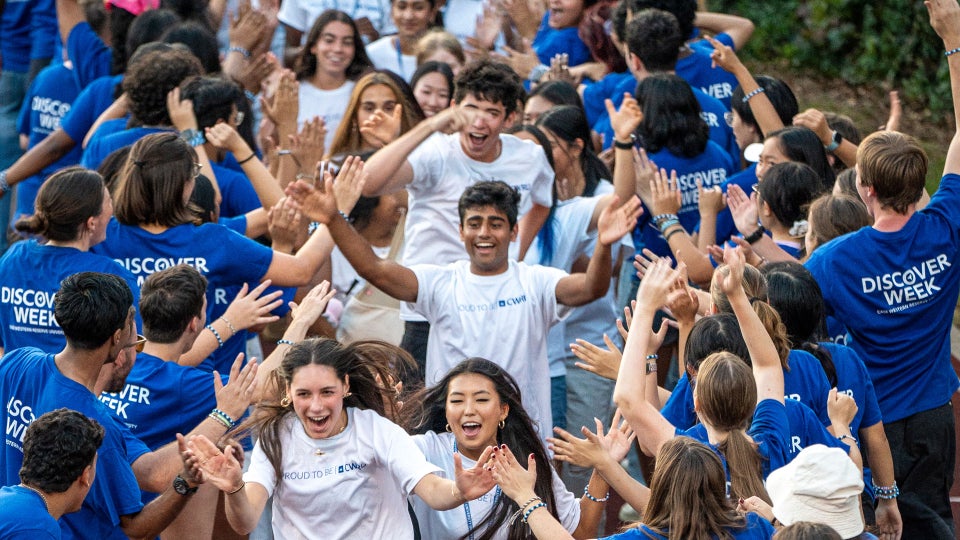
This fall, we welcomed a record first-year class of 1,663 students from 39,000 applicants. We did so in a time of changing immigration policies at the federal level that many feared would impact international student enrollment across the country. Though we did see more visa denials and visa delays than we had in the past for international first-year students, the determined efforts of our Enrollment Management team resulted in an international student enrollment roughly the same as last fall. With an undergraduate enrollment of 6,534 students, and graduate and professional enrollment of 5,864 students, our total enrollment for fall 2025 is 12,398.
The Office of the Provost continues to serve as the engine that advances our academic excellence. The Faculty 100 initiative, which aims to hire at least 100 net new tenure and tenure-track faculty by 2028, has attracted 58 top-tier faculty to date, with four additional faculty to join in 2026. In addition, the new Breaking Boundaries Seed Grants provide support for the advancement of interdisciplinary research teams with strong potential for acquiring major external funding through federal grants and/or foundation support. These seed funds are a key component of the Breaking Boundaries Initiative, which fosters collaboration across disciplines to advance research synergies throughout campus. We have also been leaders in our AI in Education initiative, with an emphasis on the ethical and responsible use of AI in learning. In fact, this semester, faculty from more than 40 departments integrated AI into their teaching and research in over 100 courses, along with advancing a newly approved minor in Applied AI that enables AI use across a variety of majors. And every day, the Office of the Provost works to strengthen civility and connection across our community, advance a commitment to improving mental health, and driving excellence in innovation across our campus.
Our seven schools and the college remain steadfastly committed to our mission of education and research. Highlights from each of the schools this year include:
-
Case School of Engineering celebrated many faculty achievements, including four faculty members who received the Presidential Early Career Award for Scientists and Engineers and one who received a Lifetime Achievement Award. Research at the school remains focused on societal impact: The school was awarded a new $9.9 million grant to take a major step toward commercialization for neuroprostheses that restore sense of touch; as well as prestigious early-career awards to advance research democratizing advanced machine learning capabilities and to protect public health by improving our water systems. In addition, student design teams—including the environmental design team, eVTOL drone team, CWRUBotix and CWRU Motorsports—achieved success in national and international competitions.
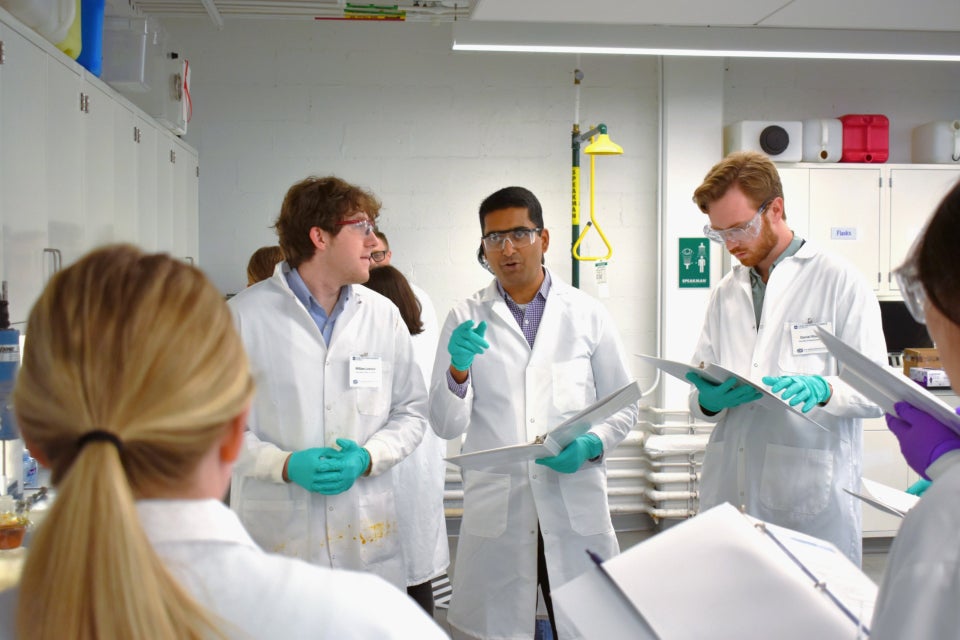
- The College of Arts and Sciences welcomed 17 new faculty members this fall, including one alumna. Also in the fall, the college launched the Humanity and Technology major as part of its Experimental Humanities initiative. Research expenditures have risen significantly in the college, with $16 million reported at the close of Fiscal Year 2025 compared to just over $12 million in Fiscal Year 2023. A portion of this growth was generated by the college’s Expanding Horizons Initiative (EHI). Funded by generous donors, EHI has awarded a total of $1.6 million to 120 faculty research projects since it was launched in 2021. As of August, these projects had secured more than $1.8 million in external funding.
- Frances Payne Bolton School of Nursing made history this year, welcoming its largest BSN class and securing a generous $8 million gift—its single largest ever—from the Shaughnessy family to support the Marian K. Shaughnessy Nurse Leadership Academy. National Institutes of Health (NIH) funding continues to be strong, as the school ranked #8 among private nursing schools and #20 among all U.S. nursing schools in Fiscal Year 2025. Further, the school strengthened its global and national rankings, rising to #28 worldwide in the Shanghai Rankings and to #13 in Bachelor of Science in Nursing, #20 in Master of Science in Nursing and #14 in Doctor of Nursing Practice in the U.S. News & World Report rankings. We were also thrilled to appoint Ronald Hickman, a quadruple alumnus and accomplished nurse scientist, as the School of Nursing dean on July 1.
- The Jack, Joseph and Morton Mandel School of Applied Social Sciences made strides in research funding, including a five-year, $3 million National Institute of Child Health and Human Development R01 grant. Additionally, the Begun Center was responsible for generating approximately $15 million in support for research, evaluation and training. First Year Cleveland (FYC), a collaborative effort to reduce infant death that is housed at the Mandel School, launched Healthy Beginnings at Home to support babies born to high-need families, and in September, FYC hosted its third Infant Vitality Advocacy Day in Columbus to advance infant health policies.
-
The School of Dental Medicine’s Dental Clinic is a pillar for oral health in the community and, in Fiscal Year 2025, completed more than 58,000 appointments. As part of the Digital Dentistry Transformation Project, the school implemented six intraoral scanners and advanced digital software to enhance the accuracy, speed and comfort of the impression process. In September, the Department of Comprehensive Care hosted the school’s first Digital Dentistry and A.I. Symposium, exploring the impact of AI and digital technologies on dental care. Also, research focused on older adults who face barriers to accessing dental care will continue, thanks to a five-year, $5 million grant from the Patient-Centered Outcomes Research Institute.
 Nancy Andrews/ Annie O’Neill Photography
 - The School of Law admissions team brought in the school’s strongest class ever for fall 2025, with a 162 median LSAT and a 3.76 median GPA (up from a 160 LSAT and 3.70 GPA for fall 2024). Using a data-based approach, the faculty made extensive changes to the school’s bar preparation program to ensure that every student has the best chance to pass the bar exam on the first attempt. Impressively, the school increased student employment to 96% (up from 86% in 2024) and rose to #2 in the state in total employment in 2025 (up from #7 in 2024), according to data from the American Bar Association. In February, the School of Law became the first in the country to require all first-year students to earn a certification in legal AI when it launched the program “Introduction to AI and the Law.” Since then, the school has been recognized as a leading innovator in legal education.
- The School of Medicine again received an eight-year approval of accreditation—the maximum term—in November from the Liaison Committee on Medical Education. Also in November, the school’s Institute for Glial Sciences held its inaugural Translational Glial Sciences Conference at the Health Education Campus, showcasing scientists who are at the forefront of glial sciences. The conference also marked the launch of the Institute for Glial Sciences, which was funded, in part, by a generous $2.5 million commitment from the Thomas F. Peterson Jr. Charitable Trust. And results of a clinical study on a therapeutic technology developed at the School of Medicine and licensed to NervGen Pharma Corp. has shown promising results for individuals living with chronic spinal cord injuries and has received positive media attention.
-
Weatherhead School of Management received a $25 million gift from the Weatherhead Foundation to launch the Celia Scott Weatherhead Leadership Institute, a university-wide, interdisciplinary institute to help CWRU students develop critical leadership skills. In the Financial Times 2025 Open Enrollment Executive Education Rankings, Weatherhead ranked #3 among U.S. schools overall and #2 in the world for overall satisfaction, a reflection of the school’s momentum with working professionals. In addition, Weatherhead expanded its xLab digital business transformation center to offer experiential coursework using digital and artificial intelligence to undergraduates, grow its corporate partnership base, lead the regional executive working group on AI, and expand into the nonprofit community.
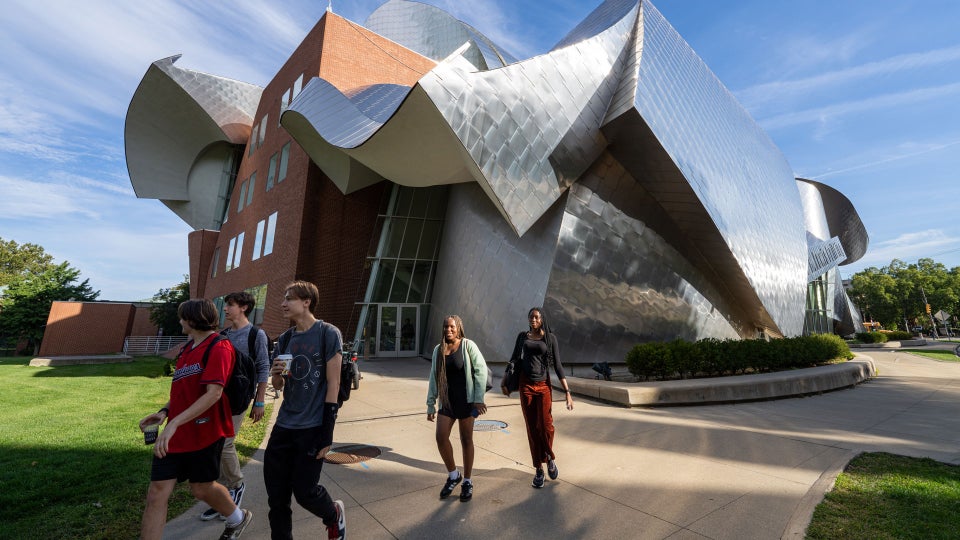
During commencement in May, we honored two new Distinguished University Professors—the university’s highest honor for faculty—for their exceptional scholarship and contributions to their fields. They are:
- Roger French, the Kyocera Professor of Ceramics in the Department of Materials Science and Engineering; and
- Jonathan Haines, the Mary W. Sheldon, MD, Professor of Genomic Sciences and chair of the Department of Population and Quantitative Health Sciences at the School of Medicine.
Expanding Our Research Enterprise
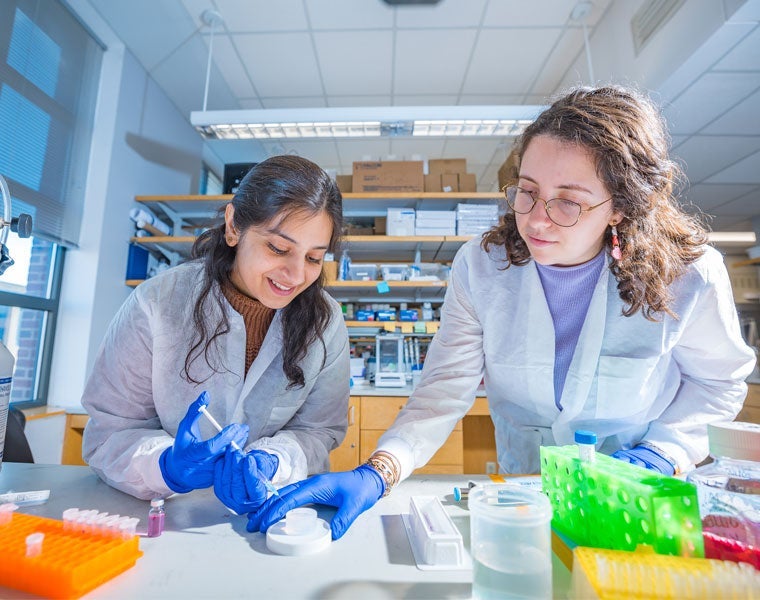
Thanks to the perseverance of our faculty researchers and enhanced teamwork of the Office of Research and Technology Management, we continue to submit impressive proposals for research awards. Though our grant portfolio is slightly decreased for this year—as was expected, given the shifting federal policies and cuts to National Science Foundation (NSF), NIH, Department of Energy and Department of Defense research funding—our applications are strong. Specifically, the School of Medicine has shown particular resilience in securing federal funding. Support for the vital Case Comprehensive Cancer Center was renewed and the important Clinical and Translational Science Collaborative remains strong.
Throughout the year, our Government Relations team—with our consultants in Washington, D.C.—have kept a close eye on changes at the federal level, especially those related to caps on indirect costs associated with research. We also remain actively engaged with our state and federal legislators to advocate for the university and research funding.
By our calculations from the November 2024 NSF Higher Education Research & Development (HERD) Survey, Case Western Reserve University’s performance places us among the fastest-growing research universities in the country. The 2025 HERD Survey results are not yet released, but indicators look promising.
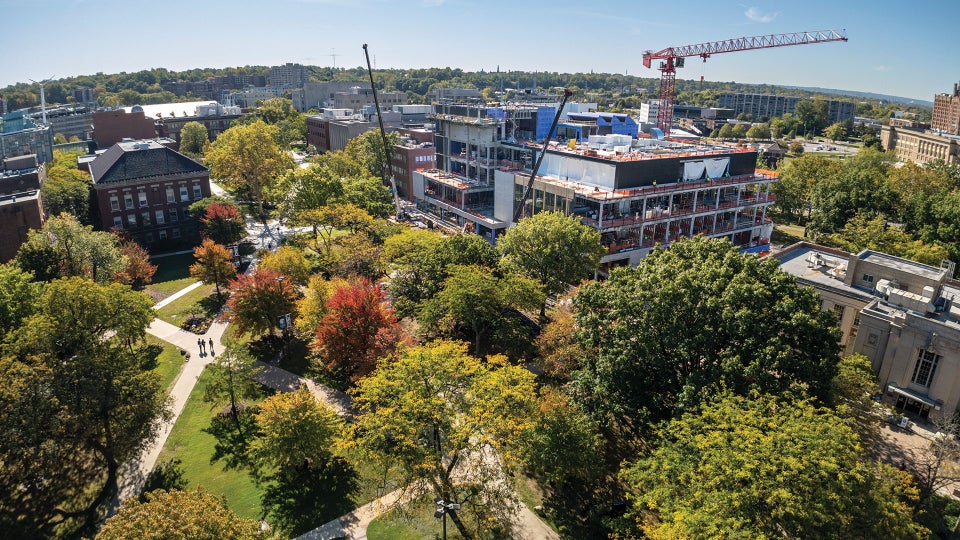
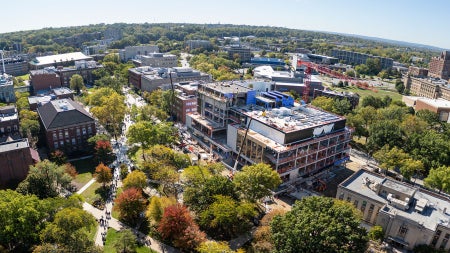
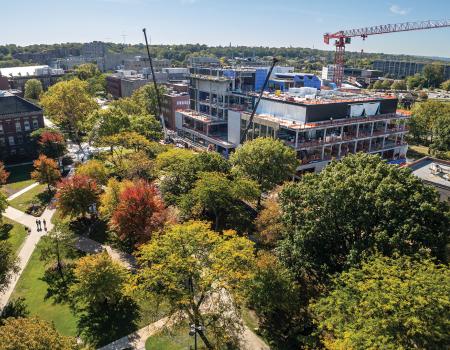
Plans for the Interdisciplinary Science and Engineering Building are taking shape with a priority on highly impactful cross-sector research. When the building opens next fall, we will have completed the three foundational components to our research ecosystem: innovation and discovery at ISEB, design and prototyping at Sears think[box], and commercialization at the 11000 Cedar Startup Incubator.
Every great American city is home to a great American research university, and indeed, Case Western Reserve University is that for Cleveland. This is a responsibility we take seriously and a role that we are working actively to expand. We want to increase our impact in regional economic and workforce development, business startup and growth, and community advancement. Beginning Jan. 1, Michael Oakes will take the lead for these efforts in his elevated role as executive vice president for research and economic development.
Already, Michael steers and supports the region’s NSF Engines effort—an initiative involving a consortium of industry, universities, community colleges, philanthropies, government and community partners. Together, we are focused on establishing Northeast Ohio as the premier national innovation hub for materials science and advanced manufacturing. We are proud to be one of 15 national finalists in the NSF Engines competition, and our next step is an in-person site visit in January. The winner of the award will receive up to $160 million over 10 years. Of course, we are hopeful we receive the grant and, working alongside our partners, we are doing all we can to ensure a successful outcome for the region.
Enhancing Community Engagement
The hub of our community engagement efforts is the Wade Park Community Engagement Center, which opened last fall. Home to our Office of Local Government and Community Relations, the center served more than 2,000 individuals and 130 events, activities and community meetings in 2025. In October, the center opened its second art exhibit, “One Art, One Community,” which features 46 works created by 16 artists who are incarcerated at the Grafton Correctional Institution. The exhibit will be on display through the end of February 2026.
The building is fulfilling its mission as a central meeting place to connect the CWRU community with residents, neighbors and nonprofit partners. I am particularly grateful to the Neighborhood Advisory Council for its significant efforts to expand dialogue and enhance shared pride in the neighborhoods adjacent to our campus.
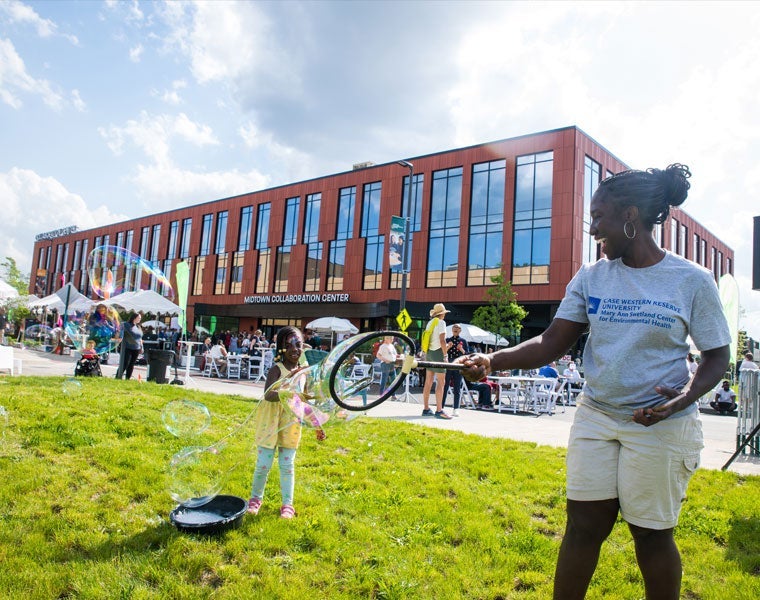
Our physical presence within the Cleveland community also expanded in 2025. In May, the Institute for Population and Community Health celebrated its move to the newly opened MidTown Collaboration Center, located in the Hough neighborhood. The center is the vision of the Cleveland Foundation and also houses other education, arts and community organizations. Locating the institute at the MidTown Collaboration Center was an intentional move to bring CWRU education and research directly to the community.
Our Pre-College programs continue to grow and celebrate milestones. For example, our thinkSTEM summer camp returned for a second year in July with enhanced hands-on activities and engineering programming for more than 20 local rising seventh through ninth graders. Also this summer, our National Youth Sports Program celebrated its 55th year on campus and attracted 386 local youth for the five-week experience that combines sports, educational enrichment, career planning, nutrition and health services. Looking ahead, our TRiO programs, which prepare low-income and potential first-generation high school students for successful postsecondary studies, will celebrate 60 years on campus in 2026.
Highlights from Selected Institutional Divisions
Our business operations are sustained by excellent leadership teams and staff who are committed to innovation, operational excellence and fiscal responsibility.
The Office for Campus Enrichment and Engagement was launched last spring and has worked steadily to advance its mission of enriching our campus life through building community, active engagement, mindful learning and transformative civil dialogue. To that end, the office has sponsored the “Minds in Motion: Understanding Mental Health” lecture series designed to educate, normalize and inspire our community around the importance of good mental health. In September, the office hosted a Sustained Dialogue Week in partnership with John Carroll University and the Sustained Dialogue Institute in Washington, D.C. The week included events, training and staff development opportunities on both campuses. Also, 21 participants in the inaugural cohort of the Engaged Leaders Academy graduated this fall. The group gained insights about belonging, community building and the principles of effective leadership.
Our University Relations and Development (URD) team ended Fiscal Year 2025 raising $189 million, which was the third-best year in university history. The group also held its first Campaign Cabinet meeting to begin planning for the public launch of our next university-wide campaign. Impressively, URD surpassed its goal in 2025 to raise $250 million for scholarships in the six years since the end of the Forward Thinking campaign, achieving that goal in half the time it took to raise a similar amount in the Forward Thinking campaign. The division also began a series of Bicentennial alumni and friends events across the country and the world in preparation for next year’s celebration.
The Division of Finance reported that the university finished Fiscal Year 2025 with a financial surplus, the 18th consecutive year that CWRU has finished a fiscal year operating overall with a positive margin. For more details, you may review the university’s 2026 Budget Summary and 2025 Financial Report. We are grateful for the financial stability we enjoy as a result of the division’s strategic and disciplined fiscal approach. This also contributed to our ability to sustain the S&P Global rating agency’s AA- bond rating and stable outlook for another year. In an effort to educate senior leaders and support staff on financial challenges and opportunities, the senior finance team hosted the university’s first Finance Academy in November. The all-day event was attended by 130 faculty and staff and received overwhelmingly positive feedback. The finance team plans to hold another academy again in 2026.

Campus Planning and Facilities Management has done an exceptional job managing the construction of ISEB. The project continues on budget and is on time for a fall 2026 opening, following the conclusion of our Bicentennial celebrations. This past summer, work to run utilities to the building under the Case Quad was completed and, since then, crews have worked steadily to install the roof, windows and other exterior finishes. We estimate the building to be fully enclosed by the end of this month. Also last spring, the Campus Planning team, in partnership with University Marketing and Communications, installed the new large CWRU letters next to the Binary Walkway (now a popular spot for students and passers-by to take pictures), as well as new signage throughout campus entry points. In the coming years, the team’s Campus Master Planning guiding document will help us make decisions about various capital and improvement projects on campus.
University Marketing and Communications (UMC) has developed and activated a master brand strategy to better position the university publicly and within the higher education community. The branding work more clearly defines our identity and brings fresh creative expression. Notably, UMC launched the CWRU Newsroom in August to bring together all the latest news and stories from across campus in one central hub. Now, our stories are searchable by topic category and by each of the schools and the college, creating a more streamlined approach to exploring and amplifying news about the work we do. Additionally, UMC launched a redesign and reimagined Case Western Reserve University Magazine. The first issue was mailed and posted online in October.
University Technology ([U]Tech) has significantly advanced the university’s technological landscape. The group drove university-wide AI adoption by expanding models available at ai.case.edu, along with access to Google AI tools. [U]Tech delivered comprehensive training to academic and administrative units to ensure effective implementation. Simultaneously, it strengthened our security posture with a new AI-powered cybersecurity monitoring system, which enhances threat detection while streamlining our application portfolio. In support of the provost’s strategic initiatives, [U]Tech successfully implemented the Slate Student Success platform to provide superior tools for graduate advisors and students.
The Department of Human Resources launched a number of AI-related training sessions for faculty and staff across the university. Many of the sessions are available to view on demand. In partnership with [U]Tech, the HR Professional Development Center also launched AI Prompt Engineering, an initiative to help CWRU faculty and staff unlock their ability to use and lead with AI. More than 90 employees received child care subsidies for Fiscal Year 2025, the second year of the university’s Child Care Subsidy Program. In total, the program paid $120,000 in subsidies to eligible employees. In September, Vice President for Human Resources Carolyn Gregory announced her retirement, effective Feb. 28, 2026. A search for her successor is underway.
Looking Ahead to 2026
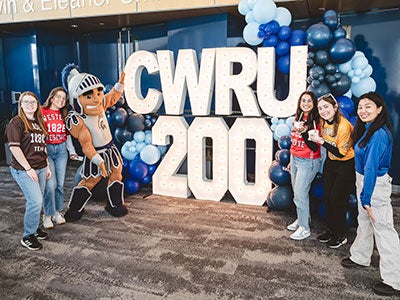
I look forward to celebrating our Bicentennial with our university community, alumni and friends in 2026. We have so much to be proud of and a tremendous history to honor. I encourage you to mark your calendars for two events: first, our Bicentennial Birthday Celebration on Saturday, Feb. 7, 2026; and second, the Bicentennial Concert with The Cleveland Orchestra on Thursday, June 4, 2026. That event is being presented in partnership with Western Reserve Academy. You can stay up to date on all of our Bicentennial events on our Bicentennial website.
Again, I want to emphasize the extraordinarily good work and partnership of everyone in our university community—our faculty and Faculty Senate, staff and the Staff Advisory Council, students, postdocs, university trustees, leadership team, alumni and donors. It is a privilege to serve as the leader of this institution and to be surrounded and supported by such excellent professionals. I wish everyone a wonderful winter break and a happy new year.
Eric W. Kaler
President