

The Social Justice Research Series highlights local scholar and community activists who are actively researching in their field through a social justice lens.
2025-2026 Events
Community Conversations on Health, Science, and Technology in the Service of Justice with Professor Lynette Hammond Gerido
Thursday, April 16th, 2026, 4:30 PM - 5:45 PM
Moot Court Room, School of Law, 11075 East Blvd.
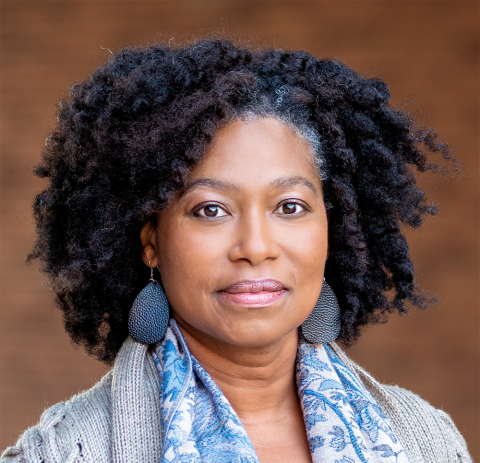
In this lecture, Dr. Gerido introduced herself as an empirical bioethicist and information scientist whose scholarship in the Ethical, Legal, and Social Implications of genomic research is rooted in community partnership and a commitment to justice in precision medicine and artificial intelligence. Her work is driven by a central question: how do we have honest conversations about science and technology when innovation is inseparable from histories of exclusion, unequal recognition, and structural harm?
Using examples from the history and politics of science, this talk examined how social justice concerns shape the way we interpret discovery, expertise, and progress. She highlighted the contested legacy of James Watson, whose role in DNA science cannot be separated from his personal stances on race, intelligence, and gender. She also examined Rosalind Franklin’s scientific contributions and the enduring questions about recognition and credit in the story of DNA discovery. In conversation with scholars such as Alondra Nelson, Professor Gerido also situates these issues within broader histories of medical discrimination, public response, and the struggle to make science and medicine more accountable to the communities they claim to serve.
These cases provide a way to think about contemporary debates in precision medicine and artificial intelligence. New technologies promise better prediction, earlier diagnosis, and more personalized care, but they also raise enduring questions about power, trust, representation, bias, and accountability. Their legitimacy depends not only on technical performance, but on whether researchers and institutions are willing to engage communities as genuine partners, address historical and ongoing harms, and design research that is transparent, responsive, and worthy of trust. She argues that community partnership is not simply a strategy for recruitment or dissemination. It is a justice practice that can reshape research questions, guide technology design, and help rebuild trust in fields where skepticism is historically grounded. This talk invited participants to see difficult conversations not as obstacles to scientific progress, but as necessary to more inclusive, socially responsive, and ethically grounded research.
Click here to learn more about Professor Lynette Hammond Gerido.
"Constitutional Rights vs. U.S. Bail System"
Alireza Nourani-Dargiri, JD
Postdoctoral Fellow, Social Justice Institute
Adjunct Professor, School of Law
Tuesday, November 18, 2025 4:30 - 6:00pm
Moot Court Room, School of Law, 11075 East Blvd.
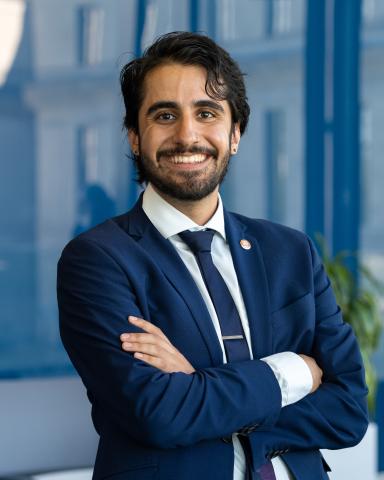
Alireza Nourani-Dargiri's research focuses primarily on the intersection of race and law to provide insight into disparate consequences in legal systems. This talk explored how the U.S. bail system impacts foundational constitutional rights. This presentation discussed how the current system violates various constitutional rights and has disparate impacts for minoritized groups, highlighting the need for comprehensive bail reform.
2024-2025 Events
"The Hidden Impact of Hygiene Poverty on Health"
Monday, November 18, 2024 at Noon
Moot Court Room, CWRU School of Law,
11075 East Blvd, Cleveland, OH 44106
Dr. Shanina Knighton is a nurse-scientist, infection preventionist, and research assistant professor at Case Western Reserve University, adjunct in biomedical engineering and also serving as a senior nurse scientist at MetroHealth System.
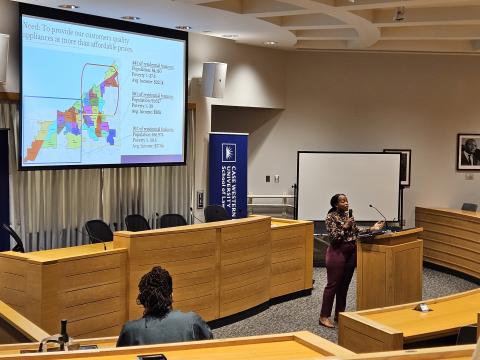
This talk provided audience members with an overview of good hygiene practices that may not come to mind when thinking about day to day practices. Dr. Knighton highlighted specific hygiene practices that may be more difficult for those that do not have the resources to access certain cleaning products. Her research provided detailed solutions for those impacted by poverty to be able to create their own cleaning products with cheaper materials.
2023-2024 Events
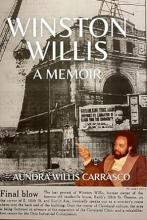
"Winston Willis: A Memoir"
Friday, April 5, 2024, 12:30 - 2:00pm
Moot Courtroom A59
CWRU School of Law, 11075 East Blvd
Presentation by:
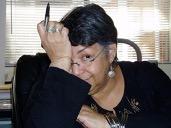
Aundra Willis Carrasco, freelance writer, essayist, and memoirist
"After becoming a self-made millionaire at the age of 28, Winston seized the hidden opportunity presented by riot-induced white flight and wisely invested in commercial real estate. Making sweeping purchases of numerous abandoned properties, he transformed the previously crime-ridden area and made something out of nothing. A widely successful urban paradise, and a brilliant symbol of Black prosperity. But in doing so, he unwittingly triggered racial resentment and made enemies of politically powerful individuals and the corrupt local judiciary. "
This talk detailed the buried history of Winston Willis's empire on Cleveland's east side in the 1960s and 1970s, and the battle for reparations and lost capital that continues to the present day.
"Youth in Transition: From Juvenile Courts to Adult Systems"
Wednesday, March 27, 2024, 12:30 - 2:00pm

Room A65
CWRU School of Law, 11075 East Blvd
Presentation by:
Jill Yang, PhD, MSW, Postdoctoral Scholar, Social Justice Institute
This talk presented a comprehensive exploration of the treatment of Cuyahoga County youth in the juvenile and adult justice systems. The research examines the impact of incarcerating juveniles in the adult system, with a focus on the current policy, disparities in race, gender, age, and sentence length. The presentation delved into the bindover process as well as other proceedings that can lead to youth experience incarceration in adult facilities. Understanding these disparities is crucial for advocating for fair and equitable treatment of all individuals, regardless of their background or circumstances.
"Law and Democracy in a 'Post-Racial' America"
Wednesday, October 25, 2023, 4:00-5:00 pm
Cleveland Public Library
Harvey Rice branch, 11535 Shaker Blvd.
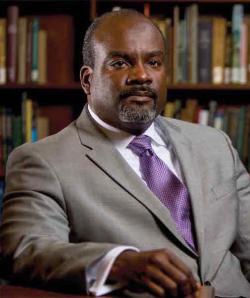
As part of our SJI Lecture Series, Professor of Law Atiba Ellis discussed how social justice informs his research and work when it comes to examining and teaching law and democracy.
Atiba Ellis, JD, CWRU Professor of Law
2022-2023 Events
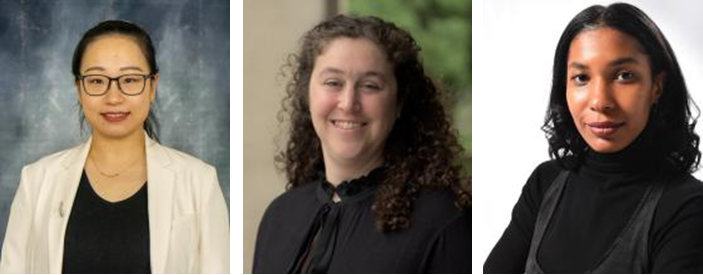
"Families of Juveniles with Life Sentences"
Wednesday, February 1, 2023, 11:45am-1:15pm
Jill Yang, PhD, MSW, Postdoctoral Scholar, Social Justice Institute
"The Superhero Project: Recognition and Representation"
Wednesday, March 1, 2023, 11:45am-1:15pm
Lisa Kollins, Founder and Executive Director, The Superhero Project; Former Administrator and Former Leadership Team Member, Social Justice Institute
“Art for Movement: Culture and Cultural Organizing for Racial Equity"
Wednesday, April 5, 2023, 11:45am-1:15pm
Amanda D. King, JD, Co-Founder, Shooting Without Bullets; conceptual artist, social justice advocate, and educator; LAW '17; 2022 FRONT Art Futures Fellow
"Reproductive Rights and Justice in a Post-Roe World
Thursday, September 15, 2022, 12:00 pm
Crawford Hall A-13, 10900 Euclid Ave
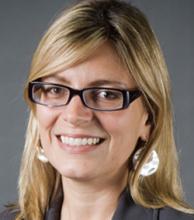
Our first Fall 2022 lecture featured Jessie Hill, JD, Associate Dean for Research and Faculty Development, School of Law; Judge Ben C. Green Professor of Law, School of Law; Social Justice Institute Leadership Team.
2021-2022 Events
"Healthcare Lapses Among Sexual and Gender Minorities"
April 20, 2022, 12:00 pm
Crawford Hall A-13 / Virtual via Zoom
The last of our spring 2022 Social Justice Research Lunch Series featured Dana Prince, PhD (Associate Professor, Mandel School of Applied Social Sciences) and Braveheart Gillani (Doctoral Student, Mandel School of Applied Social Sciences; Previous Instructor, SJUS 100).
"1492 & the Beginning of Planetary Injustice"
March 23, 2022, 12:00 pm
Crawford Hall A-13 / Virtual via Zoom
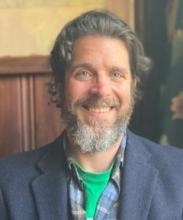
The second of our spring 2022 Social Justice Research Lunch Series featured Jeremy Bendik-Keymer, PhD of CWRU (Professor of Philosophy; Faculty Senate Vice Chair).
"Who are Black Girls? An Intersectional Herstory of Feminism"

Wednesday, February 9, 2022, 12:00 pm
Crawford Hall A-13 / Virtual via Zoom
The first of our spring 2022 Social Justice Research Lunch Series featured Shemariah Arki, PhD of Kent State University (Assistant Professor, Africana Studies; Director, Center for Pan African Culture; Founder and Program Director, Ellipsis Institute for Womxn of Color in the Academy).
2018-2019 Events
"God Complexes" and "Complex Gods": Emancipatory Practices in Religion and Hip Hop
Tuesday, September 11, 2018, 11:30 am-12:45 pm
Crawford Hall, Room A9 (ground floor), 10900 Euclid Avenue
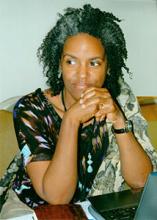
Joy Bostic explored the use of "divine grammars" by Black hip hop and contemporary pop artists to address complex issues of race, gender, sexuality, power and divinity.
"Never Leave Yourself: Gender, Education and Health in Belize"
Tuesday, November 6, 2018, 11:30 am-12:45 pm
Crawford Hall, Room A13, 10900 Euclid Avenue
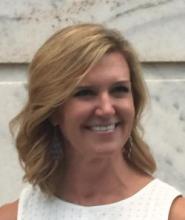
Eileen Anderson-Fye of the School of Medicine provided an analysis of a twenty-year study that followed the first high school educated cohort of women in Belize and discuss how they subsequently transformed their society.
"Followers in a Leaderless Movement: An Intersectional Analysis of the Occupy Wall Street Movement"
Tuesday, December 4, 2018, 11:30 am-12:45 pm
Crawford Hall, Room A13, 10900 Euclid Avenue
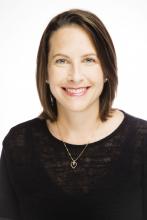
Even in contemporary "leaderless" social movements, leadership is an interactional, gendered, and intersectional process, shaped by follower feedback. Heather McKee Hurwitz, a full time lecturer in sociology, analyzes the Occupy Wall Street movement through this complex lens.
"Draw the Circle Wide: Celebrating Transgender and Gender Expansive Students in Music Learning Environments"
Tuesday, January 29, 2019, 11:30 am-12:45 pm
Crawford Hall, Room A13, 10900 Euclid Avenue
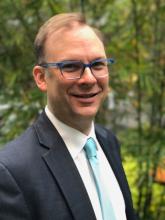
A critical conversation about creating equal access to ethically and pedagogically sound education for trans and gender expansive students with Matthew Garrett, associate professor of music.
"The "Tiny Horrors" of Cultural Genocide: Indigenous Children in Residential and Boarding Schools, 1870-1970"
Tuesday, February 26, 2019, 11:30 am-12:45 pm
Crawford Hall, Room A13, 10900 Euclid Avenue
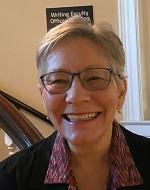
Susan Dominguez, SAGES teaching fellow, will discuss the century of North American federal policy that ripped children from families and inflicted tortuous cruelties for years at a time, creating conditions of PTSD and genetically embedded intergenerational trauma.
"Embedded Activism: Changing Foster Care from the Inside Out for LGBTQ2S Youth"
Tuesday, March 26, 2019, 11:30 am-12:45 pm
Crawford Hall, Room A13, 10900 Euclid Avenue
Dana Prince (MSASS assistant professor) and Sonia Emerson (project coordinator of Affirm Me) led a dialogue about opportunities, barriers and effective strategies for effecting social change for LGBTQ2S (Lesbian Gay Bisexual Transgender Queer/Questioning Two-Spirit) youth within the public child welfare system. This conversation co-sponsored by QGrad.
2017-2018 Events
"Social Justice Institute Fellows Present..."
Research Lunch Series with Janet McGrath and Andrew Rollins, Frank Manzella and Megan Schmidt-Sane
Tuesday, April 17, 2018, 11:30 am-12:45 pm
Crawford Hall, Room A13, 10900 Euclid Ave
Anthropology-Engineering Collaborative: Designing Interdisciplinary Solutions to Global Health Problems
Janet McGrath (professor of anthropology) and Andrew Rollins (professor of biomedical engineering and medicine) present the results of their collaboration that trains social science and engineering students at CWRU and Makerere University, Uganda in a collaborative design process involving community based participatory action research (PAR) and biodesign to develop solutions to locally identified technology for health needs in Luwero district, Uganda.
(Dis)Embodied Experiences of Medical Tourism in Urban Brazil
Drawing on the results of a one-year ethnographic study on the medical tourism industry in Rio de Janeiro, Brazil, Frank Manzella (graduate student in anthropology) focuses on the social justice dimensions that encourage foreign patients to seek healthcare in another country. Additionally, conflicts encountered by patients throughout the many phases of the medical tourism process will be described.
"We lost many of our friends": Economic scarcity, social resilience, and HIV vulnerability in Kampala, Uganda
The research of Megan Schmidt-Sane (graduate student in medical anthropology) employs a broader framing of risk in the patterning of HIV vulnerability and social resilience among men in Kampala, Uganda who live and work in communities deemed “high-risk” due to the presence of sex work. This study draws on core principles in social justice to confront the complexity and fragility that punctuates life at the margins.
"A Different PoV: A Plea for Academic Rigor on North Korea"
Tuesday, March 20, 2018, 11:30 am-12:45 pm
Crawford Hall, Room A13, 10900 Euclid Ave
Presented by Merose Hwang, Hiram University
The Democratic People’s Republic of Korea (DPRK, aka North Korea) is referred to as the most isolated country in the world. We assume this is an inaccessible country and yet we hold strong assumptions and feelings about this place. Teaching on this topic presents many challenges when ideas of North Korean threat and violence dominate the headlines and racial misogyny permeates the literature.
In this presentation, Professor Hwang challenged us to look beyond our enemy-lens to find a better way of understanding North Korea and to look at the DPRK from its own historiographical vantage point. Examining North Korean pedagogical materials allows us to glean a new perspective, one in which a country endured a long history of imperial and colonial aggression and emerged as a truly post-colonial nation. By studying DPRK poems, interviews, documentaries, and films, we can gain nuanced understanding of the values and attitudes of people as individuals, social sub-groups, communities, as humans experiencing pleasures, local and global challenges, and the mundane of everyday life and see North Korea beyond a faceless horde under a diabolic dictator.
"Forced Labor and Maritime Art: Finding Slaves in Seventeenth-Century France"
Tuesday, February 13, 2018, 11:30 am-12:45 pm
Crawford Hall, Room A13, 10900 Euclid Ave
Presented by Gillian Weiss
Historians long assumed that after the medieval period, slavery vanished from metropolitan France and re-emerged only in its American colonies. In fact, thousands of enslaved Muslims and convicts labored for King Louis XIV (r. 1643-1715). Besides rowing his Mediterranean galleys, these servile oarsmen helped build and decorate naval vessels and other artworks that proclaimed royal supremacy. In her collaborative book project (with NYU art historian Meredith Martin), historian Gillian Weiss explores the role of forced labor in maritime art produced and displayed in seventeenth-century France. Her talk considers how revealing the historical presence of Muslims and the persistence of slavery reverberates in current debates about Islam, immigration, integration and citizenship.
"Medical Deportation: The New Form of Patient Dumping"
Tuesday, January 23, 2018, 11:30 am-12:45 pm
Crawford Hall, Room A13, 10900 Euclid Ave
Presented by Sana Loue
Medical deportation refers to the involuntary removal of documented and undocumented immigrants with long term health care needs and little or no health insurance coverage from a US hospital to a facility in their country of origin. Often, the medical facilities that exist in the immigrant’s country of origin to which individuals are sent lack adequate equipment and/or skill to provide the requisite care. Research suggests that hospitals are increasingly utilizing this practice to address inadequate funding for emergency and long term medical care costs. Some hospitals have attempted to have a US citizen patient removed to the country of a parent’s origin in an effort to reduce their costs. Hospitals have often been successful in their attempts to obtain a state court order permitting such medical deportations. Various commentators have suggested that the practice of medical deportation represents a form of patient dumping across international borders, and constitutes a violation of both US and international law. This presentation explores the ethical and legal issues confronting health care providers in such situations, as well as the obligations of local governments and organizations to provide care for immigrants with health needs.
"Who's Afraid of Edward Said? The Palestinians and the Stifling of Dissent"
Tuesday, December 5, 2017, 11:30 am-12:45 pm
Crawford Hall, Room A13, 10900 Euclid Ave
Presented by Ted Steinberg
Steinberg writes: "Growing up in the sixties and seventies, I don’t recall hearing anything about Palestinians. It was always Arabs. Golda Meir herself had said that the Palestinian people 'did not exist.' My personal journey with respect to this contentious issue, and an update on the serious threats to dissent now present and brewing in the United States—and on our campus."
"Race, Equity and Inclusion: How Cleveland Generates Wealth"
Tuesday, November 7, 2017, 11:30 am-12:45 pm
Crawford Hall, Room A13, 10900 Euclid Ave
Presented by Kevin Alin and Peter Truog
What happens when a community comes together to unpack the history of structural racism and how it manifests locally? In 2017, Cleveland Neighborhood Progress, the Fund for Our Economic Future, and other engaged partners funded a learning journey to increase shared understanding of racial inequality in Northeast Ohio and foster productive dialogue among stakeholders. Through that journey, The Fund for Our Economic Future has produced an analysis looking at how wealth is generated annually in the Cleveland MSA through a racial equity and inclusion lens. A discussion of this analysis and the questions that it provokes was the focus on this presentation.
"Social Justice Institute Fellows Present..."
Research Lunch Series with Matthew Rossman and Elizabeth Nalepa
Tuesday, October 10, 2017, 11:30 am-12:45 pm
Crawford Hall, Room A13, 10900 Euclid Ave
Not the Sharpest Tools in the Shed - In Search of Smarter Homeowner Subsidies
Matthew Rossman, professor of law, discussed his revealing research project about the profound disconnect between the federal tax code’s homeowner subsidies (often criticized for primarily benefiting higher income households) and other federal housing related policies. These other policies include combating disinvestment in distressed housing submarkets, decreasing residential segregation, and minimizing negative environmental externalities. This project also explores how homeowner subsidies might be made smarter, including through community level applications of advances in real estate data and analytics.
The Effect of Abortion Restrictions on Individual Outcomes
New regulations and restrictions placed on access to abortion in the United States are assumed to disproportionately impact women marginalized by their race, ethnicity, and socioeconomic status. Using data that spans more than 30 years, Elizabeth Nalepa, sociology graduate student, explores how health policy such as abortion regulation generates or worsens health inequalities.
"The Secret Joy of Accountability
Mixed-Race -Gender -Class -Age Collaborations in Life and Liberation Work"
Tuesday, September 19, 2017, 11:30 am-12:45 pm
Crawford Hall, Room A13, 10900 Euclid Ave
Veteran queer, sex-positive activists Ignacio Rivera and Jaime Grant talked about their long history of collaboration across differences that are often fault lines in our culture and society. How do we create accountable partnerships and grow accountable communities across race and gender differences (especially) in the midst of so much white supremacist, sexist and transphobic violence? How do we address how racism, sexism, queer and transphobias, ageism, fatphobia and other systems of oppression inequitably distribute resources and opportunity? How do we take care of each other while fighting? How do we take care of ourselves?
"History, Biography and Age: Levels of Inequality in the Life Course"
Tuesday, September 12, 2017, 11:30 am-12:45 pm
Crawford Hall, Room A13, 10900 Euclid Ave
Presented by Dale Dannefer, PhD
In many late modern societies, increasing attention is being paid to the realities of inequality. Although those who focus on inequality have paid little attention to its relation to age, the set of temporally grounded processes associated with individual aging comprise a robust and reliable generator of social inequality. In this talk, Dannefer reviews those processes and considers the reasons for their resilience and the possibilities of change.
2016-2017 Events
"Sexual Assault Kits - Changing What We Know About Rape"
Tuesday, September 13, 2016: 11:30 am-12:45 pm
Crawford Hall, Room A13
Presented by Misty Luminais, PhD and
Discover how research conducted on the untested backlog of sexual assault kits is changing the understanding of serial criminals, victimization and investigations.
"The Promise, The Breach and the Remedy"
Tuesday, October 11, 2016: 11:30 am-12:45 pm
Crawford Hall, Room A13
Presented by Ayesha Bell Hardaway, JD
An examination of the legal construct of common law trusts and the relationship between the United States government, Native Americans and African Americans.
"From Riot to Political Event: Cleveland's Hough Neighborhood of July 1966"
Tuesday, November 8, 2016: 11:30 am-12:45 pm
Crawford Hall, Room A13
Presented by Paul Hanson
Making the case that Hough was a political event which can be productively interpreted in light of wider struggles over resident rights to the city.