

Search results, if found, will automatically update as terms are selected. If no results are displayed, please revise your search terms.
Filter By:
-
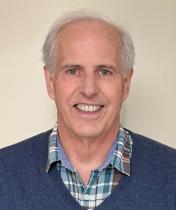
Jonathan L. Haines, PhD
Chair, Department of Population and Quantitative Health Sciences, School of MedicineMary W. Sheldon MD Professor of Genomic Sciences, Department of Population and Quantitative Health Sciences, School of MedicineProfessor, Department of Genetics and Genome Sciences, School of MedicineProfessor, Department of Ophthalmology and Visual Sciences, School of MedicineFounder and Director, Cleveland Institute for Computational Biology, School of MedicineEmail: jonathan.haines@case.edu
Phone: 216.368.0411
My focus is on genetic epidemiology of neurological and opthalmological disorders, as well as computational methods for biomedical big data.
-
Xiaonan Han, PhD
Associate Professor, Department of Medicine, School of MedicineMember, Cancer Genomics and Epigenomics Program, Case Comprehensive Cancer CenterEmail: xxh455@case.edu
Our laboratory is interested in the chronic infection- or inflammation-induced colorectal cancer (CRC), which can cause the majority of metastatic CRC (CRC) over time without intervention. One of the most important pathogeneses of mCRC is cancer stem cell (CSC) malignancy induced by somatic mutations. Using murine and human adult stem cell- and human induced pluripotent stem cell (IPSC)-derived tumoroids, our laboratory comprehensively tests the genetic and epigenetic mechanisms of CSC malignancy during loss of anti-proinflammatory TH2 cytokine-JAKs-STAT5 signaling, further determine the targets of intervention of CSC-induced mCRC.
-
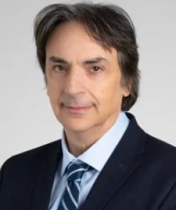
Philippe Haouzi, MD
Researcher, Department of Neurosciences, Lerner Research Institute, Cleveland Clinic, School of Medicine- Regulation of respiration and blood gas homeostasis. In vivo studies in small and large mammals, neural mechanisms of control of respiration
- toxicology: Development of countermeasures against mitochondrial poisons
- Opioid overdose
-
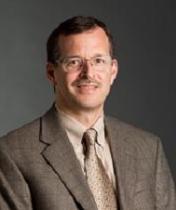
Clifford V. Harding, MD, PhD
Joseph R. Kahn Professor and Chair of Pathology, Department of Pathology, School of MedicineProfessor, Department of Anatomy, School of MedicineProfessor, Department of Medicine, School of MedicineMember, Immune Oncology Program, Case Comprehensive Cancer CenterUniversity Hospitals Distinguished PhysicianUniversity Hospitals Cleveland Medical CenterEmail: cvh3@case.edu
Phone: 216.368.3611
My areas of research include immunology, MHC, antigen processing, T cell, phagocytosis, endocytosis, subcellular fractionation, mycobacteria, tumor immunity, tuberculosis, cell biology, exosomes, and extracellular vesicles.
-
Ann Harris, PhD
Professor, Department of Genetics and Genome Sciences, School of MedicineLeonard C. Hanna ProfessorMember, Cancer Genomics and Epigenomics Program, Case Comprehensive Cancer CenterEmail: ann.harris@case.edu
Phone: 216.368.6651
I research tissue-specific and temporal regulation of gene expression in health and disease. In addition, I study functional genomics of regulatory elements, transcriptional networks, and Chromatin architecture.
-
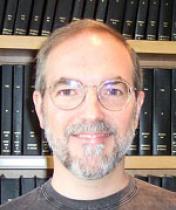
Peter J. Harte, PhD
Professor, Department of Genetics and Genome Sciences, School of MedicineMember, Cancer Genomics and Epigenomics Program, Case Comprehensive Cancer CenterEmail: peter.harte@case.edu
Phone: 216.368.6417
My focus is in transcription activation, repression, Chromatin structure, and homeotic genes.
-
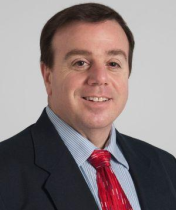
Stanley L. Hazen, MD, PhD
Chairman, Lerner Research InstituteMember, Molecular Oncology Program, Case Comprehensive Cancer CenterI research the role of gut microbiome in cardiometaboilc diseases and oxidative pathways in inflammation and cardiovascular disease.
-
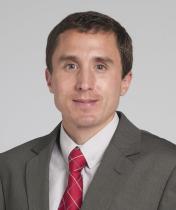
Christopher Hine, PhD
Assistant Professor, Department of Molecular Medicine, School of MedicineMember, Molecular Oncology Program, Case Comprehensive Cancer CenterEmail: hinec@ccf.org
The research performed in the Hine lab is focused on nutritional, environmental, and genetic factors impacting aging and longevity. To this end, we use in vivo, cellular, and in vitro model systems to understand the hormonal and nutritional regulation of endogenous hydrogen sulfide (H2S) metabolism to cultivate clinically applicable interventions to harness endogenous H2S production for beneficial health outcomes such as increased stress resistance, metabolic fitness, cognition, and lifespan.
-
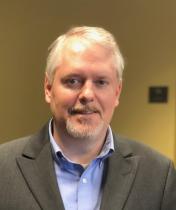
Craig Hodges, PhD
Professor, Department of Genetics and Genome Sciences, School of MedicineProfessor, Department of Pediatrics, School of MedicineDirector, Cystic Fibrosis Mouse Models Core, School of MedicineChildren's Lung Foundation Professor of Pediatric Pulmonology, School of MedicineEmail: craig.hodges@case.edu
Phone: 216.368.0008
I investigate correction of disease manifestations of Cystic Fibrosis, the creation of mouse models, and modifier genes.
-

Alex Y.C. Huang, MD, PhD
Professor, Department of Pediatrics, School of MedicineProfessor, Department of Pathology, School of MedicineCo-Leader, Immune Oncology Program, Case Comprehensive Cancer CenterDirector, Medical Scientist Training Program, School of MedicineEmail: alex.y.huang@case.edu
Phone: 216.368.1271
I research the regulation between immune activation and tolerance in the pathogenesis of cancer, and intravital 2-photon laser scanning microscopy to study various aspects of in vivo immunity and pathogenesis.