

We are very excited to welcome these speakers to our inaugural Plastics and Health Bioregional Forum, "Connecting Human, Environmental and Great Lakes Health in the Age of Plastic Pollution".
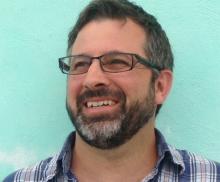
Toby Alves
Product and Zero Waste Specialist at Eco-Products
Toby Alves began his career in organics recycling building out championship golf courses without pesticides or synthetic fertilizers. He has managed biosolids derived soil amendments, consulted with municipalities on composting manufacture and marketing and hauled and composted food scraps. His attention is currently focused on developing successful post-consumer food scrap diversion programs and advocating for composting infrastructure development.
He holds a Bachelor of Science degree in Horticulture and Agronomy from the University of New Hampshire, is a certified TRUE Advisor and is an active member of several organizations including. NERC, CAV, NJ Composting Council & NYSAR.
Toby is happiest while on the forefront of the composting movement, attending industry conferences or growing local food on his family’s diversified farm in the western mountains of Maine.
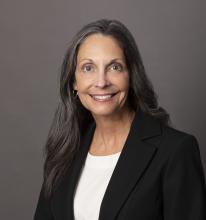
Beth Biggins-Ramer
Executive Director, Cuyahoga County Solid Waste District
Beth has been involved in the solid waste industry for over 35 years. Her work with public sector agencies both in Ohio and Arizona has given her an opportunity to implement best solid waste management practices in nationally recognized programs.
Beth worked to design and implement progressive waste management programming both in Buckeye, AZ and in Phoenix, AZ that exceeded state reduction goals. The “Reimagine Phoenix” programming remains as the City’s strategy to exceed 40% diversion.
As Director of the Medina County Solid Waste District in Ohio, Beth managed the retrofit of an outdated 500 tons per day mixed waste processing facility to a single stream material recovery facility servicing pay-as-you-throw curbside and a network of drop off collection programs. The Medina Solid Waste campus also features a full-time household hazardous waste collection center, yard waste drop-off area, and a waste transfer facility.
Beth is currently the Executive Director of the Cuyahoga County Solid Waste District, one of the largest in Ohio. She is focused on a new campaign to manage yard and other organic wastes for the 59 communities in the District, and continuing efforts to eliminate contamination is recyclables, as well as expand the materials that can be recycled into new, sustainable products.
Beth’s deep respect and appreciation of nature is what led her away from a career in banking to work in the public sector. She believes that as in nature, actions and endeavors should find a balance. There needs to be a financial and environmental balance to achieve sustainability.
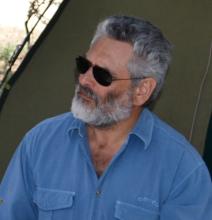
Robert F. Brand, PhD
Watershed Program Manager
Dr. Robert Brand is the Watershed Program Manager at the Cuyahoga County Board of
Health (CCBH) since January 2017. Robert also leads the planning committee for this inaugural forum. As an ecologist, with research interests in biodiversity conservation, vegetation, wetlands and climate change impacts, he became concerned by plastic pollution, particularly micro and nanoplastics. Lake Erie water and sediment samples were collected in 2024 with subsequent analysis of polymers and additives. Analysis of wetland vegetation, maize and sediment samples followed in 2026. This confirmed the hypothesis that toxic polymers and additives are present in all samples.
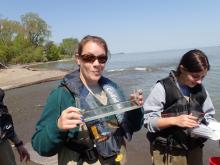
Jennifer Bucheit
Education Coordinator, Old Woman Creek NERR, Office of Coastal Management, Ohio Department of Natural Resources
Jennifer grew up in Michigan and has the Great Lakes in her blood. She earned her B.S. from Hawaii Pacific University in Marine Ecology and her M.S. from Florida Tech in Environmental Education with a focus in Ecology. In between earning her degrees, she served in the Peace Corps as an educator in Belize. She has been the Education Coordinator at Old Woman Creek National Estuarine Research Reserve for over a decade. She loves working with people of all ages and showcasing the amazing natural landscapes of the Great Lakes in hopes of engendering love and care for these spectacular resources.
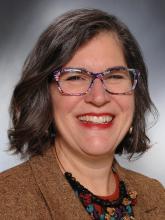
Shannon Conrey, PhD
Assistant Professor, Case Western Reserve University School of Medicine
Shannon Conrey is an Assistant Professor in the CWRU School of Medicine, Department of Population and Quantitative Health Sciences. She is Core Faculty in the Mary Ann Swetland Center for Environmental Health and a faculty affiliate of the Schubert Center for Child Studies. Dr. Conrey completed an MS in Nutritional Sciences and a PhD in Epidemiology at the University of Cincinnati, with two postdoctoral fellowships: the first in the Human Milk and Novel Therapeutics Lab led by Dr. Ardythe Morrow and the second in molecular epidemiology in children's environmental health, led by Dr. Kelly Brunst. Her work is focused on understanding the metabolic, socio-economic, and environmental contributors to lactation biology. Dr. Conrey's current focus is characterizing the transfer of heavy metals and other environmental toxins from mother to child through human milk and understanding factors associated with maternal passive transfer of viral antibodies to her baby and how this affects infection risk and severity in early life. Her long-term translational goal is to lead research that informs public health interventions that reduce barriers to breastfeeding and optimize the benefits of human milk for all babies. Her research contributions include collaborative projects spanning diverse topics such metabolic contributors to lactation failure, the identification of viral illness episodes using real-time PCR and serologic antibody profiles to identify previously undetected viral infections, characterization of infant microbiome variation in relation to maternal genetics and breastfeeding behaviors, and proteomic analysis of extracellular vesicles in human milk.
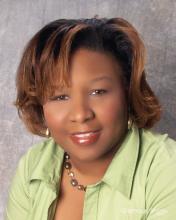
Yvonka M. Hall, MPA
Executive Director, Northeast Ohio Black Health Coalition
Yvonka Hall is a nationally recognized, award-winning health disparities expert, social and environmental justice advocate, and the unstoppable force behind the Northeast Ohio Black Health Coalition (NEOBHC) dba the Northeast Ohio Community Resilience Centre.
Her fight for health equity is not just professional; it’s personal. In 1974, Yvonka’s mother, Yvonne Boston Hall was murdered, a devastating loss that reshaped her childhood. Yvonka holds a Master of Public Administration from Texas Southern University and a Bachelor of Arts from Notre Dame College. A proud graduate of Cleveland’s John Marshall High School, she was inducted into its Alumni Hall of Fame in 2019.
Yvonka has been recognized with numerous prestigious honors. Her accolades include the 2025 Community Impact Award National Association of Chronic Disease Directors, 2025 Unsung Hero Award Buckeye Health Plan, 2025 Who’s Who in Black Cleveland Most Influential, 2025 Inclusive Impact Award, WellLink formerly the Center for Health Affairs, and the 2025 CareSource Community Impact Award.
2024 Health Innovator to Watch by the Boston Congress of Public Health, 2024 Crain’s Cleveland Notable Leader in Health Care, and "Everyday Hero" by WEWS News 5 ABC Cleveland. She was also named a 2022 100 Women to KNOW Across America Honoree and a 2021 Black Woman Green Future Honoree.
Her story has been preserved in The HistoryMakers archive at the Library of Congress for future generations to know her impact.
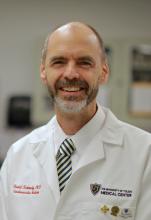
David Kennedy, PhD
Professor of Medicine, Co-Director of Women and Philanthropy Genetic Analysis Center
Dr. David Kennedy is a Professor of Medicine at the University of Toledo College of Medicine and Life Sciences and Senior Director of Medical Student Research Program Development. He earned his Ph.D. in Biomedical Sciences from the Medical College of Ohio and completed the David and Lindsay Morgenthaler Endowed Fellowship in Cell Biology at the Cleveland Clinic. He co-directs the NIH- and NSF-funded Great Lakes Center for Fresh Waters and Human Health and the Women & Philanthropy Instrumentation Center within the Department of Medicine’s Environmental, Occupational, and Community Medicine Program.
Dr. Kennedy’s research focuses on how environmental and metabolic stressors drive inflammation, fibrosis, and organ dysfunction, particularly in chronic conditions such as heart failure, hypertension, diabetes, obesity, and chronic kidney disease. His lab investigates the interplay between cardiovascular, renal, and hepatic systems in regulating cellular injury and repair, with a focus on identifying novel biomarkers, therapeutic targets, and counter-regulatory pathways. Given the region’s reliance on the Great Lakes for clean water and food security, his team also examines how environmental toxins impair the land-water-food nexus, aiming to develop diagnostics and interventions that improve public and environmental health. He has published more than 90 peer-reviewed papers and was the first Ph.D. scientist elected President of the Central Society for Clinical and Translational Research in its 95-year history.
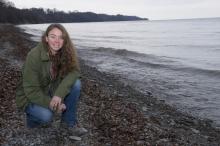
Sherri “Sam” Mason, PhD
Director of Project NePTWNE (Neptune)
Dr. Sherri A. Mason (aka “Sam”) was among the first to study the prevalence and impact of plastic pollution within freshwater ecosystems, with a focus on the Great Lakes. A chemist by training, she earned her bachelor’s degree from the University of Texas at Austin and completed her doctorate at the University of Montana as a NASA Earth System Science scholar. Having risen through the typical academic ranks, she now serves as the Director of Project NePTWNE (a water quality and economic revitalization initiative) at Gannon University in Erie, Pennsylvania.
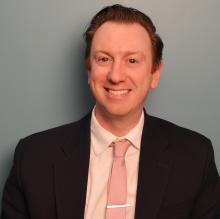
John Mills, JD
General Counsel, Cuyahoga County Board of Health
Attorney John Mills serves as the general counsel to the Cuyahoga County Board of Health, practicing public health law, environmental law, and litigation. He has been practicing law in Ohio for over 15 years, and worked previously for the City of Cleveland, the Cleveland Housing Court, and in the private sector. He is a native of Toledo, Ohio but currently resides in Lakewood.
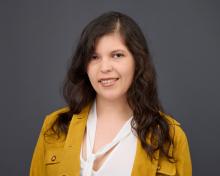
Luciana Rivera Molina
Graduate and Teaching Assistant
Luciana Rivera Molina earned her B.S. in chemistry from Walsh University in 2022. She joined the research group of Prof. Chrys Wesdemiotis as a PhD student at the University of Akron in 2022, where she also earned an M.S. in analytical chemistry (2024). Her research focuses on advanced multidimensional mass spectrometry techniques including MALDI-MS, DART-MS, ESI-MS, and IM-MS for the molecular characterization of synthetic molecules, polymeric materials, biomaterials, and environmental contaminants. Her work places particular emphasis on microplastics detection and quantification.
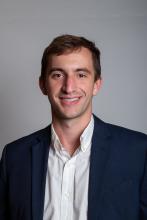
Max Pennington
Co-Founder and CEO, CLEANR
Max Pennington is the Co-Founder and CEO of CLEANR, a Cleveland-based company pioneering innovative filtration technologies to reduce microplastic pollution and exposure. Powered by its patented VORTX technology, CLEANR is developing solutions that filter microplastics from drinking water, prevent pollution from washing machines, and provide whole-home water filtration, helping address microplastics at every stage of daily life.
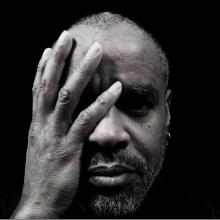
Ron Shelton
Curator and Publisher at High Art Fridays (HAF)
Multimedia artist/publisher Ron Shelton has become acutely aware of the plastic problem after featuring artists from around the world who use discarded plastic to draw attention to this environmental menace. Ron's plastic artworks have been exhibited locally and internationally. Most recently, Ron covered two Northeast Ohio buildings with plastic to share this problem with his community.
He is curator/publisher at High Art Fridays (HAF), an online art magazine that has become a beacon for a worldwide environmental voice and narrative, www.highartfridays.com. For the past six years, HAF has closely examined what artists are saying about the plastic epidemic and its toll on the environment.
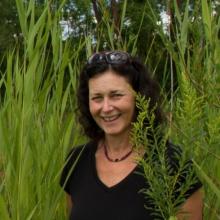
Christy Tyler, PhD
Professor of Environmental Science
Dr. Christy Tyler is a professor of Environmental Science at the Rochester Institute of Technology (RIT). Dr. Tyler received her B.S. in Biological Sciences from Cornell University and her M.S. and Ph.D. from the University of Virginia. Her research focuses on aquatic ecology and biogeochemistry, including ecosystem restoration and emerging contaminants, particularly plastic pollution in the Great Lakes watershed. She currently leads RIT’s Center for Plastics and the Environment, the regional solutions-driven collaborative CASCADE (Community Action for Stormwater Cleanup and Debris Elimination), and serves as co-director of the Lake Ontario Center for Oceans and Human Health (LOMP).
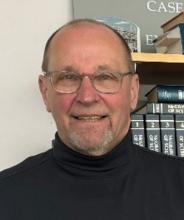
Gary Wnek, PhD
Professor of Engineering
Dr. Gary Wnek is the Joseph F. Toot, Jr., Professor of Engineering and Chair of the Department Macromolecular Science and Engineering at Case Western Reserve University. Gary’s research interests include sustainable polymer processing aimed at adding value to common polymers and incompatible blends using uncommon processing approaches, flammability mitigation of common polymers, and synthetic polymers that exhibit signatures of living systems including motion and excitability. He has authored or co-authored over 215 publications and holds 40 US patents. Gary earned his Ph.D. In Polymer Science and Engineering from the University of Massachusetts, Amherst, and his B.S. Degree in Chemical Engineering from Worcester Polytechnic Institute. He is a Fellow of the National Academy of Inventors, and received the 2007 John W. Hyatt award (benefit to society) from the Society of Plastics Engineers for his work on polymer nano- and microfibers for regenerative medicine and related biomedical applications.