

📅 Date: Friday, November 13, 2026
🕒 Start Time: 4:00 PM
📍 Location: Harkness Chapel, Classroom
👥 Who: Free | Open to the public
About The Series
Our weekly Friday colloquia showcase current research by distinguished visiting scholars alongside our own faculty and graduate students in musicology, historical performance practice, and music education. A brief reception follows each talk to keep the conversation going. All are welcome!
About The Talk
“Phenomenological Inquiry into the Impact of Doctoral Study: Experiences of PreK–12 Music Educators with Terminal Degrees”
This qualitative phenomenological study examines the impact of doctoral study on PreK–12 music educators who hold terminal degrees (PhD, EdD, or DMA) in music education and continue to teach in PreK–12 settings, whether they pursued the degree full-time or part-time while teaching. Grounded in Moustakas’s (1994) transcendental phenomenology, this study investigates the motivations that drive these educators toward doctoral study, their experiences along the way, and the impact of the degree program on their teaching. Existing scholarship in music teacher education has examined incentives and barriers to doctoral study (Teachout, 2004, 2008), occupational identity and career intent (Martin, 2016), mentoring relationships (Bond & Koops, 2014; Bond et al., 2023), and career readiness (Schultz et al., 2024), yet little research has explored how these factors converge for practitioners who remain in or return to PreK–12 classrooms after completing a terminal degree (Greene et al., 2021). Participants completed a written narrative followed by a 90-minute semi-structured interview, with data analyzed through horizontalization, textural and structural description, and synthesis into a composite description of the essence of the phenomenon (Moustakas, 1994).
Analysis of the data reflects several general themes. Across participants, doctoral study appears to have been motivated primarily by intrinsic intellectual curiosity rather than by career ambition, with many participants distancing themselves from higher-education aspirations or the pursuit of professional prestige. Financial considerations nonetheless shaped how participants pursued and made use of the degree, consistent with Teachout’s (2004) identification of finances as the “strongest barrier” to doctoral study. Participants describe carrying doctoral habits of mind back into PreK–12 practice in tangible ways, and several continued engaging with research or scholarly writing after finishing their doctoral study, though often through methods that did not depend on university resources. A strong constellation of support, including advisors, committee members, family members who absorbed additional responsibilities, and deliberate time-management strategies, was repeatedly credited as essential to completing the degree, consistent with the mentorship literature (Bond et al., 2023; Bond & Koops, 2014). Finally, participants often drew contrasts between their own PreK–12 lives and the lives of academic peers in higher education, and these comparisons appeared to reinforce, rather than complicate, their decisions to remain in PreK–12 classrooms.
About The Speaker
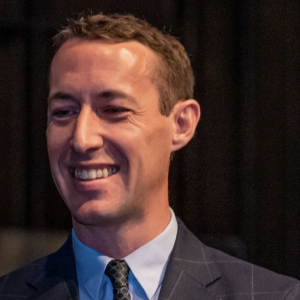
Dennis Giotta is pursuing a PhD in Music Education at Case Western Reserve University and is a music teacher in Apple Creek, OH where he teaches band, music technology, songwriting, and rock band. Dennis completed degrees at Case Western Reserve University and the University of Cincinnati College-Conservatory of Music. Dennis' research interests include: Secondary general music, music teacher mentoring, and curricular development. He has presented at various state, regional, and national conferences for researchers and practitioners. Dennis' publications appear in Triad and Contributions to Music Education.
Venue Information
Harkness Classroom, located inside Harkness Chapel, serves as both a lecture hall for large classes and a backstage area during events. It is also the meeting location for the CWRU Music Colloquium Series.
Health + Safety
The health and well-being of our community is important to us as we gather for campus events. University Health and Counseling Services provides up-to-date guidance and resources to help support a safe campus experience. For life-threatening emergencies, please call CWRU Public Safety immediately at 216.368.3333.