

Search results, if found, will automatically update as terms are selected. If no results are displayed, please revise your search terms.
Filter By:
-
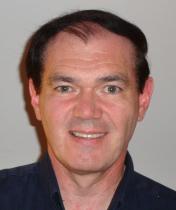
Carlos Subauste , MD
Professor, Medicine and Pathology, School of MedicineEmail: carlos.subauste@case.edu
Phone: 216.368.2785
My Laboratory is dedicated to the study of cell signaling to develop novel therapies against infectious and inflammatory diseases. This work includes translational studies in animal models of these diseases.
Carlos Subauste's Biography -
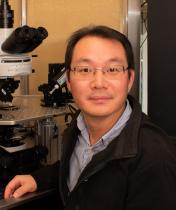
Qian Sun, PhD
Associate Professor, Department of Neurosciences, School of MedicineEmail: Qian.Sun4@case.edu
Phone: 216.368.4169
Our lab studies the function of the hippocampal circuit, a brain area that is vital for memory formation and is linked to many neuropsychiatric disorders, such as PTSD, schizophrenia, and Alzheimer's disease. We use a variety of in vitro and in vivo techniques – including electrophysiology, neuronal tracing, optogenetics and chemogenetics, immunohistochemistry, and mouse behavior – to address the cellular and circuit mechanisms underlying hippocampal information processing and its relevance to behaviors.
-
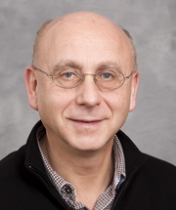
Witold K. Surewicz, PhD
Robert F Bennett MD Professor, Department of Physiology and Biophysics, School of MedicineEmail: witold.surewicz@case.edu
Phone: 216.368.0139
I research diseases of protein misfolding, neurodegenerative diseases, amyloid and prion disease, Alzheimer's disease, protein chemistry, protein folding, liquid-liquid phase separation of proteins, protein-membrane interactions, and biophysical chemistry.
-
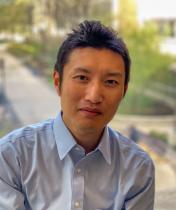
Masashi Tabuchi, PhD
Assistant Professor, Department of Neurosciences, School of MedicineEmail: Masashi.Tabuchi@case.edu
Phone: 216.368.6796
Our lab studies how the brain uses specific coding mechanisms to regulate persistent internal drive. Our lab's goal is to understand how neural coding impacts molecular/cellular signaling, plasticity, and behavior. We apply multidisciplinary approaches in Drosophila to understand how non-canonical (temporal or analog) neural codes represent persistent internal drive.
-
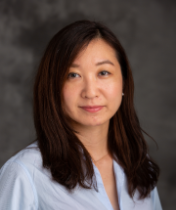
Nami Tajima, PhD
Assistant Professor, Department of Physiology and Biophysics, School of MedicineEmail: nxt193@case.edu
Phone: 216.368.5519
I research the molecular mechanisms of neuroreceptor complexes and synaptic transmission.
-
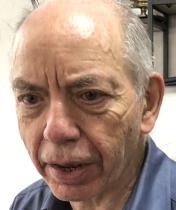
Alan Tartakoff, PhD
Professor, Department of Pathology, School of MedicineProfessor, Department of Genetics and Genome Sciences, School of MedicineProfessor, Department of Molecular Biology and MicrobiologyProfessor, Department of BiochemistryMember, Molecular Oncology Program, Case Comprehensive Cancer CenterEmail: alan.tartakoff@case.edu
I research dynamic spatial relations in eukaryotic cells. As well as study organization and functions of the nucleolus and chromosome dynamics.
-
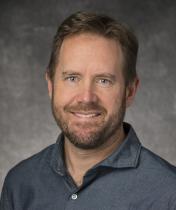
Derek J. Taylor, PhD
Vice Chair for Innovation, Translation, and Entrepreneurship, Department of Pharmacology, School of MedicineProfessor, Department of Biochemistry and Department of Pharmacology, School of MedicineAssociate Director for Shared Resources, Case Comprehensive Cancer Center, School of MedicineMember, Developmental Therapeutics Program, Case Comprehensive Cancer CenterEmail: djt36@case.edu
Phone: 216.368.0684
I investigate telomere maintenance, phosphatase signaling, macromolecular structure and function, drug development, and cancer biology.
Derek J. Taylor's Biography -
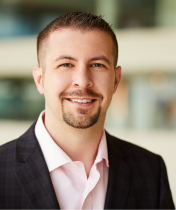
Paul J. Tesar, PhD
Director, Institute for Glial Sciences, School of MedicineProfessor, Department of Genetics and Genome Sciences, School of MedicineProfessor, Department of Neurosciences, School of MedicinePavey Family Eminent Professor, Department of Genetics and Genome Sciences, School of MedicineMember, Cancer Genomics and Epigenomics Program, Case Comprehensive Cancer CenterEmail: paul.tesar@case.edu
Phone: 216.368.6225
My research focuses on stem cell pluripotency and differentiation, developmental neurobiology and genetics, regulation of glia, and therapeutic discovery.
-
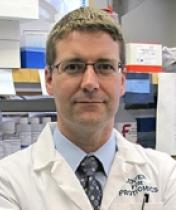
John Tilton, MD
Associate Professor, Department of Nutrition, School of MedicineVice Chair, Research, Department of Nutrition, School of MedicineAssistant Professor, Department of Molecular Biology and Microbiology, School of MedicineAssistant Professor, Center for Proteomics and Bioinformatics, School of MedicineEmail: john.c.tilton@case.edu
Phone: 216.368.3360
My lab repurposes viruses for in vivo delivery of protein and nucleic acid therapeutics. We understand the heterogeneity of viruses and other small particles using nanoscale flow cytometry and unravel unraveling mechanisms of extracellular vesicle-mediated fusion and intercellular signaling.
-
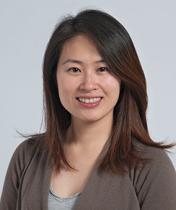
Angela H. Ting, PhD
Associate Professor, Department of Molecular Medicine, School of MedicineAssistant Professor, Department of Genetics and Genome Sciences, School of MedicineMember, Cancer Genomics and Epigenomics Program, Case Comprehensive Cancer CenterEmail: tinga@ccf.org
Phone: 216.444.0682
I research the mechanisms of epigenetic gene silencing and understanding the functional relevance of DNA methylation in diseases.