June 2026

  • The building is 189,000 square feet and has six levels
  • Levels 5 and 6 are mechanical spaces
  • The building is 120 feet tall from the ground floor to the top of the exhaust stacks
  • The building includes 9 research focus areas, 64 fume hoods, and 237 lab stools
  • Peak onsite workforce was 250 workers, with 998 trade workers total

The ISEB is built with:

  • 1,700 tons of steel
  • 3,400 gallons of paint
  • 43,500 square feet of glass, including 1,200 individual pieces
  • 26 miles of plumbing
  • 1,600 sprinkler heads
  • 4,500 light fixtures
  • 125 miles of electrical wire
  • 128 miles of Cat 6a cable
  • 306 shrubs and trees, and 2,765 ground plantings

Hear from Greg Wells about [U]Tech's Involvement in the ISEB Building Construction

May 21, 2026

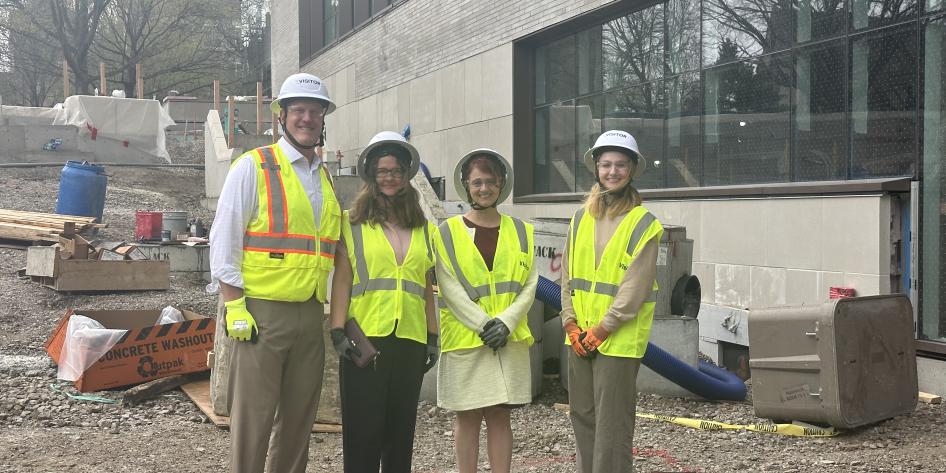
[U]Tech's involvement with the construction of the Interdisciplinary Science and Engineering Building (ISEB) kicked off in the spring of 2023. Greg Wells (Assistant Director, Network Operations) facilitated a series of initial meetings with Joanne Brown, Campus Architect with Campus Planning and Construction, regarding CWRU staff and faculty vacating the Yost building. A series of fast-track renovations and moves had to take place before Yost could be demolished.

A new space was renovated for University Counseling on the second floor of the Dental Research Building, while Financial Aid was relocated to the Nursing Research Building. Following suit, the Math Department moved to the Health Services Building. Finally, the Registrar’s, Bursar’s, and Cashier's offices were relocated to the second floor of Sears Library, clearing the way for Yost to be fully vacated by the end of 2024.

While these enabling projects progressed, Greg reviewed the technology drawings, starting in June 2023 with the Schematic Design drawings, moving to Design Development drawings, and concluding with the construction drawings. The permit set was officially issued in September of 2024. Bob Shaffer (IT Engineer) and Greg then spent time with the construction team and the technology contractor during scope review meetings. Ultimately, Lakeland Electric was selected as the technology contractor for the project. One of the biggest challenges during the design process was collaborating with the technology engineering team, Advanced Engineering Consultants, to ensure the technology rooms were designed per CWRU and [U]Tech specifications.

For the ISEB network, SER-01 and SER-08 will feature Cisco aggregate switches with 100G uplinks back to the Crawford Data Center. The Cisco C9400 access layer switches will have a 100G uplink from each aggregate switch, making the ISEB the fastest network on campus. The network consists of two Cisco 32-port aggregate switches and ten C9400 network chassis. Jack Jesberger (IT Engineer) and Keymarin Washington (IT Engineer) have been configuring the network switches and programming approximately 2,700 switch ports at the Cedar Avenue Service Center. Once the network is deployed, Vertiv technicians will commission the UPS battery backup system. Currently, temporary switches are installed to allow the HVAC network to be configured and commissioned.

Logicalis was hired to provide a predictive design for the ISEB wireless system. The building will feature 175 Cisco 9176 Wi-Fi 7 access points, marking CWRU's first Wi-Fi 7 deployment on campus. The wireless design includes outdoor access points to enhance the Wi-Fi experience around the exterior of the building. Logicalis will test and certify the wireless design prior to the building's grand opening in October this year.


Inspiring the Next Generation of Broadcasters

May 21, 2026

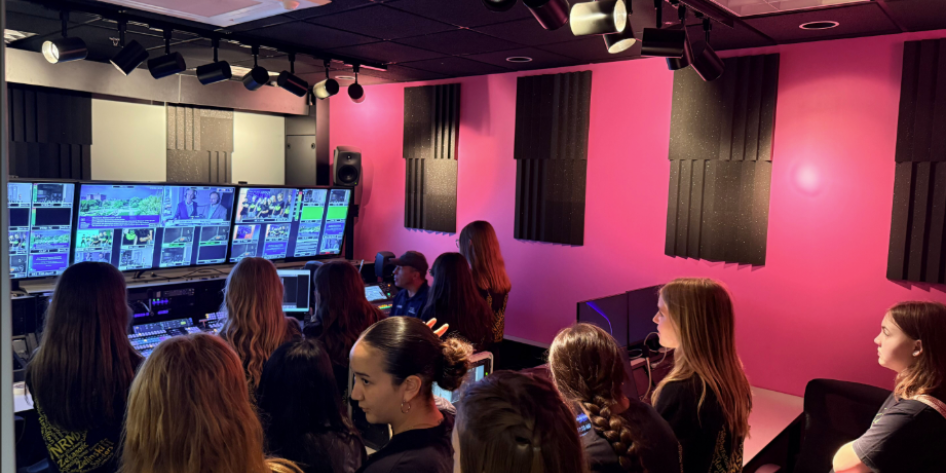
MediaVision recently hosted 52 talented students and three staff members from the North Royalton Middle School morning announcement crew! The program director of the announcement crew mentioned that it's usually tough to get a club of their size invited to production facilities around town. However, MediaVision welcomed the team with open arms and divided the kids into three groups, rotating them through the production space. Mike Becher (Lead Digital Video Specialist) showed the students the control room, highlighting the different camera feeds, how to cut shows, and how to integrate the announcers. By encouraging kids to volunteer at the sounds, Mike demonstrated what it would be like to be a part of a game broadcast.

Noah Sitch (Assistant Digital Video Specialist) then led the students through the Tech Core area at MediaVision, showcasing the purpose-built BigFoot fiber transmission stations. These are essential to forming the signals from DeSanto Field and allowing the team to broadcast from the control room. Having recently managed the challenging task of balancing all the cameras used in CWRU commencement broadcast, Noah offered valuable insights and answered technical questions. MediaVision had field cameras set up in the area, allowing the students to experience both being on camera and operating the equipment.

Jake Kovitz (Asst. Digital Video Post-Production Specialist) was in charge of the studio groups where the main set, green screen, and teleprompter were used to demonstrate how the team gets the coaches' interviews ready before game day. Jake covered how MediaVision uses the various areas of the studio and explained which space is best suited for each unique project Jake did a fantastic job guiding the students and highlighting what was most effective.

The group toured the facilities for about an hour. The students enjoyed the tour and the chance to explore MediaVision's space!

"It was awesome. Thanks so much for your flexibility. We truly appreciate it!"


Women in Technology Event: Coffee with Lolita Hines

April 30, 2026

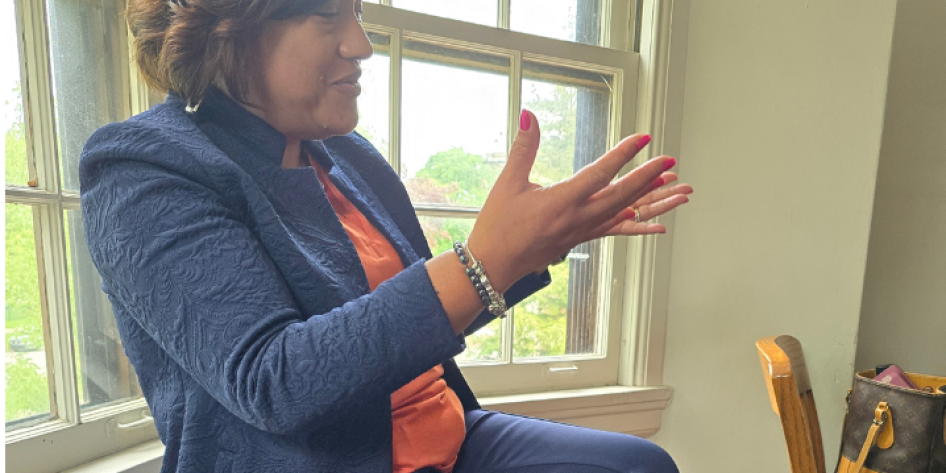
Members of [U]Tech's Women in Technology group recently gathered at The Coffee House on North Campus for an intimate conversation with Lolita Hines, Associate Vice President of Finance & Administration, as she reflected on her nearly 20-year career at CWRU. Drawing from her extensive experience in both corporate and higher education, Lolita shared how these contrasting environments taught her to adapt, lead, and deeply connect with her teams over the years. She shared insights into her journey as a woman in the corporate world, noting how her time at CWRU underscored a vital philosophy of hers: "We don't live to work; we work to live." As a passionate advocate for well-being and belonging, Lolita reinforced [U]Tech's mission to support work-life balance.


Research Computing at the CTSC AI and Health Outcomes Insight Summit

May 20, 2026
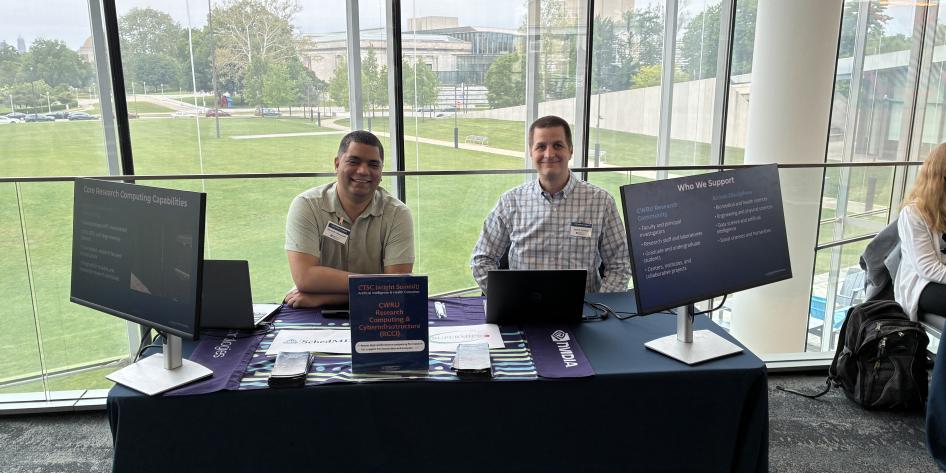
Research and Computing Table at the CTSC AI and Health Outcomes Insight Summit

Research computing staffed a table at the CTSC AI and Health Outcomes Insight Summit, a full-day event dedicated to exploring how artificial intelligence is transforming health outcomes, with a special focus on chronic disease across Northern Ohio. CWRU personnel are already using agent frameworks like Google Antigravity to accelerate their workflow and thinking about how to translate that to health care. Jeremy Fondran (Research Computing Technologist) and Mostafa Abouzaid (Research Computing Technologist) handled multiple inquiries about using Researching Computing services for the CTSC-related computational work and HPC services. Brian Christian (IT Engineer) answered questions about identified data and the Secure Research Environment (SRE). All promoted awareness of services available to CWRU researchers working on campus and in health care. The Research Computing & Infrastructure Services booth stood out as one of the event's most popular booths, and successfully distributed over 100 brochures to attendees.