


The Sarah Cole Hirsh Institute for Best Nursing Practices Based on Evidence was established by the Frances Payne Bolton School of Nursing in 1998 with a generous endowment from Sarah Cole Hirsh. The original goal of the Institute was to facilitate the integration into practice of the most current available best evidence to support nurses and other health professionals in their clinical decision-making. The Hirsh Institute stimulates the use of implementation science and design thinking as a basis for delivering superior health care, shaping the next phase of nursing research and practice, and providing standards for nursing education and practice.
The Institute has evolved into an educational and resource center for the implementation of evidence, policy, and innovations into practice to improve health outcomes for patients, families, and communities. Nursing practice based on the best available clinical and policy evidence and innovation is the ideal basis to ensure optimal healthcare delivery and assuring positive patient, family and community outcomes. To assist organizations and individual nurses, The Hirsh Institute is prepared to assist in the development of necessary skills to implement evidence, quality, and innovations in the support of optimal clinical practice.
Hirsh Fellowship
The Sarah Cole Hirsh Institute for Evidence-Based Practice in the Frances Payne Bolton School of Nursing seeks to produce the nation’s top scientists through its Hirsh Fellowship Program. A fellow of the Sarah Cole Hirsh Institute earns full tuition support, as well as an educational allowance. This award includes a research assistant appointment (employment/activities), requiring participation in scholarship, education, service and research-related activities of the Hirsh Institute. Acceptance in this program is based on fit with the Institute’s mission, vision and aims, the student’s academic performance, and professional leadership potential. Previous experience in evidence-based practice implementation is highly desirable but not required.
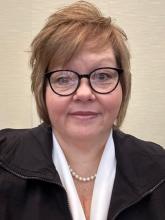
Pamela Bolton, MS, ACNPC, CCNS, CCRN, PCCN, RN, FAANP
Pamela J Bolton is a third-year PhD nursing student at Case Western Reserve University and a research assistant working with Mary Dolansky and Stephanie Griggs.
Bolton graduated from the University of Cincinnati with a BSN, University of Maryland with a MS (certified as a Critical Care Clinical Nurse Specialist), and received a post-master’s certificate as an Acute Care Nurse Practitioner from the University of Cincinnati. Currently she is employed part-time as an Acute Care Nurse Practitioner at University Hospitals in the Cardiothoracic Intensive Care Unit. Her experience extends to academia in which she has taught at the undergraduate and graduate level at two Universities and specifically in Acute Care Nurse Practitioner programs.
Bolton’s interests include implementation science, nursing education, and research on topics specific to critical care. Explicitly, Pamela’s interests include racial disparities as it relates to circadian rhythm, sleep, and the effects on glucoregulation. Sleep has long been identified as a significant issue in critical care, yet the effect of insufficient sleep continue to plaque patients with devastating impacts on patient’s cognitive functioning. Bolton’s research seeks to address circadian rhythm in disparate populations and identify, through implementation science, potential obstacles to addressing sleep insufficiencies in this critical environment.
Bolton demonstrates leadership through local, regional, and national positions with the American Association of Critical-Care Nurses (AACN) Certification Corporation and her Medical Advisory Board position at Life Center Organ Donor Network from 2014 through 2022. In addition to serving as a board member of the AACN Certification Corporation, Pamela also served as the Chair-Elect and Chair position to the Certification Corporation. She has mentored numerous Registered Nurses in publication and the implementation of clinical research. In addition to her Lifetime Membership Award to AACN, Pamela also was inducted into the Fellow of the American Association of Nurse Practitioners in 2017.
For her current research “Racial Disparities in Sleep, Circadian Rhythm, and Glucoregulation Among Individuals Post-Coronary Bypass Surgery,” Pamela has been awarded the National Institute of Nursing Research (NINR) in the amount of #14331 Ruth L Kirschstein Predoctoral Individual National Research Service Award for $143,082.00 and Student Innovator of the Year Award at Case Western Reserve University (CWRU).
Recent Publications
- Griggs, S, Howard, Q, Bolton, PJ, Motairek, I, Al-Kindi, S, Harmon-Still, C, & Hickman, R. Geographic Insufficient Sleep Duration and Cardiometabolic Risk Among Adolescents and Adults in the T1D Exchange Clinic Registry, Poster Presentation, AASM National Meeting, June, 2023, Indianapolis, Indiana
- Griggs S, Hernandez E, Bolton PJ, Strohl KP, Grey M, Kashyap S, Li CS, Hickman RL. (2023). Cognitive behavioral sleep self-management intervention for young adults with type 1 diabetes (NCT04975230). Clinical Nursing Research, 32(3), 560-570
Amy Patterson, MSN, RN, NPD-BC, CCRN
Amy Patterson is a nursing professional development specialist whose professional and scholarly interests focus on implementation science and evidence-based practice. She is passionate about understanding how evidence can be more effectively translated into clinical practice to improve patient outcomes, healthcare quality, and system-level performance. Drawing from extensive experience in nursing education, professional development, quality improvement, and clinical practice, she is particularly interested in identifying and evaluating strategies that support the adoption, implementation, and sustainability of evidence-based interventions across diverse healthcare settings.
Professionally, Amy serves as a Nursing Professional Development Specialist for University Hospitals Health System, where she leads system-wide educational initiatives, contributes to nursing policy and practice guideline development, mentors nurses, and supports evidence-based nursing practice implementation. Throughout her career, she has held roles in critical care nursing, transplantation, nursing education, and staff development, building more than two decades of experience in advancing nursing excellence. She is also a member of the University Hospitals Institutional Review Board and has been actively involved in projects focused on nursing education, ethics, quality improvement, and professional development.
Amy holds a Master of Science in Nursing Education from Georgetown University, a Master of Arts in Bioethics from Case Western Reserve University, and a Bachelor of Science in Nursing from Ursuline College. She is board certified in Nursing Professional Development (NPD-BC) and Critical Care Nursing (CCRN) and has presented nationally and regionally on topics related to evidence-based practice, nursing education, ethics, and innovative approaches to clinician learning. Her long-term goal is to contribute to the development and implementation of evidence-informed strategies that enhance patient care, strengthen nursing practice, and improve healthcare delivery systems.
Sarah A. Knowles, DNP, APRN, ACCNS-AG, NEA-BC, EBP-C, GERO-BC, WCC
Sarah A. Knowles is the Principal Project Manager in the University Hospitals Quality Institute, where she leads system-wide quality, patient safety, implementation, and evidence-based practice initiatives. She also mentors the Nurses Improving Care for Healthsystem Elders (NICHE) Leadership Training Program and has held numerous leadership roles supporting nursing research, innovation, and professional development.
Dr. Knowles earned a Bachelor of Science in Nursing from The University of Toledo, a Master of Science in Nursing with a focus on Nurse Education from Cleveland State University, a post-master's certificate as an Adult-Gerontology Clinical Nurse Specialist from Kent State University, and a Doctor of Nursing Practice degree from Ursuline College. She recently completed a postdoctoral fellowship in Executive Nursing Leadership at Case Western Reserve University. Her career spans clinical practice, nursing professional development, education, quality improvement, patient safety, leadership, and implementation of innovative care delivery models.
Dr. Knowles' scholarly interests focus on implementation science, healthcare quality, patient safety, evidence-based practice, and integrating technology to improve patient outcomes. Her doctoral work examined the implementation and adoption of continuous vital signs monitoring technology to support early recognition of clinical deterioration in hospitalized patients. Building on this work, her future research seeks to identify effective implementation strategies that accelerate the adoption, sustainment, and spread of evidence-based innovations across healthcare systems. Specifically, she is interested in understanding how implementation science frameworks, artificial intelligence, and quality improvement methodologies can be leveraged to improve patient safety, clinical decision-making, workforce engagement, and organizational performance.
Dr. Knowles demonstrates leadership through service to national and regional nursing organizations, including the National Association of Clinical Nurse Specialists, the Midwest Nursing Research Society, the Ohio Organization for Nursing Leadership, and the American Nurses Association. She currently chairs the Midwest Nursing Research Society’s Implementation and Translation Science Research Interest Group and the Ohio Organization of Nurse Leaders Evidence-Based Practice Committee. Through her research, leadership, and mentorship activities, Dr. Knowles is committed to advancing the science of implementation and translating evidence into sustainable improvements in healthcare quality and patient outcomes.
Recent Publications
- Knowles, S. (2024). Promoting the Use of Continuous Vital Signs Monitoring (CVSM) Technology for Early Recognition of Clinical Deterioration in Non-ICU Adult Hospitalized Patients. ANA-Ohio News Journal, 2(4), 10-12.
- Knowles, S. (2024). Promoting the Use of Continuous Vital Signs Monitoring (CVSM) Technology for Early Recognition of Clinical Deterioration in Non-ICU Adult Hospitalized Patients. Abstract published in Western Journal of Nursing Research, Abstracts from the Midwest Nursing Research Society Annual Meeting, 46(1_suppl), 1S-57S. doi:10.1177/01939459241233357.
- National Association of Clinical Nurse Specialists. (2022). Crosswalk Analysis of AACN Essentials of Nursing Education with NACNS Core Practice Competencies. Task force member and contributing author.
Selected Recent Scholarly Presentations
- Knowles, S. (2025). Policy Critical to Patient Safety Internal Audit: How Incorporating Peer-to-Peer Methodology Improved Patient Safety and Quality of Care. International Council of Nurses Congress, Helsinki, Finland.
- McNett, M., Knowles, S., Hook, M., Williams, R., & Reger, A. (2025). Supporting Complex Decision Making in Healthcare with Implementation Science and Artificial Intelligence. Midwest Nursing Research Society Annual Conference, Indianapolis, IN.
- Knowles, S. (2025). Promoting the Use of Continuous Vital Signs Monitoring Technology for Early Recognition of Clinical Deterioration in Non-ICU Adult Hospitalized Patients. Memorial Sloan Kettering Evidence-Based Practice Conference. Invited Presentation.
- Knowles, S., Kozub, E., & Johnson, A. (2022). The Impact of the Clinical Nurse Specialist in Implementation and Sustainment of New Technology for Patient Safety. National Association of Clinical Nurse Specialists Educational Series.
- Knowles, S., Thatcher, E., & Anthony, M. (2022). Nurses' Acceptance and Use of Continuous Vital Signs Monitoring in Non-ICU Adult Hospitalized Patients. Association for Leadership Science in Nursing International Conference.
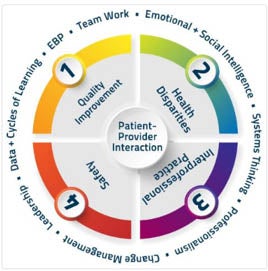
Dedicated to Evidence-Based Practice
The Sarah Cole Hirsh Institute for Evidence Based Practice is an endowed research and training institute to promote implementation of evidence into clinical practice. Established in 1998 with the generous endowment by Sarah Cole Hirsh, the center focuses on annual training and research in EBP for graduate students, leaders, and current clinicians. In close collaboration with the Quality Safety Education for Nurses Institute, the center’s key objective is to increase implementation of EBP guidelines and promote quality, safety and reduce cost in care.
The Sarah Cole Hirsh Institute for Best Nursing Practices Based on Evidence is made possible by a bequest from the estate of Sarah "Sally" Cole Hirsh, a dedicated alumna (MN '45).
Throughout her career, Sally Hirsh was a dedicated volunteer for the Frances Payne Bolton School of Nursing. From 1963-69, she served as national chair of the University Medical Center Development Program and helped raise substantial funds for the construction of the building that currently houses the nursing school.
In 1973, Hirsh received the school's first Alumni Award. She continued to serve the Frances Payne Bolton School of Nursing until her death in 1997.
The Sarah Cole Hirsh Institute for Evidence Based Practice is an endowed research and training institute to promote implementation of evidence into clinical practice. Established in 1998 with the generous endowment by Sarah Cole Hirsh, the center focuses on annual training and research in EBP for graduate students, leaders, and current clinicians. The center’s key objective is to increase implementation of EBP guidelines and promote quality, safety and reduce cost in care.
The Sarah Cole Hirsh Institute for Evidence Based Practice is an endowed research and education institute to promote implementation of evidence into clinical practice through the alignment of the human experience with systems and teams.
Vision: Discover and promote the alignment of the human experience with healthcare delivery to optimize the implementation of evidence-informed practices, policy, and quality innovations with our academic and practice partners.
Mission: To coordinate an interprofessional center for evidence-informed practice implementation that facilitates best practice uptake and transforms practice outcomes
Values: Accountability, equity, and inclusiveness
Key Focus: Quality and safety, policy, leadership, technology, and geriatrics
Activities:
- Advance implementation science and improvement science education (courses and lectures) to promote implementation of evidence-informed care and policy
- Facilitate practice change projects in teams that are relevant to the needs of our clinical partners and communities
- Educate experiences in design thinking and user-technology simulations to enhance uptake of interventions
- Encourage forums to:
- Enhance networking and dialogue on implementation of evidence-informed practices, policy and innovation
- Identify technology solutions for implementation of evidence and policy
- Consult to promote learning health systems using implementation systems and team sciences
- Partner with scientists (e.g., PhD) and clinician leaders (e.g, Doctorate of Nursing Practice, administrators) to generate generalizable knowledge and practical knowledge to improve outcomes
- Collaborate in creating learning laboratory experiences to prototype interventions in understanding feasibility, usability, acceptability, and potential adoption of implementation strategies and technologies
- Conduct focus group, interview, and simulation model services to assess the “voice” of the user.
The purpose of the Hirsh Institute Advisory Committee is to advise the Hirsh Institute on future initiatives, review its progress, and support the selection of future fellows of the Hirsh Institute. The review members are a group of interprofessional experts with a background in nursing and medicine with in-depth knowledge in leadership, and evidenced-based practice implementation. The group will meet bi-annually to advise the director on upcoming decisions and initiatives.
Committee Members
- Mary Dolansky, PhD, RN, FAAN, FPB faculty
- James Spilsbury, PhD, MPH, CWRU School of Medicine faculty
- Esther Thatcher, PhD, RN, nurse scientist, University Hospitals
- Elizabeth Edminston, PhD, RN, CCRN, chief nurse scientist, Department of Veteran's Affairs
- Melissa Klein, DNP, nurse executive, MetroHealth System
- Anita Misra-Herbert, MD, MPH, director of healthcare delivery and implementation science center at Cleveland Clinic Foundation
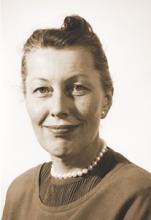
The Sarah Cole Hirsh Institute for Best Nursing Practices Based on Evidence is made possible by a bequest from the estate of Sarah "Sally" Cole Hirsh, a dedicated alumna (MN '45).
Throughout her career, Sally Hirsh was a dedicated volunteer for the Frances Payne Bolton School of Nursing. From 1963-69, she served as national chair of the University Medical Center Development Program and helped raise substantial funds for the construction of the building that currently houses the nursing school.
In 1973, Mrs. Hirsh received the school's first Alumni Award. She continued to serve the Frances Payne Bolton School of Nursing until her death in 1997.