

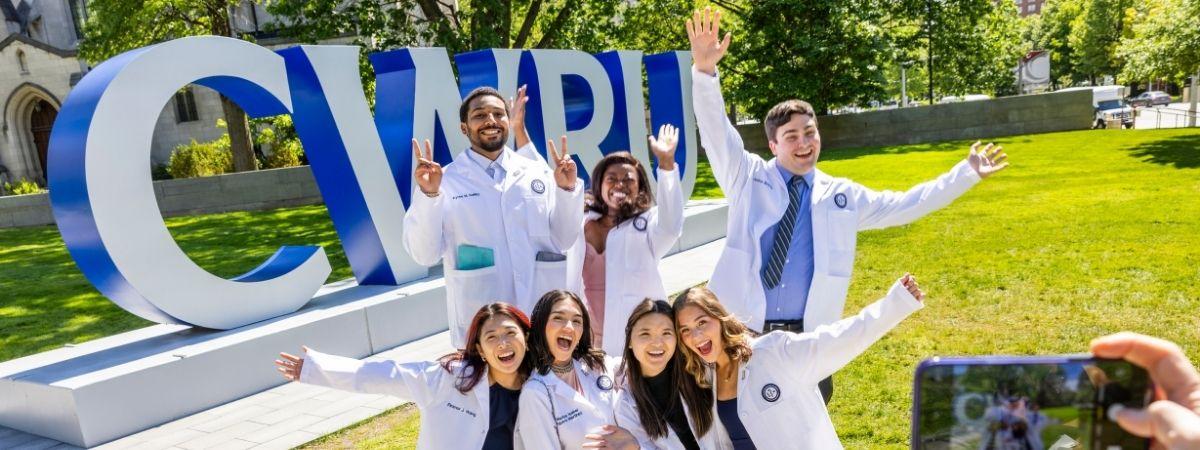
The MS in Molecular & Cellular Biology of Disease curriculum helps students develop many of the AAMC Core Competencies for Entering Medical Students, making it an excellent option for those preparing for medical school and other health professions. Through rigorous biomedical science coursework, research opportunities, faculty mentorship, and collaborative learning experiences, students strengthen key competencies. These skills are highly valued by medical schools and are essential for success in healthcare, research, and professional training programs.
Professional Competencies
MCBD students engage in rigorous graduate-level coursework and receive individualized advising, encouraging continuous reflection, academic growth, and professional development. Students learn to set academic goals, evaluate their progress, and incorporate feedback from faculty mentors.
Through clinical exposure opportunities, observerships, and collaborative academic environments, students develop a deeper understanding of patient experiences and the human impact of disease.
The program emphasizes scientific integrity, responsible research conduct, and ethical decision-making in both laboratory and clinical contexts.
Small class sizes and collaborative projects foster strong interpersonal communication, emotional awareness, and professional interaction with peers, faculty, and clinical professionals.
Students regularly present scientific research, participate in discussions, and engage in seminar-style learning that strengthens their ability to communicate complex scientific ideas effectively.
Graduate-level expectations help students develop professional accountability, time management, and responsibility for meeting academic and research commitments.
MCBD students learn to navigate challenging coursework and research environments, developing resilience and adaptability—key traits required for success in medical and research careers.
Advising sessions and career planning help students reflect on their academic strengths, areas for improvement, and long-term career goals.
Many students pursue volunteer work and clinical experiences in the Cleveland medical community while enrolled in the program.
Research projects, laboratory work, and group coursework provide opportunities for collaborative learning and interdisciplinary teamwork.
The diverse student body and interdisciplinary learning environment help students appreciate different backgrounds, perspectives, and approaches to scientific and medical challenges.
Science Competencies
Coursework and research related to disease mechanisms, immunology, neurodegeneration, and pathology help students understand how biological, social, and behavioral factors influence health outcomes.
The MCBD curriculum provides advanced training in molecular biology, cellular biology, immunology, and disease pathology, giving students a deep understanding of biological systems across multiple levels of organization.
Thinking and Reasoning Competencies
Students analyze scientific literature, evaluate experimental results, and apply scientific reasoning to complex biomedical problem
Laboratory work and research projects require students to interpret quantitative data, statistical analyses, and experimental results.
Research opportunities allow students to design experiments, analyze findings, and contribute to scientific discovery while developing a deeper understanding of the scientific method.
Students develop strong scientific writing skills through research reports, literature reviews, and capstone projects.