
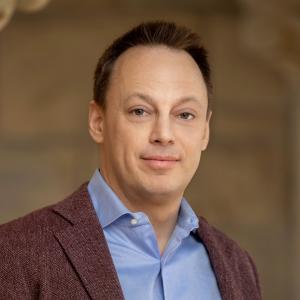
Music Colloquium Series: Jesse Rodin (Stanford University)

Jesse Rodin (Stanford University)

đź“… Date: Friday, March 20, 2026
đź•’ Start Time: 4:00 PM
📍 Location: Harkness Chapel, Classroom
👥 Who: Free | Open to the public 

View Series Schedule

Our weekly Friday colloquia showcase current research by distinguished visiting scholars alongside our own faculty and graduate students in musicology, historical performance practice, and music education. A brief reception follows each talk to keep the conversation going. All are welcome!

About The Talk

“High Notes and Full Hearts”

If you were a professional singer around 1480 you would have thought nothing of melodies spanning eleven, twelve, or even thirteen notes. Ranges this wide would have been rare when your teacher was a boy; in your old age they would have become rare once again. But if you earned your bread premiering new music by Du Fay, Okeghem, or Josquin, virtuosic vocal ranges would have been the norm. The reason, I argue in a recent book, is that expansive ranges helped produce a special kind of intensity that musicians of this period craved. With a wide range it becomes easier to withhold the highest note. Unleashing that note, especially when approaching the end of a section or when setting powerful words, can be explosive. A potent example is Josquin’s Vultum tuum, a multi-section motet from 1480s Milan that handles vocal ranges with elegance and drama. Across more than nineteen minutes the most significant high note is reserved for the words “with a full heart.” In this moment—and in many others—Josquin seems to have wanted to channel the feeling produced by the words into physically charged sounds. That charge is hard to get at, in part because until recently it has not seemed possible to develop as much fluency with Renaissance polyphony as with later repertories. This experimental paper moves between historical evidence and things we do with that evidence today—like singing, listening, and making recordings. The central claim is that becoming intimate with pieces like Vultum tuum can help us connect viscerally to musicians from a long time ago.


Venue Information

Harkness Classroom, located inside Harkness Chapel, serves as both a lecture hall for large classes and a backstage area during events. It is also the meeting location for the CWRU Music Colloquium Series.


Health + Safety
The health and well-being of our community is important to us as we gather for campus events. University Health and Counseling Services provides up-to-date guidance and resources to help support a safe campus experience. For life-threatening emergencies, please call CWRU Public Safety immediately at 216.368.3333.