

Case CCC's Developmental Therapeutics Program co-leader, John Letterio, MD, is senior corresponding author on a study that has led to the development of an innovative cancer vaccine strategy designed to harness one of the immune system's greatest untapped resources: the immune memory generated through prior COVID-19 infection and vaccination. Case CCC shared resources were used in the study.
Published in Nature Communications, the study provides the scientific foundation for a planned first-in-human clinical trial in patients with sarcoma and demonstrates how insights gained from the COVID-19 pandemic may be redirected to strengthen the body's ability to recognize and attack cancer.
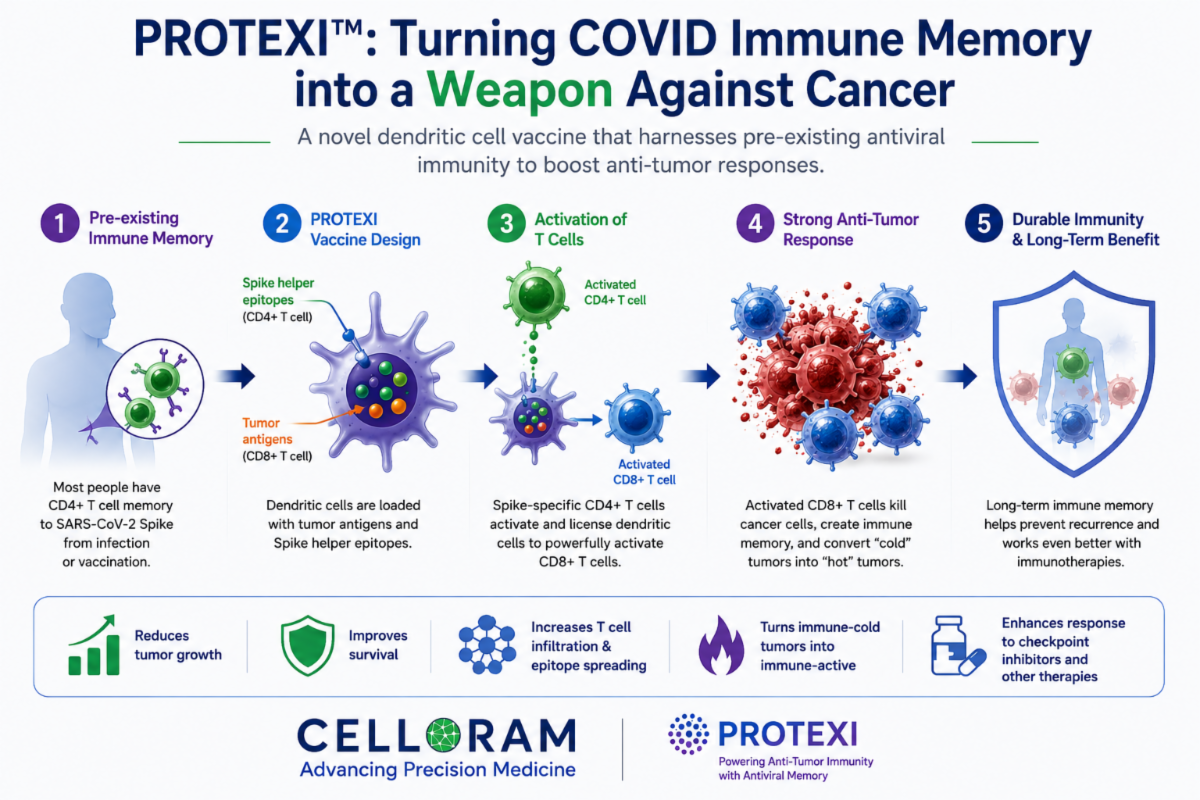
The experimental platform, known as PROTEXI™, takes a fundamentally different approach to cancer immunotherapy. Rather than attempting to generate an entirely new immune response against cancer, the vaccine is designed to redirect the body's existing antiviral immune memory toward tumor-specific targets.
By pairing cancer antigens with fragments of the SARS-CoV-2 spike protein already recognized by the immune system, the platform activates helper T cells that enhance the body's cancer-fighting CD8+ T-cell response.
In multiple preclinical models, the vaccine slowed tumor growth, improved survival, generated durable immune memory, and enhanced responses to other immunotherapies. The approach also demonstrated activity using immune cells from individuals previously vaccinated against COVID-19, suggesting broad translational potential.
Letterio, Director of the Angie Fowler Adolescent and Young Adult Cancer Institute at University Hospitals Rainbow Babies & Children's Hospital, says, "For decades, researchers have understood the importance of helper T cells in generating durable antitumor immunity, but identifying clinically useful helper signals has remained a significant challenge."
He adds, "PROTEXI offers a compelling strategy by redirecting robust antiviral immune memory toward tumor eradication. These findings provide the scientific rationale to advance this platform into first-in-human studies for patients with sarcoma."
The work illustrates the strength of the collaborative research environment fostered by Case CCC, bringing together investigators from academia, clinical medicine, and biotechnology to translate laboratory discoveries into potential new therapies.
If the eventual clinical trial is successful, the strategy could open the door to a new generation of cancer vaccines designed to treat not only sarcoma, but also other cancers that have remained resistant to current immunotherapies.
Why This Matters
This research demonstrates how discoveries made in one field—in this case, the immune response to COVID-19—can be translated into entirely new approaches to cancer treatment, highlighting the power of collaborative science across Case CCC.