

Interested in bringing free sunscreen and sun-safety education to your community? Reach out to learn more about becoming a Stop the Burn partner.
Easy Behavior Changes that Protect Your Skin
UV rays are invisible. Their damage is not.
Did you know that it takes only five sunburns to double your risk of developing melanoma later in life? Unprotected exposure to ultraviolet (UV) radiation from the sun is the number one cause of skin cancer, the most common cancer in both the United States and Ohio.
Melanoma is the most dangerous type of skin cancer. It spreads quickly and becomes life-threatening if not caught early. Melanoma does not discriminate. People of all skin tones can develop skin cancer, including in less pigmented areas such as the palms, soles, and under the nails.
Sunscreen is more than a summertime essential—it's a critical tool in protecting your skin year-round. The sun's UV rays, as well as lights from tanning beds, damage the DNA in skin cells. Over time, this damage can lead to mutations and skin cancers like melanoma. Sunscreen coats the skin and stops the rays from reaching the skin cells, stopping the chain reaction before it starts.
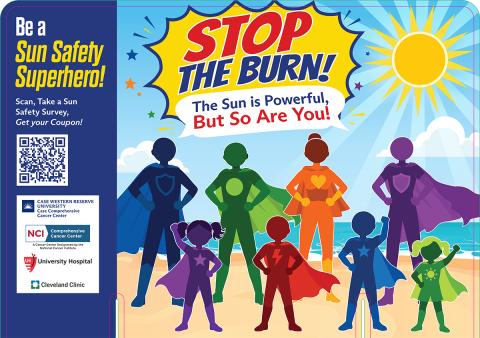
Case CCC is giving away free sunscreen at municipal pools, splash pads, and water attractions in six cities, at one beach, and in the Lorain County Metro Parks, hoping to help people cover up if they forget to bring sunscreen.
But prevention is only part of the story. To truly reduce melanoma rates, we need to understand why they're so high in our region. That's why we're also asking for your help. By completing a brief voluntary survey, which you will find by scanning a QR code on the kiosks and dispensers, you'll contribute to important research that could lead to better strategies for early detection, education, and prevention.