

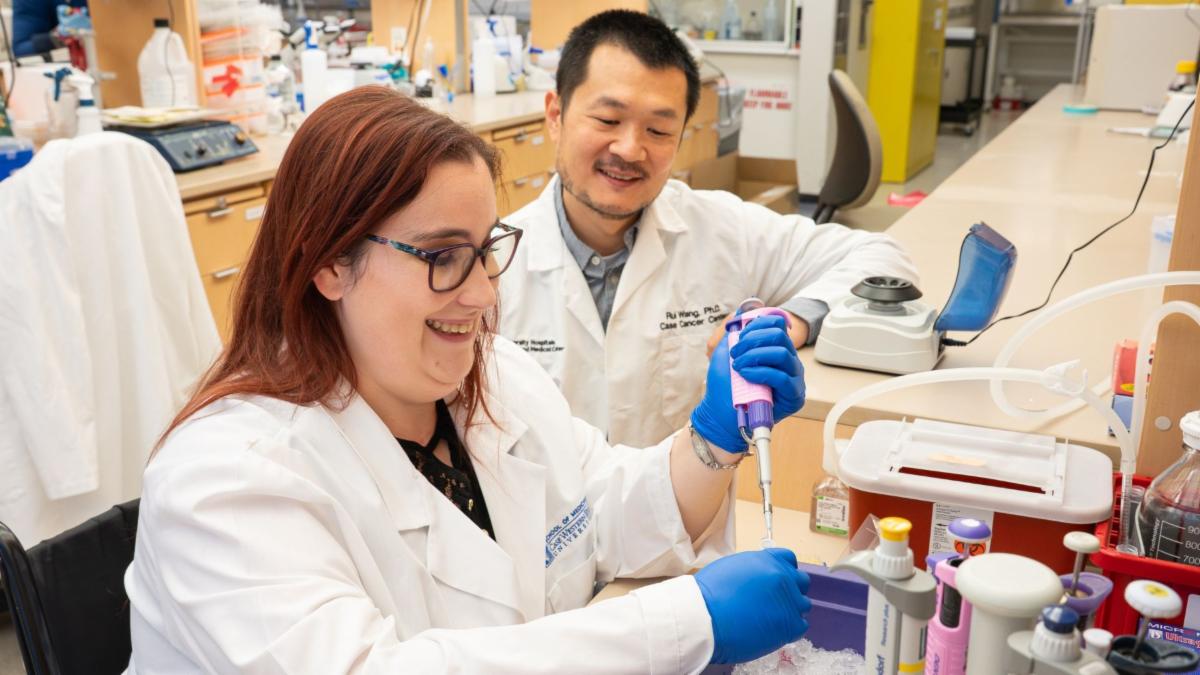
Elizabeth Bryson, a fourth-year PhD candidate in the Cancer Biology Training Program at Case Western Reserve University, was recently featured by the American Gastroenterological Association (AGA) for National Disability Employment Awareness Month. Bryson works in the lab of Rui Wang, a member of Case CCC’s Molecular Oncology Program, studying how Neuronal Pentraxin 2 regulates macrophage biology in inflammatory bowel disease (IBD). Her research could help identify new therapeutic targets and treatment options for people living with IBD.
Bryson’s path into biomedical research began with hospital stays and surgeries related to spina bifida. Those experiences sparked her interest in science and the treatment decisions that affect patients, leading her to pursue translational research with the potential to improve care.
As a wheelchair user, Bryson has also navigated research environments that were not always designed with her needs in mind. With Wang’s support, she has worked through adaptations to PhD spaces and laboratory environments to make her research possible. These experiences have strengthened her commitment to making scientific spaces more accessible and welcoming to researchers with disabilities.
“Accessibility is not a burden; it is an opportunity to build a more innovative and inclusive scientific community,” Bryson said in the AGA feature. She encourages scientists and institutions to think proactively about accessibility, from laboratory layouts and equipment to meeting spaces and workplace culture. Small changes, she noted, can make a significant difference in whether a young scientist with a disability feels they belong.