
What is a ‘serious’ genetic condition and why it ethically matters? with Dr. Vardit Ravitsky

Thursday, November 5th, 2026
4:30 PM - 5:30 PM

Add to Calendar: Add to Calendar: 2026-11-05 16:30:00 2026-11-05 17:30:00 What is a ‘serious’ genetic condition and why it ethically matters? with Dr. Vardit Ravitsky Event Description The use of ‘serious’ to describe certain genetic conditions is pivotal in determining current and future applications of repro-genetic technologies. From Preimplantation Genetic Testing (PGT), through prenatal testing, all the way to potential gene editing, this concept is used as a justification for allowing or even funding certain interventions. Yet, the concept of ‘serious’ remains nebulous and poorly defined. Consequently, its application is inconsistent and not equitable. Recent work across a range of disciplines and international contexts has begun the process of mapping the contours of this complex concept. This work considers a range of stakeholder perspectives and various approaches to its operationalization. A better understanding of this concept can assist policymakers, clinicians, and families to apply it in relevant contexts. This talk will explore the implications of ‘serious’ and the emerging attempts to clarify its use.Speaker's BioVardit Ravitsky is President and CEO of The Hastings Center for Bioethics, an independent, nonpartisan bioethics research institute that is among the most prestigious bioethics and health policy institutes in the world. She is a Senior Lecturer onGlobal Health and Social Medicine at Harvard Medical School. Previously, she was a Full Professor at the Bioethics Program, School of Public Health, University 1of Montreal. She is Past-President of the International Association of Bioethics, and a Fellow of the Canadian Academy of Health Sciences and of The Hastings Center for Bioethics.Ravitsky’s research focuses on the ethics of genomics and reproduction, as well as the ethics and governance of health AI. She is particularly interested in the various ways in which cultural frameworks shape public debate and public policy around bioethical issues. Her work has been funded by Canada’s national and provincial funding agencies and is currently funded by the NIH and by leading Foundations. She has published over 250 articles and commentaries on bioethical issues and has given over 300 talks world-wide and over 400 media interviews.Her research covers a variety of topics such as public funding of In-Vitro Fertilization; the use of surplus frozen embryos; posthumous reproduction; genetic testing of in-vitro embryos; gamete donation; prenatal testing; germline and somatic gene editing; mitochondrial replacement; and the use of Artificial Intelligence in biomedical research and healthcare. She has been engaged in research and policy regarding pandemic ethics and was heavily involved in public outreach during COVID-19.Ravitsky is a Principal Investigator on two Bridge2AI research projects funded by the National Institutes of Health that expand the use of AI in biomedical and behavioral research. She served on the steering committee of the National Academy of Medicine (NAM) to develop an Artificial Intelligence Code of Conduct (AICC).Ravitsky holds a BA from the Sorbonne University in Paris, an MA from the University of New Mexico in the US, and a PhD from Bar-Ilan University in Israel.  Previously, she was a Fellow at the Department of Bioethics at the NIH and faculty at the Department of Medical Ethics, School of Medicine, at the University of Pennsylvania. She was also a Senior Policy Advisor at CIHR's Ethics Office and aconsultant to Genome Canada on Ethical, Economic, Environmental, Legal and Social aspects of Genomics Research (GE3LS). CWRU School of Law Moot Courtroom School of Law School of Law America/New_York public

The Law-Medicine Center

Free

1 hour of CLE credit has been approved

Event Description

The use of ‘serious’ to describe certain genetic conditions is pivotal in determining current and future applications of repro-genetic technologies. From Preimplantation Genetic Testing (PGT), through prenatal testing, all the way to potential gene editing, this concept is used as a justification for allowing or even funding certain interventions. Yet, the concept of ‘serious’ remains nebulous and poorly defined. Consequently, its application is inconsistent and not equitable. Recent work across a range of disciplines and international contexts has begun the process of mapping the contours of this complex concept. This work considers a range of stakeholder perspectives and various approaches to its operationalization. A better understanding of this concept can assist policymakers, clinicians, and families to apply it in relevant contexts. This talk will explore the implications of ‘serious’ and the emerging attempts to clarify its use.

Speaker's Bio
Vardit Ravitsky is President and CEO of The Hastings Center for Bioethics, an independent, nonpartisan bioethics research institute that is among the most prestigious bioethics and health policy institutes in the world. She is a Senior Lecturer on
Global Health and Social Medicine at Harvard Medical School. Previously, she was a Full Professor at the Bioethics Program, School of Public Health, University 1of Montreal. She is Past-President of the International Association of Bioethics, and a Fellow of the Canadian Academy of Health Sciences and of The Hastings Center for Bioethics.

Ravitsky’s research focuses on the ethics of genomics and reproduction, as well as the ethics and governance of health AI. She is particularly interested in the various ways in which cultural frameworks shape public debate and public policy around bioethical issues. Her work has been funded by Canada’s national and provincial funding agencies and is currently funded by the NIH and by leading Foundations. She has published over 250 articles and commentaries on bioethical issues and has given over 300 talks world-wide and over 400 media interviews.

Her research covers a variety of topics such as public funding of In-Vitro Fertilization; the use of surplus frozen embryos; posthumous reproduction; genetic testing of in-vitro embryos; gamete donation; prenatal testing; germline and somatic gene editing; mitochondrial replacement; and the use of Artificial Intelligence in biomedical research and healthcare. She has been engaged in research and policy regarding pandemic ethics and was heavily involved in public outreach during COVID-19.

Ravitsky is a Principal Investigator on two Bridge2AI research projects funded by the National Institutes of Health that expand the use of AI in biomedical and behavioral research. She served on the steering committee of the National Academy of Medicine (NAM) to develop an Artificial Intelligence Code of Conduct (AICC).

Ravitsky holds a BA from the Sorbonne University in Paris, an MA from the University of New Mexico in the US, and a PhD from Bar-Ilan University in Israel. 
 
Previously, she was a Fellow at the Department of Bioethics at the NIH and faculty at the Department of Medical Ethics, School of Medicine, at the University of Pennsylvania. She was also a Senior Policy Advisor at CIHR's Ethics Office and a
consultant to Genome Canada on Ethical, Economic, Environmental, Legal and Social aspects of Genomics Research (GE3LS).

Event Location

CWRU School of Law Moot Courtroom
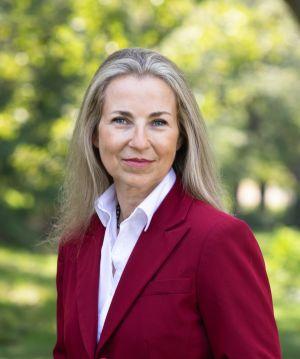
Headshot of Vardit Ravitsky

Vardit Ravitsky

President and CEO 

The Hastings Center for Bioethics